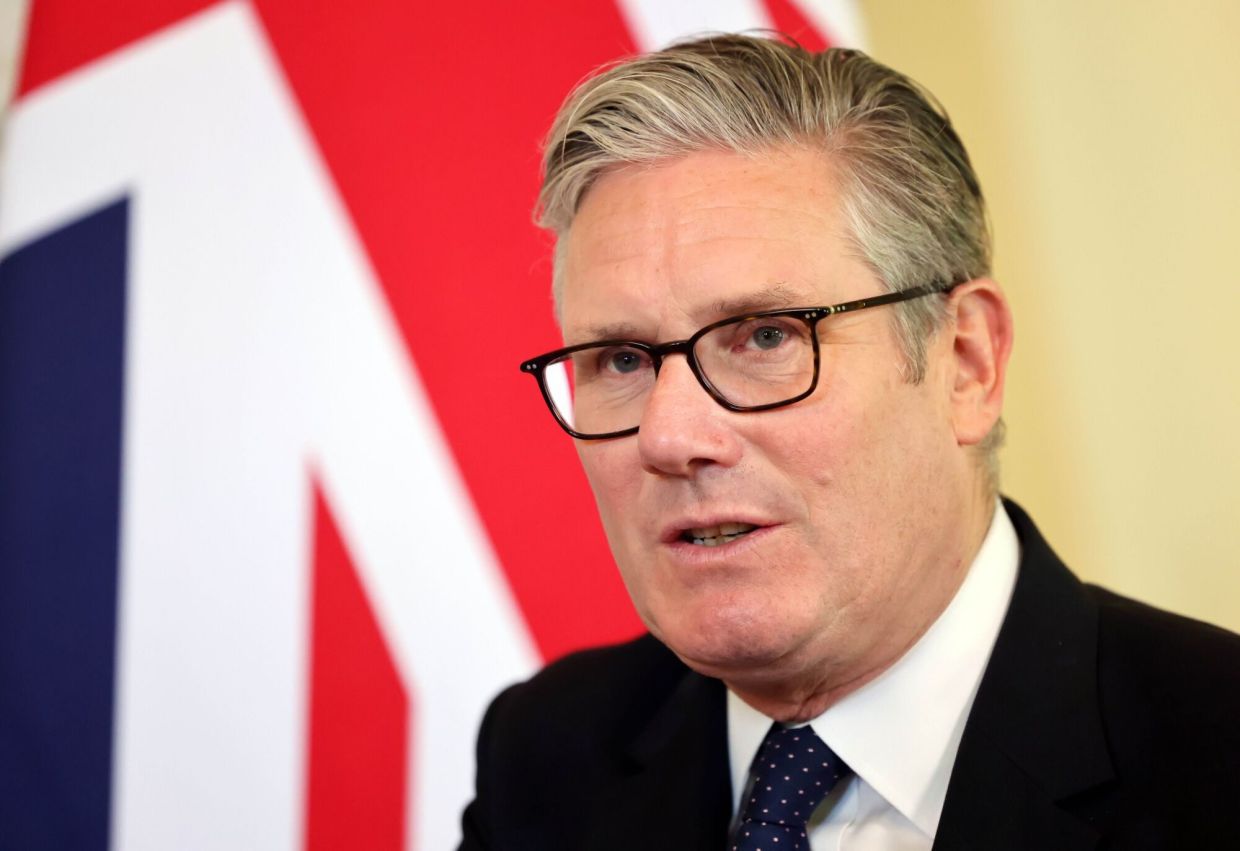
Prime Minister Keir Starmer is set to announce a sweeping package of restrictions on Monday morning designed to shield British teenagers from the risks posed by social media platforms and other online services. The announcement represents a significant hardening of the government's approach to protecting young people in the digital space, positioning Starmer's Labour administration as willing to take aggressive legislative action where others have hesitated. Immediately following the declaration, the Prime Minister will travel to Évian-les-Bains, France, for a gathering of the Group of Seven, a summit that arrives at a deeply challenging moment for his leadership after the departure of key defence officials and lingering questions about military funding commitments.
The centrepiece of Starmer's initiative is an outright prohibition on social media use for anyone under the age of 16, a move that goes beyond comparable legislation in Australia, where restrictions on teen social media usage took effect last year. Additional components include curfew-like measures for older teenagers and strict new rules governing the deployment of chatbots and artificial intelligence systems. While such a ban enjoys considerable public backing across the United Kingdom, serious doubts persist about the practical mechanisms through which it would be enforced and whether platform companies would genuinely comply with age-restriction requirements. In a statement released Sunday evening, Starmer framed the decision in starkly moral terms: "This is a choice about whose side we're on: families across the country, or a status quo that isn't working."
Yet the timing and hastiness of this announcement have drawn sharp criticism from unexpected quarters. Ian Russell, whose teenage daughter took her own life in 2017 after encountering damaging content online, expressed dismay at the Prime Minister's approach on Sunday. Rather than praising a policy that directly addresses the dangers his family experienced, Russell warned it would be "deplorable" if Starmer had accelerated the ban primarily to create a policy victory ahead of what many expect will be a leadership challenge to his position. This rebuke carries particular weight given Russell's standing as an advocate for stronger online safety protections in Britain and his moral authority on the issue.
Behind closed doors at the highest levels of government, Cabinet members have raised concerns that the decision to impose a full ban on social media for under-16s was rushed through without adequate deliberation. A public consultation process on youth protection mechanisms concluded fewer than three weeks ago, leaving minimal time for policymakers to absorb feedback, model enforcement strategies, or stress-test the proposal against real-world scenarios. Critics point out that the accelerated timeline appears designed to coincide with political positioning rather than following careful evidence-based development of complex regulation. The Liberal Democrats were blunt in their assessment, accusing the Labour leadership of "rushing through a half-baked policy just to secure a political legacy."
The urgency surrounding the announcement cannot be divorced from the precarious political situation Starmer faces. Thursday will bring a by-election in the Makerfield constituency in northwest England, where Andy Burnham, one of Starmer's potential rivals within the Labour movement, is widely expected to secure a parliamentary seat. Should Burnham win that contest while fending off a challenge from Nigel Farage's Reform UK party, he would be positioned to launch a formal leadership challenge to Starmer, potentially triggering a contest for control of the Labour Party and the office of Prime Minister before summer's end. Deploying a popular policy announcement just before such a crucial electoral test carries obvious strategic value.
Starmer's political position has deteriorated sharply over the past week following the unexpected departures of key figures from his defence establishment. John Healey, serving as secretary of state for defence, resigned last week after determining that the Prime Minister had failed to secure adequate budget increases for the military. Healey cited mounting security threats from Russia and other adversaries as justification for his departure, arguing that Starmer's government had not done enough to strengthen Britain's defence posture. His departure was accompanied by the resignation of Al Carns, a junior defence minister, and two additional ministerial aides, suggesting broader frustration within government circles over military spending priorities.
However, signals from other quarters suggest negotiations continue behind the scenes regarding defence funding. Lisa Nandy, who serves as culture secretary, indicated on Sunday that the government remains committed to securing additional defence resources by identifying savings within other departments. Speaking to the BBC, Nandy stated that "negotiation is happening as we speak," implying that Starmer has reconsidered his initial position and is actively exploring pathways to increase military expenditure. Such a reversal would mark the third significant policy shift on defence in recent weeks, risking accusations that Starmer lacks conviction or that his government makes decisions reactively rather than through sustained strategic planning.
The combination of these challenges—the social media ban announcement, the defence resignations, the looming by-election, and the G7 summit—creates a complex backdrop for Starmer's efforts to project steady leadership. The social media restrictions may provide a temporary boost to government messaging by demonstrating decisive action on a matter of genuine public concern. Yet the rushed nature of the policy's development and the apparent synchronisation with electoral considerations rather than genuine evidence-based policymaking raise questions about the substance beneath the headline. For observers in Malaysia and across Southeast Asia, the episode illustrates broader tensions between popular digital policy interventions and the administrative capacity to implement them effectively.
The Australian precedent looms large in this debate. While Australia's social media ban for teenagers enjoyed significant political support and proceeded with genuine urgency, implementation questions remain outstanding. Starmer's government faces similar challenges: how to define age-appropriate access, how to verify user age without creating surveillance infrastructure, and how to balance protection with young people's agency and digital inclusion. These questions become more acute in a context where the policy appears politically motivated rather than the culmination of careful regulatory design. The next weeks will demonstrate whether the ban can survive scrutiny from both civil liberties advocates and those who question its enforceability, while Starmer navigates the separate crises of defence funding and internal party management.