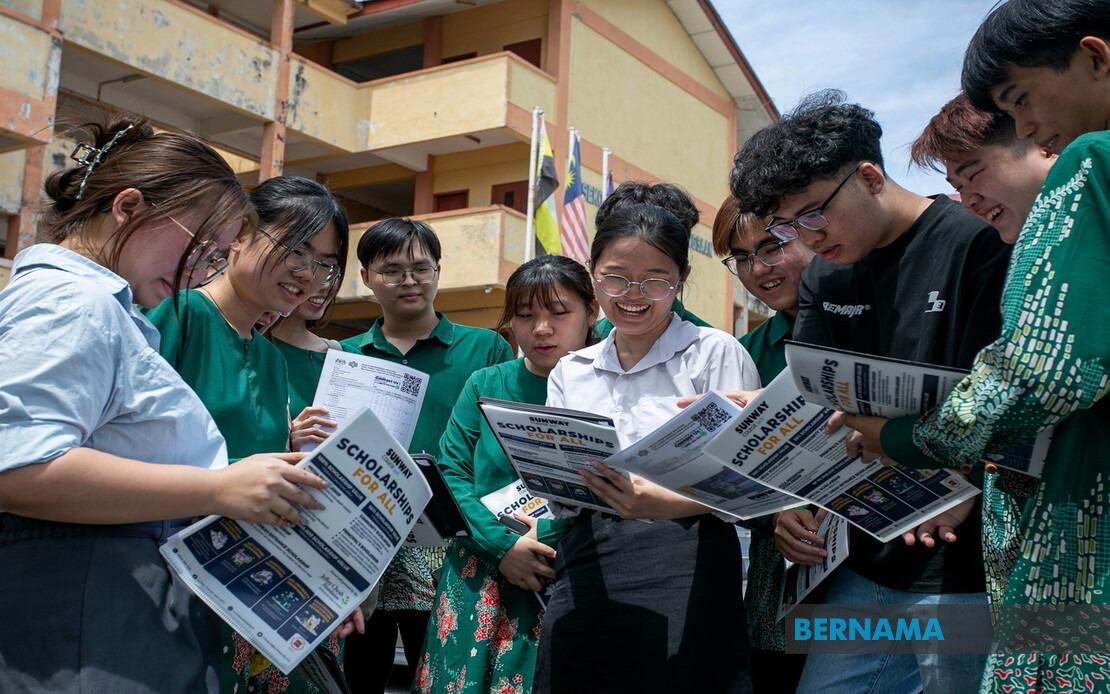
Malaysia's Sijil Tinggi Persekolahan Malaysia (STPM) is reasserting itself as a genuine alternative to other pre-university pathways, backed by compelling evidence from this year's examination cycle. Three exceptional students who achieved a perfect 4.00 Cumulative Grade Point Average exemplify how the two-year Form Six programme attracts and nurtures talent from underrepresented communities, challenging perceptions that the qualification has lost ground to matriculation schemes. Their achievements underscore a broader narrative: STPM continues to open doors for those who might otherwise be excluded from higher education, whilst maintaining academic standards that meet international expectations.
Hazaril Hakimi Hassan's trajectory encapsulates the transformative potential of informed educational choices. The Orang Asli student from Kampung Paya Mendoi in Kuala Krau, Pahang, exemplifies how Form Six can serve indigenous communities when visibility and guidance are enhanced. Upon grasping the genuine advantages of the STPM route—advantages he admits were previously obscured to him—Hazaril channelled parental and teacher encouragement into focused effort. His perfect score and subsequent award from the Malaysian Examinations Council validate not merely his individual diligence, but also the pedagogical framework that enabled it. Now aspiring to read Malay Language Education at Universiti Putra Malaysia with ambitions to lecture, Hazaril represents a constituency whose participation in tertiary education directly strengthens Malaysian academia and society.
The financial accessibility argument, often overshadowed in discussions dominated by prestigious international rankings, emerges as critical through Ng Yu Yong's testimony. The SMK Tsung Wah student from Kuala Kangsar, Perak, positions Form Six not merely as academically rigorous but as fiscally prudent—a distinction that carries profound implications for middle and lower-income families across Malaysia. Ng's five A grades, encompassing both Physics and Biology, demonstrate that cost-consciousness need not compromise attainment. His deliberate selection of Form Six as the optimal springboard for medical studies at Universiti Malaya reflects strategic thinking: STPM's international recognition combined with substantially lower fees than private institutions or overseas preparatory programmes makes it a rational choice for ambitious students whose circumstances demand fiscal restraint. His encouragement to younger cohorts underscores a messaging gap—many capable students remain unaware that academic excellence and economic feasibility can coexist within the STPM framework.
Beyond conventional markers of success, the examination's inclusive infrastructure represents a quiet revolution in Malaysia's educational equity landscape. Yeoh Chwen Yih, a visually impaired student from St John's Institution, achieved the same 4.00 CGPA as his sighted peers, but his pathway involved navigating technological accommodations that Form Six increasingly provides. Screen-reading software, which Yeoh credits with accelerating his access to learning materials beyond traditional Braille methods, exemplifies how STPM institutions are embedding assistive technology into daily pedagogy. This is not merely about compliance with disability frameworks; it reflects a genuine commitment to inclusive excellence. Yeoh's aspiration to pursue law—a field demanding sustained intellectual rigour—becomes plausible precisely because STPM's learning environment prioritised accessibility without diluting academic standards.
The geographical and socioeconomic diversity among these three top achievers warrants sustained attention from policymakers and educators. Hazaril's rural Pahang origins, Ng's assumption that Form Six suited financially constrained families, and Yeoh's status as a student with disabilities collectively challenge a prevailing assumption that only urban, wealthy, or able-bodied students can excel within rigorous pre-university systems. If these three represent merely the visible pinnacle of a broader cohort of high-performing STPM students from marginalised backgrounds, the case for reinvigorating the qualification's profile becomes substantially stronger. Malaysia's demographic complexity demands educational pathways capable of identifying and nurturing talent across community lines.
International recognition remains a tangible advantage that STPM marketing often undersells. Ng explicitly referenced the qualification's standing among overseas universities, noting that it facilitates progression to leading institutions globally. This matters acutely in Southeast Asia, where students increasingly pursue tertiary education across national boundaries. STPM's curriculum design, examination rigour, and institutional familiarity abroad position Malaysian Form Six graduates competitively against peers from neighbouring countries who have completed alternative pre-university schemes. For students without resources to undertake International Baccalaureate or A-Level programmes—the traditional preserves of private education—STPM effectively internationalises their credentials at domestic cost.
The relationship between students' awareness and pathway choice emerges as perhaps the most malleable variable in this analysis. Hazaril's own admission that he initially lacked understanding of Form Six's advantages suggests that many equally talented peers may be making pathway decisions based on incomplete information. Educational counselling systems, both within schools and at the secondary-tertiary interface, require strengthening to present STPM alongside matriculation and private alternatives with genuine parity. Currently, narrative dominance tends to favour matriculation through sheer visibility and institutional promotion, despite comparable or superior outcomes from Form Six. Recalibrating how Form Six is communicated—as the pathway for academically ambitious students willing to invest two years for demonstrable competitive edge—could reshape participation patterns.
Teacher support emerges as a consistent theme across all three testimonies, reflecting STPM's reliance on pedagogical quality. Schools like SMK Temerloh and SMK Tsung Wah, which produced multiple perfect-CGPA students, likely employ educators invested in Form Six excellence. Conversely, institutions where teachers regard STPM as a secondary tier inevitably communicate that perception to students. This creates a potential virtuous or vicious cycle: schools with strong STPM track records attract committed teachers and motivated students, whilst those with weak reputations struggle to reverse perceptions. Investment in STPM teacher training, subject specialisation, and professional recognition could amplify the qualification's appeal and quality simultaneously.
The cost-benefit calculus for students contemplating STPM versus matriculation has shifted measurably in recent years. Matriculation fees have risen substantially, whilst STPM remains anchored to public school funding mechanisms that keep direct costs minimal. Simultaneously, STPM's university acceptance rates remain competitive, particularly for professional programmes including medicine, engineering, and law. For families uncertain whether to prioritise international credentials or domestic affordability, Form Six resolves the tension favourably. The three students featured in this narrative have effectively demonstrated that competitive excellence, inclusivity, and economic accessibility are not mutually exclusive within the STPM ecosystem.
Looking forward, STPM's sustainability depends on sustained institutional support and strategic repositioning within Malaysia's increasingly fragmented educational landscape. International competition—from A-Levels, International Baccalaureate, and emerging alternative qualifications—intensifies pressure on Form Six to differentiate itself. Yet the evidence marshalled here suggests STPM possesses distinct assets: genuine inclusivity for students with disabilities, affordability for financially constrained families, recognition among both Malaysian and international universities, and demonstrable academic rigour. These strengths require amplification through targeted outreach, enhanced teacher development, and transparent communication about outcomes. Hazaril, Ng, and Yeoh have each proved that STPM remains a pathway worthy of consideration by any student serious about tertiary advancement, irrespective of background or circumstance.

