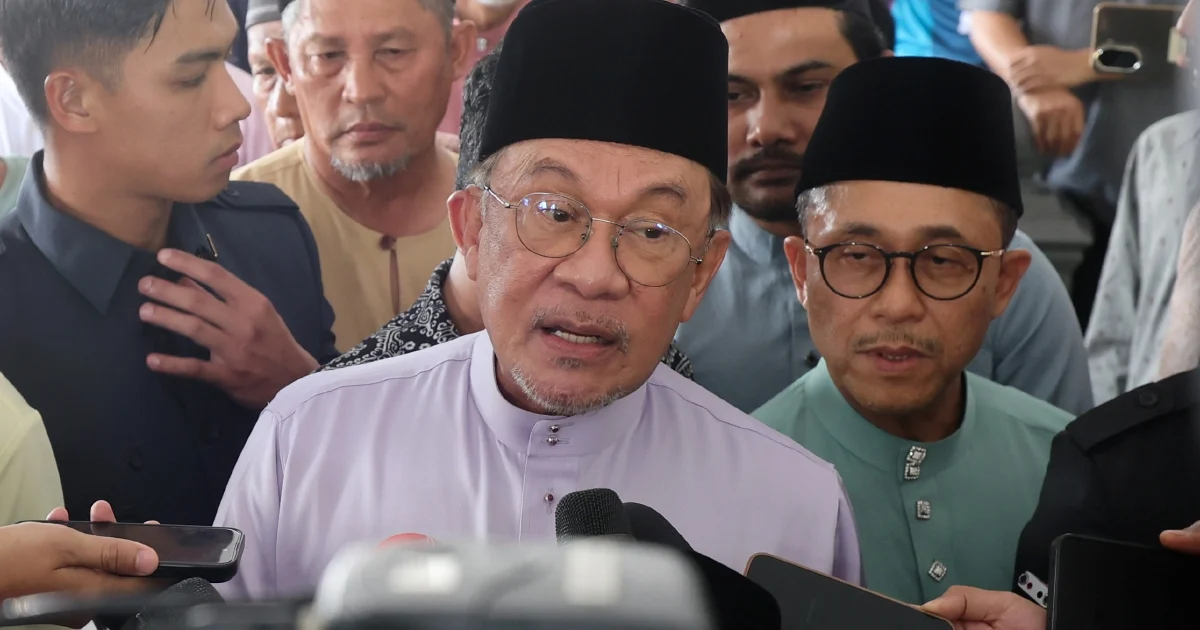
Prime Minister Datuk Seri Anwar Ibrahim has moved to allay concerns about Malaysia's constitutional balance by declaring that institutional improvements to the Syariah court framework will operate within existing legal boundaries and pose no threat to the religious liberties guaranteed to non-Muslim citizens. Speaking from his office in Putrajaya, the Prime Minister emphasised that elevating the status and capacity of Islamic courts forms part of a broader governance agenda that can be pursued simultaneously with the protection of pluralistic values that have long underpinned the Malaysian system.
The statement addresses an increasingly sensitive debate within the country about the appropriate role and jurisdiction of religious courts in a multi-faith federation. Malaysia's constitutional architecture, established at independence, deliberately carved out distinct spheres of authority: the Syariah courts handle personal law matters for Muslims including marriage, divorce, and inheritance, while civil courts maintain jurisdiction over all other legal questions and apply to all citizens regardless of faith. This separation has been presented as a framework enabling both religious communities and the secular state to function in parallel without encroaching on one another's domain.
Anwar's comments come as the government explores ways to enhance the institutional standing and operational effectiveness of Syariah courts. Supporters of such reforms argue that adequate resourcing and elevated status would improve service delivery for Muslim citizens navigating personal law matters, reducing backlogs and expediting resolution of family disputes. They contend that strengthening these courts within their defined scope is entirely compatible with maintaining the rights of non-Muslims, since the reforms are intended to affect only the administration of Islamic law for Muslims who voluntarily submit to Syariah jurisdiction.
However, the initiative has sparked discussion among civil society groups and non-Muslim communities who worry about mission creep in Islamic judicial power. Past disputes over cases involving custody of children born to mixed-faith parents and the religious status of individuals have occasionally blurred jurisdictional lines, generating concern that institutional elevation of Syariah courts could encourage wider interpretations of their authority. The Prime Minister's reassurance appears designed to counter such apprehensions by explicitly tethering any reforms to the existing constitutional and legal framework.
The broader context matters significantly for Malaysia's social cohesion. As a nation where Muslims comprise roughly 70 per cent of the population, alongside sizable Chinese and Indian communities with their own religious traditions, the health of inter-communal relations depends on all major communities maintaining confidence that their fundamental freedoms are secure. Educational rights, freedom of worship, the ability to practise religious ceremonies without state interference, and protection against discrimination form non-negotiable pillars of Malaysian identity for these communities. Any policy initiative touching on religious institutions therefore operates in a politically charged environment where perceptions can crystallise quickly into broader anxieties.
Anwar's government has signalled its intent to balance competing demands: respecting the constitutional position of Islam whilst preserving the secular institutional structures that protect minority rights. This is no simple undertaking. The Prime Minister himself has positioned himself as a reformist figure within Malay-Muslim politics, someone willing to engage with civil society and recognise the need for institutional checks and balances. His personal history, including imprisonment during the Mahathir era on what many viewed as politically motivated charges, has lent him credibility among those advocating for rule of law and constitutional propriety.
Implementing Syariah court improvements in a manner that commands cross-communal acceptance will require meticulous attention to detail. Any legislative or administrative changes should be preceded by transparent consultation with affected communities and detailed explanations of how existing safeguards will be maintained. Clear demarcation of jurisdictional boundaries, with explicit prohibition against courts overreaching beyond personal law matters, becomes essential. Training and oversight mechanisms should be strengthened to ensure that judges apply religious law consistently with constitutional guarantees of individual rights.
For regional observers, Malaysia's handling of this balancing act carries implications beyond its borders. Other Southeast Asian nations with Muslim-majority populations and religious minorities face analogous tensions. How Malaysia navigates the challenge—whether through genuine institutional pluralism or through gradual centralisation of religious authority—may influence policy thinking elsewhere in the region. Conversely, international human rights scrutiny of Malaysia's religious freedom practices tends to generate domestic political reverberations that policymakers must manage carefully.
The road ahead requires both communities to engage in good faith. Muslim citizens seeking better-functioning religious courts deserve responsive institutions, whilst non-Muslims require cast-iron assurances that their constitutional rights remain inviolable. Anwar's statement represents an opening gambit in this conversation rather than a concluded argument. The substantive proof of commitment to pluralism will emerge through the specific design of any reforms and through their implementation on the ground, where citizens' lived experience ultimately matters more than prime ministerial reassurances.

