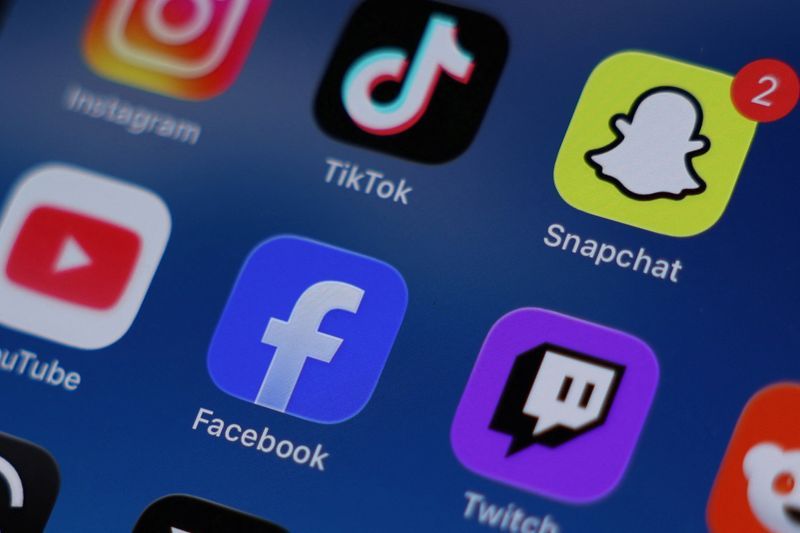
As social media giants face intensifying legal challenges over their impact on young users, fresh polling data from the United States reveals mounting public appetite for government intervention. A Reuters/Ipsos survey conducted in early August demonstrates that six in ten American voters now favour tighter regulatory frameworks governing how technology companies operate their platforms, signalling a remarkable consensus that transcends traditional political divides. The timing of this finding is significant: it arrives amid high-profile legal action against industry leaders and growing state-level efforts to curb youth access to digital networks.
The regulatory backlash against Meta, Google, and other platforms has accelerated dramatically. Prosecutors in multiple states have launched civil suits alleging that Meta deliberately engineered its services to foster addiction among younger users—a charge the company disputes. Should these claims succeed, Meta faces potential financial exposure exceeding $1.4 trillion. In a separate development this week, a New Mexico court ordered Meta to contribute $567 million toward a mental health fund for teenagers and mandated substantial changes to how its platforms function for minors, establishing what amounts to a landmark judicial finding that the social media firm bears responsibility for harm to child wellbeing.
The legal pressure reflects a broader pattern of governmental action. More than twelve American states have enacted legislation designed to regulate how young people access social media platforms, prompted by genuine concerns about online safety and developmental harm. Yet technology industry groups, including NetChoice—a lobbying organization supported by Meta, TikTok, and Snap—have mounted constitutional challenges to these laws. They contend that age-verification requirements infringe upon free speech rights, creating a complex legal battlefield that extends far beyond simple commercial regulation.
The polling itself reveals striking bipartisan alignment on the core issue. Among respondents, 71 percent of Democrats and 62 percent of Republicans endorsed stronger oversight, indicating that social media regulation has become one of the rare policy areas where partisan agreement exists. This convergence matters politically: it suggests that lawmakers from both camps face constituent pressure to act, potentially lowering legislative obstacles that have historically prevented passage of comprehensive child protection measures in Congress. Independent voters registered lower support, with many expressing uncertainty about their position—a reminder that consensus, while broad, remains incomplete.
Americans showed even stronger backing for specific protective mechanisms. Two-thirds of survey participants supported mandatory age-verification systems designed to prevent children under sixteen from accessing platforms. Republicans proved most enthusiastic about this proposal, with three-quarters endorsing it compared to 69 percent of Democrats. The metric underscores how child safety transcends ideological boundaries; traditional conservative and progressive concerns about government regulation dissolve when parents worry about their offspring's wellbeing online.
The survey captured diverse perspectives from individual voters reflecting America's varied political landscape. A sixty-year-old Republican from Tennessee acknowledged an internal contradiction in his own thinking: he generally prefers minimal government intervention but recognized that social media regulation might represent an exception worth making. A younger Democratic voter from Washington, D.C., emphasized tech companies' outsized influence over information flows, arguing that corporate power over content distribution justifies state action. A Kansas grandmother who voted Republican noted how children demonstrate sophisticated technical skills in circumventing parental controls, suggesting that platform-level protections may prove essential when household-level safeguards fail.
This generational dimension carries particular weight for Malaysian and Southeast Asian policymakers observing the American regulatory debate. The region hosts some of the world's highest rates of social media penetration among youth populations. Thailand, Indonesia, the Philippines, and Malaysia all face analogous challenges regarding minors' exposure to addictive content, inappropriate material, and platforms designed to maximize engagement regardless of developmental impact. As Southeast Asian governments contemplate their own regulatory frameworks, the American experience—combining public demand, legal action, state-level legislation, and industry resistance—provides instructive precedent.
The public's perception of social media's psychological effects runs deeply concerning. Eighty-five percent of survey respondents believe platforms operate on addictive principles targeting children, while a similar majority considers regular use potentially harmful to mental health. These concerns rest on substantial evidence: research increasingly documents correlations between heavy social media consumption and adolescent anxiety, depression, and sleep disruption. Yet Americans demonstrate a more ambivalent relationship with digital platforms overall. Seventy percent report finding their social media time enjoyable, whilst only 35 percent describe it as stressful—suggesting that discomfort with the technology coexists alongside genuine appreciation for its social and entertainment value.
The survey's finding that slightly more than half of Americans feel they spend excessive time on social media daily, while 43 percent disagree, illuminates the contested nature of healthy engagement. People struggle to reconcile their lived experience—finding platforms genuinely rewarding—with abstract concerns about optimal usage patterns. This tension creates political space for regulation that doesn't eliminate social media but rather reshapes it through guardrails protecting vulnerable populations.
Congress has so far failed to translate public sentiment into legislation despite a decade of rising concerns about youth welfare online. This legislative paralysis reflects industry lobbying power, technical complexity, constitutional questions about age verification, and disagreement about which regulatory model would prove most effective. The American impasse matters regionally because Southeast Asian democracies increasingly look to the US for policy templates, while authoritarian governments might invoke American failure to justify more paternalistic, surveillance-based approaches. Malaysia, Indonesia, and other countries watching this debate must consider whether their own regulatory paths should mirror American assumptions about privacy, parental choice, and company accountability.
The polling methodology itself merits note: the Reuters/Ipsos survey reached 4,505 American adults through online channels, carrying a margin of error of two percentage points. This represents substantial sample size generating reliable conclusions about national attitudes. The six-day survey window in early August captured sentiment during intense media coverage of these legal battles, potentially amplifying awareness of the regulatory debate. Whether public support translates into political will sufficient to overcome industry opposition remains uncertain, but the polling establishes unambiguous foundation for legislative action should Congress choose to proceed.

