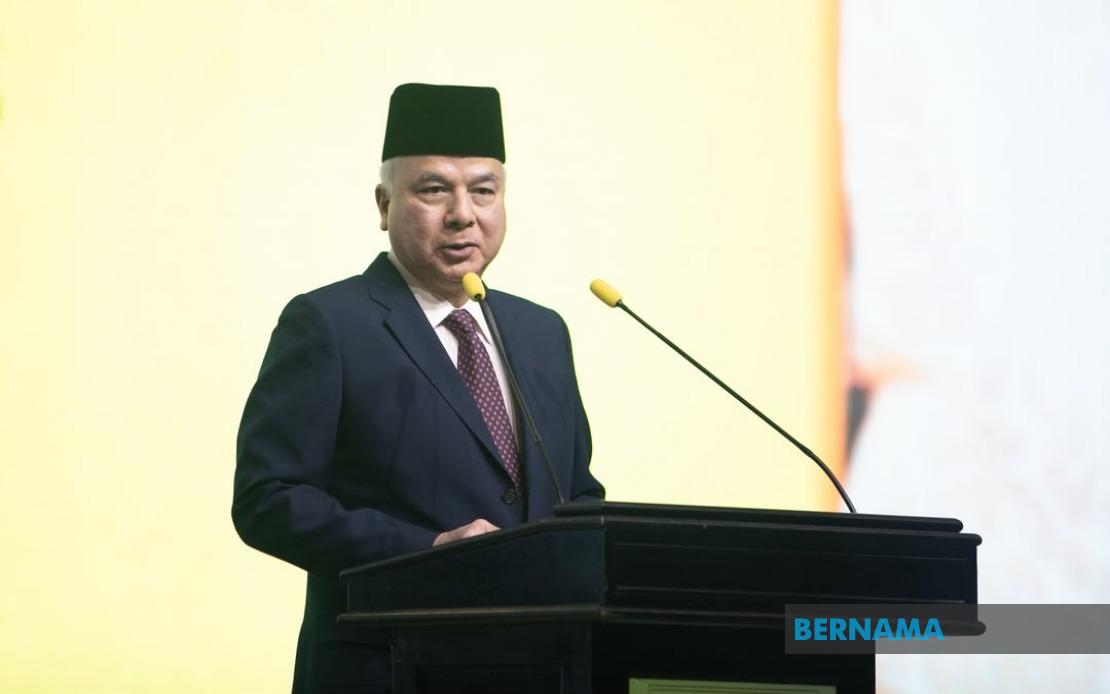
At the 8th World Conference on Islamic Thought and Civilisation in Ipoh on July 21, the Sultan of Perak, Sultan Nazrin Shah, delivered a pointed message about the prerequisites for national success. Regardless of how generously endowed a country might be with natural wealth, human capital, or cultural heritage, it will ultimately disappoint its citizens if the bedrock institutions are fragile, those in power escape accountability, or political calculations prioritise personal advancement over the welfare of the governed. This observation carries particular weight for Southeast Asian nations grappling with institutional strengthening and democratic consolidation.
Sultan Nazrin framed good governance not as an abstract ideal but as a practical achievement requiring the orchestration of several interdependent elements. The cornerstone is institutional resilience—structures sturdy enough to persist beyond the tenure of any single leader or government. When institutions possess this durability, they provide continuity and predictability that citizens and investors alike depend upon. This resonates acutely in Malaysia, where questions about institutional independence and longevity have periodically surfaced during periods of political transition.
Transparency in the management of public finances forms another pillar of this governance framework. When citizens can trace how their tax contributions are collected and deployed, confidence in government grows and the legitimacy of state action strengthens. Equally vital is the principle that laws apply uniformly—neither the powerful escape their reach nor the powerless find themselves denied its protections. Sultan Nazrin emphasised this impartial application of the rule of law as non-negotiable; once citizens perceive that justice is dispensed selectively, the social contract fractures.
The political culture itself must transform to embody civility in disagreement. Stability, the Sultan observed, does not emerge from the absence of debate. Rather, the world's most stable democracies are often remarkably argumentative, yet their disagreements flow through legitimate channels—parliaments, courts, electoral processes—rather than erupting onto streets or manifesting in violence. This distinction between discord and destabilisation is crucial for regional policy makers. The erosion of shared institutional rules for resolving disputes, not disagreement itself, triggers instability and societal fracturing.
When trust in the foundational mechanisms erodes—when elections appear rigged, courts seem politically compromised, or public office resembles a commercial transaction—the state's fabric unravels with devastating consequences for the most vulnerable. Sultan Nazrin underscored this reality: the poor, marginalised, and voiceless suffer first and most severely when governance falters. This observation has profound implications for Malaysia's pursuit of inclusive development and social cohesion across its diverse population.
The Sultan reframed the government budget as fundamentally a moral document rather than merely a financial ledger. Spending allocations reveal whose interests a government genuinely prioritises. A civil service that operates without regard to race, religion, or partisan affiliation embodies national unity in its most tangible form. Similarly, leaders who govern with humility, who listen before drafting policy, and who recognise their authority as custodial rather than proprietary generate far greater public loyalty and national pride than any rhetorical flourish could achieve. This message holds particular relevance as Malaysia continues navigating questions of inclusive governance and merit-based administration.
Beyond the borders of any single nation, development cannot be pursued in isolation. No country, however talented or richly resourced, flourishes by withdrawing from global economic engagement. Trade, foreign investment, technological transfer, and knowledge exchange form the currents upon which modern prosperity travels. Economies that embrace open trade while simultaneously nurturing resilient and diversified domestic industries consistently outperform those retreating into protectionism or gambling everything on a single sector. For Southeast Asia, particularly Malaysia's aspirations as a regional economic leader, this message reinforces the imperative of strategic openness.
Cooperation between nations, between the state and private sectors, and between government and civil society has become the basic operating condition of sustainable growth. Yet Sultan Nazrin cautioned against conflating cooperation with dependency. Openness must not disable a nation's capacity for autonomous decision-making. The wisdom lies in balance: welcoming foreign capital and expertise whilst systematically building domestic capability ensures long-term resilience rather than perpetual reliance on external actors. This calibration remains a central challenge for developing economies across the region.
Turning specifically to Islamic finance, Sultan Nazrin identified a vastly underutilised instrument for cross-border economic cooperation. Malaysia has spent decades establishing itself as the global centre for Islamic financial services, from sukuk issuance through takaful insurance to Syariah-compliant asset management. Yet the true potential extends beyond technical compliance with prohibitions against riba. Islamic finance embodies a distinctive philosophy: risk-sharing, asset-backing, and equitable participation in economic returns. If pursued with philosophical rigour rather than mere regulatory adherence, Islamic finance could catalyse infrastructure investment, small and medium enterprise financing across the Organisation of Islamic Cooperation, and the patient, long-horizon capital essential for development priorities ranging from clean water provision to renewable energy transition. For Malaysia and other Muslim-majority nations, this represents an underexploited pathway to both financial innovation and development partnership.

