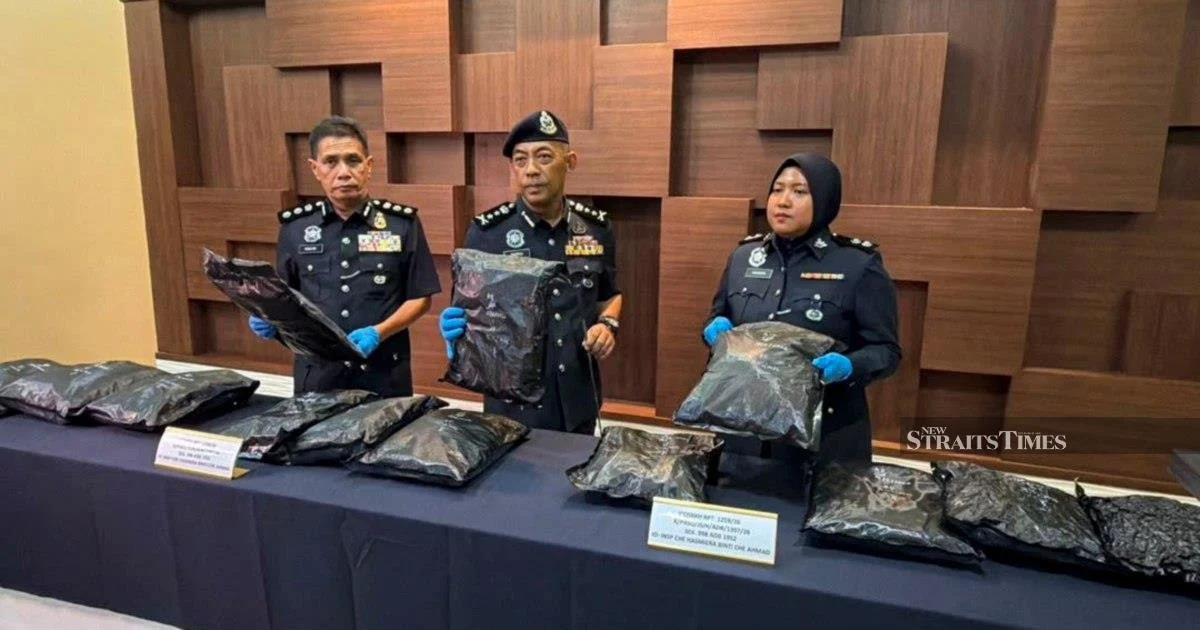
A student enrolled at a private institution of higher learning has been detained by authorities in Alor Star following an attempt to smuggle substantial quantities of cannabis buds across an international border. The apprehension, which occurred on Monday at the Bukit Kayu Hitam checkpoint in Kedah, represents a significant drug trafficking interdiction and marks yet another instance of organised drug movement through northern Malaysia's border regions.
The arrested individual was found in possession of 14.63 kilograms of processed cannabis buds, a haul valued by enforcement agencies at approximately RM1.17 million based on prevailing street prices. The substantial quantity and high declared value underscore the scale of the operation and suggest the drugs were destined for distribution within Malaysia's illicit market rather than for personal consumption. The seizure represents precisely the type of cross-border trafficking operation that regional law enforcement agencies have increasingly prioritised in recent years.
The circumstances surrounding the student's involvement in this smuggling operation remain under investigation, though authorities have characterised the detainee as a "transporter"—a designation indicating the individual may have been recruited to physically move contraband rather than serving as an organiser or financier of the broader trafficking network. This operational role is typical of smuggling chains, where vulnerable individuals, particularly young people with academic commitments, are leveraged to undertake the highest-risk portions of drug distribution routes.
The Bukit Kayu Hitam crossing represents one of Malaysia's most strategically significant border points, serving as a principal transit corridor between Thailand and Malaysia. The checkpoint's prominence in regional drug trafficking has made it a focal area for enforcement operations by the Royal Malaysia Police's Narcotics Criminal Investigation Department and collaborating agencies. The frequency of substantial narcotics seizures at this location reflects both the volume of cross-border traffic and the determined efforts of frontier law enforcement personnel.
Cannabis remains a controlled substance under Malaysia's Dangerous Drugs Act, with cultivation, possession, trafficking, and distribution subject to severe criminal penalties. The quantities involved in this case—substantially exceeding any threshold that could support a personal consumption defence—place the charge within the most serious trafficking categories. Sentences for drug trafficking in Malaysia can extend to decades of imprisonment, with some offences carrying capital punishment as a potential sentence, though actual capital cases for drug offences have become increasingly rare in recent years.
The involvement of a university student in drug smuggling operations illustrates a concerning trend in Malaysia's drug enforcement landscape. Younger individuals, particularly those with legitimate reasons to travel or whose family circumstances provide cover for international movement, have become recruitment targets for trafficking organisations seeking reliable transporters with lower visibility to enforcement agencies. Educational institutions in border regions have become particular focal points for such recruitment.
From a regional perspective, this seizure reflects the persistent challenge that Southeast Asia faces in managing transnational drug flows. Thailand, despite enhanced enforcement efforts and international cooperation frameworks, continues to serve as a major production and transit point for cannabis destined for Malaysian and Singaporean markets. The profitability of the cannabis trade—with retail prices in Malaysia substantially exceeding production costs in source countries—creates powerful economic incentives for trafficking organisations to develop increasingly sophisticated smuggling methodologies.
The apprehension at Bukit Kayu Hitam also demonstrates the operational effectiveness of Malaysian border security mechanisms when deployed with adequate resources and intelligence. The checkpoint interdiction prevented approximately 14.63 kilograms of cannabis from reaching street distribution networks, a figure representing thousands of individual transactions had the drugs reached their intended market.
Investigators will likely focus on determining the student's connections within the broader trafficking hierarchy, identifying the intended distribution network within Malaysia, and establishing whether this represents an isolated smuggling attempt or part of a larger ongoing operation. The interrogation process may also seek to understand recruitment methodologies and the financial arrangements that motivated the student's participation in what authorities clearly recognised as a high-risk criminal enterprise.
The case underscores the continued vulnerability of Malaysia's borders to drug trafficking operations despite technological enhancements and personnel increases at major crossing points. It also highlights the persistent demand for cannabis within Malaysia's illicit drug market and the willingness of international trafficking networks to develop supply chains to meet that demand. For Malaysian readers, the seizure serves as a reminder of the border security challenges that authorities confront daily and the diverse recruitment tactics that criminal organisations employ to sustain narcotics distribution.