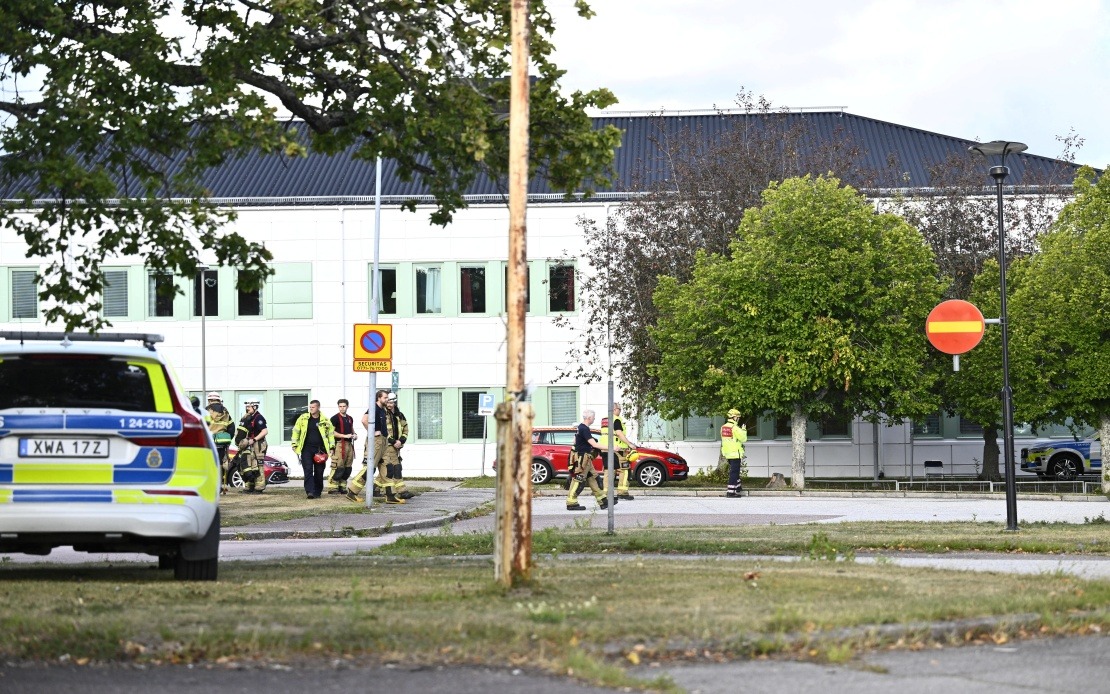
A shocking incident unfolded in central Sweden on Wednesday when an attacker armed with a sword entered a school and carried out an assault that resulted in one fatality and multiple injuries. The assault occurred at Brinell School located in Fagersta, with emergency services receiving notification at 2.06 pm local time. The incident represents another concerning case of violence on school premises in Northern Europe, a region that has experienced periodic breaches of safety at educational institutions.
Two teenagers, both under 18 years of age, sustained serious injuries during the attack and were transported to medical facilities where they remained in serious but stable condition. A third individual suffered minor injuries in the incident. The swift response by emergency medical personnel likely prevented further casualties, though details regarding the deceased victim's identity and age have not yet been disclosed by authorities. The incident has reignited concerns about school security protocols across Scandinavian nations.
Police responded rapidly to the emergency call and arrested a suspect at the scene. The apprehended individual is 18 years old and has been identified as a former student of the school. Investigators have linked the suspect to two residential addresses within Fagersta, and initial inquiries suggest possible connections to the institution that may warrant examination as authorities piece together motivations behind the violence. The status of formal charges against the suspect remains pending official confirmation from Swedish prosecutors.
In response to the emergency, multiple educational facilities and public venues throughout Fagersta were immediately placed under security lockdown as a precautionary measure. The affected establishments included Olympen, Fagerstahallen, Risbroskolan, Skogsglantan, Bjorksta, Prastkragen, and Norrbybacken. This coordinated security response reflected standard emergency protocols designed to contain potential threats and protect students and staff at nearby locations until the situation was fully contained and assessed.
Gunnar Strommer, Sweden's Justice Minister, publicly acknowledged the severity of the incident and confirmed that government authorities were maintaining close coordination with law enforcement agencies investigating the matter. Strommer stated that the government had received immediate notification of the serious incident and noted that police personnel were conducting intensive investigative work at the scene. His statement underscored the gravity with which Swedish government officials view school-based violence and their commitment to supporting ongoing police operations.
The assault has cast a spotlight on school safety measures across Sweden and raises broader questions about how educational institutions throughout the Nordic region assess and manage security risks. While Scandinavian countries generally maintain lower violent crime rates compared to many other developed nations, incidents involving young perpetrators and school-based violence have prompted recurring policy discussions about mental health support systems, threat assessment programs, and campus security infrastructure. This particular case, involving a former student with apparent familiarity with the school environment, mirrors patterns observed in other jurisdictions where prior institutional connection may have provided operational knowledge.
For Malaysian observers monitoring international security incidents, the episode offers instructive lessons regarding the unpredictable nature of institutional violence and the importance of comprehensive emergency response protocols. Educational institutions in Malaysia and across Southeast Asia continue to evaluate their own security postures, and incidents occurring in developed nations with established safety frameworks often prompt comparative analysis regarding vulnerability assessments and crisis management readiness. Swedish authorities' rapid containment and coordination among multiple facilities demonstrate procedural effectiveness, though the fundamental occurrence nonetheless demonstrates that even well-resourced societies with advanced emergency services must continuously adapt security measures.
The investigation into the Fagersta incident will likely examine multiple dimensions including the suspect's background, any documented warning signs or previous behavioral concerns, access to weapons, and possible contributory factors relating to mental health or personal grievances. Swedish law enforcement agencies have extensive experience investigating serious crimes and will apply rigorous forensic and investigative techniques to establish a complete account of events preceding and following the assault. Findings from this investigation may inform policy discussions regarding preventive interventions and threat identification systems.
For students, families, and staff members directly affected by the incident, psychological support services will presumably be made available through school authorities and municipal health services. Traumatic incidents within educational settings produce lasting impacts on institutional communities, and comprehensive counseling and support mechanisms are typically activated in the aftermath of such events. The broader Fagersta community will likely experience heightened security awareness and discussions regarding institutional preparedness in coming weeks as local authorities release additional details and conduct debriefing sessions.

