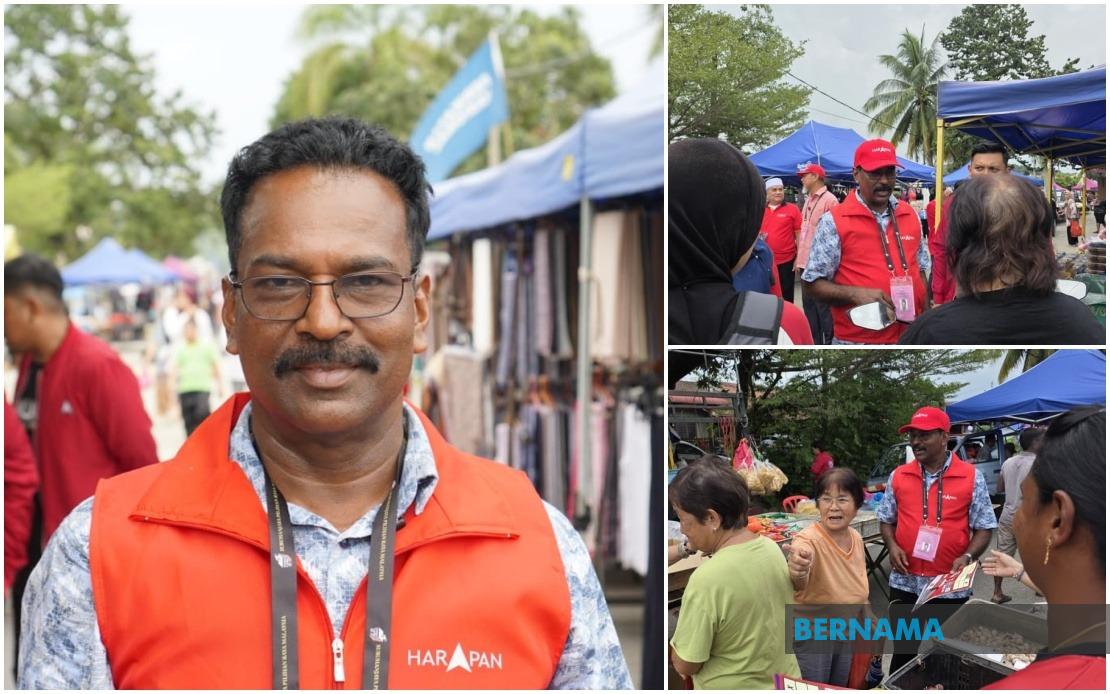
As voting looms in the 16th Johor state election, C. Subramani, the Pakatan Harapan standard-bearer for Bukit Kepong, has expressed confidence that constituent sentiment for political renewal will propel him to a surprise victory in a closely watched three-way contest. The Pagoh-based PKR politician has built his campaign around a narrative of community-driven change, asserting that voters across the constituency are demanding fresh leadership and tangible improvements to their daily lives.
Subramani's optimism stems from what he characterises as sustained encouragement during his campaign trail throughout the electoral period. His narrative centres on identifying and addressing longstanding grievances that residents have articulated across multiple community meetings and informal gatherings. This ground-level approach has formed the bedrock of his electoral positioning, allowing him to project familiarity with constituent concerns whilst maintaining that established parties have overlooked their needs.
A pivotal element of Subramani's campaign strategy rests on institutional reform—specifically, how state and federal governments can function in concert to accelerate development initiatives within the constituency. He argues that misalignment between administrations of different political complexions has historically created bureaucratic friction, slowing the resolution of issues that span multiple government jurisdictions. Closer coordination, he contends, would enable faster processing of constituent requests and more efficient deployment of resources toward infrastructure and social welfare programmes.
The candidate has made targeted visits to Orang Asli communities within Bukit Kepong, a significant demographic often overlooked in mainstream electoral discourse. These interactions have furnished Subramani with what he describes as direct evidence of infrastructure deficits and socioeconomic hardships affecting these marginalised populations. His emphasis on having personally witnessed these conditions distinguishes his campaign from rival candidates who may not have invested similar effort in engaging these communities, potentially offering him a strategic advantage in a tight contest.
Subramani's policy priorities reveal a mixed-basket approach combining heritage-led economic development with practical municipal improvements. His proposal to transform the Bukit Kepong Gallery into a historical tourism attraction reflects an economic diversification strategy aimed at attracting visitor spending to stimulate local commerce. Simultaneously, he addresses quotidian concerns—inadequate street lighting, structurally inadequate bridges, and the scarcity of affordable housing for lower-income households—that resonate across multiple demographic segments and represent the constituency's most pressing grievances.
The candidate's prior electoral experience provides him with tactical and organisational credibility. His 2022 contest in the Buloh Kasap seat, though unsuccessful, furnished him with campaign infrastructure, volunteer networks, and institutional knowledge of electoral mechanics that younger or debut candidates would lack. This accumulated political capital, combined with his position as Pagoh PKR chief, positions him as an established figure within the party machinery capable of mobilising organisational resources effectively.
The electoral mathematics in Bukit Kepong present a genuinely unpredictable landscape. The three-way contest between Pakatan Harapan, Barisan Nasional, and Perikatan Nasional fragments the voter base, potentially advantaging a candidate with superior ground organisation and targeted messaging. The 2022 result, which saw Perikatan Nasional-Bersatu's Datuk Dr Sahruddin Jamal retain the seat with a slender 710-vote majority, underscores how finely balanced constituency sentiment remains. Such a narrow margin suggests high volatility and susceptibility to shifting voter preferences—terrain favouring Subramani's change-oriented positioning.
Across the broader 16th Johor state election, approximately 2.7 million voters will participate in determining the allocation of 56 state assembly seats. The election represents a significant political checkpoint for all three major coalitions, with the Johor outcome potentially influencing national political trajectories and coalition alignments. For Pakatan Harapan, constituency-level victories remain important for burnishing its claim to be a viable alternative administration, particularly in states where it contests from opposition status.
Subramani's campaign operates within a strategic context where federal-state political alignment has become a tangible electoral asset. Voters increasingly appear conscious that divided government—where state and federal authorities belong to rival coalitions—creates coordination challenges affecting service delivery and development velocity. This realisation favours candidates and parties campaigning on administrative coherence and institutional synchronisation, messaging that Subramani has centred throughout his engagement with constituents.
The candidate's confidence, whilst not unusual in electoral rhetoric, appears anchored in concrete metrics: direct resident feedback characterised as encouraging, successful community engagement across diverse demographic segments, and identification of specific, addressable grievances that rival campaigns may not have adequately acknowledged. Whether these subjective assessments translate into actual vote margins will depend on turnout dynamics, effectiveness of rival ground campaigns, and how voter sentiment crystallises in the voting booth.
For Malaysian observers tracking Johor's political evolution, the Bukit Kepong contest exemplifies broader dynamics reshaping state politics—declining voter loyalty to established parties, heightened expectations for tangible development delivery, and growing electoral volatility in constituencies historically considered safe. Subramani's campaign, regardless of outcome, reflects these structural shifts and the premium contemporary voters place on accessible, responsive political leadership addressing quotidian concerns rather than national-level ideological positioning.

