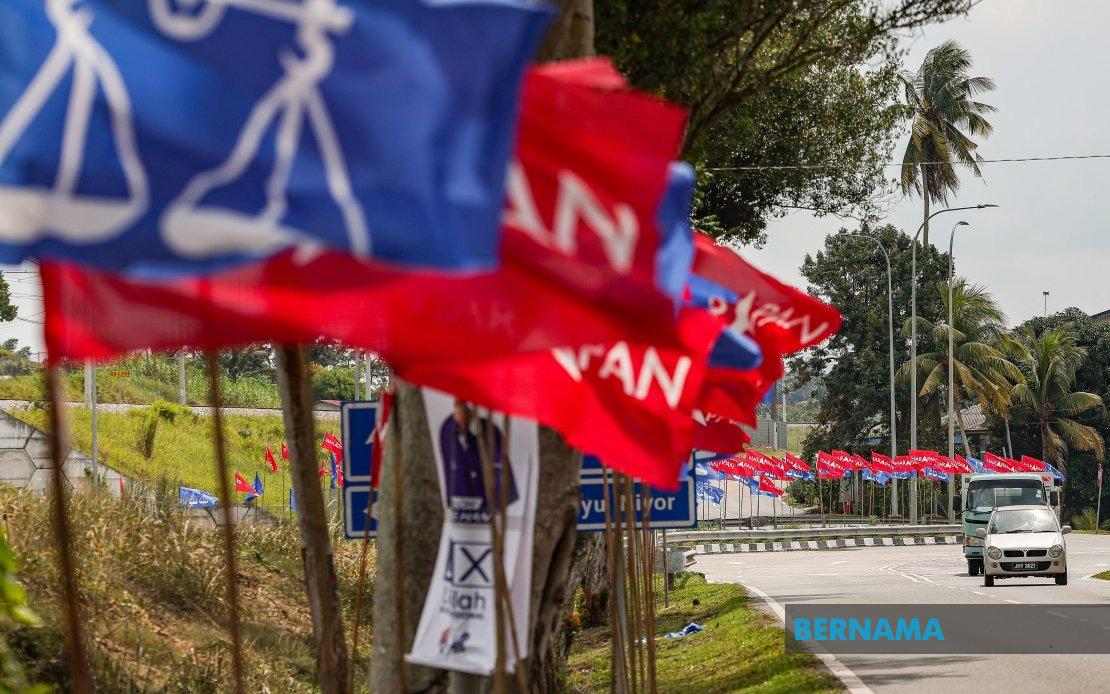
Pakatan Harapan candidate Suhaizan Kaiat has signalled renewed optimism about wrestling back the Larkin state seat from Barisan Nasional in the upcoming 16th Johor state election, with his strategy hinging fundamentally on mobilising a higher proportion of voters than turned out in the previous polls. Speaking after engaging constituents in the constituency, Suhaizan framed his confidence around historical voting patterns rather than the most recent electoral performance, suggesting the 2022 result represents an anomaly rather than a reliable predictor of voter preference in the area.
The basis for Suhaizan's bullish outlook stems from Larkin's voting behaviour during the 14th General Election, when the constituency demonstrated sufficient appetite for change to oust the incumbent Barisan Nasional candidate. This historical precedent, he argues, remains more instructive than the 2022 state election outcome, which saw voter participation drop to just 51 per cent—a collapse largely attributable to pandemic-related restrictions that constrained campaigning and dampened overall engagement with the electoral process. The depressed turnout in 2022 creates what Suhaizan evidently views as a suppressed baseline from which to launch his comeback bid.
As Pulai Member of Parliament, Suhaizan has articulated a clear electoral mathematics: amplify voter participation and Pakatan Harapan's chances of reclaiming Larkin improve substantially. This logic rests on the assumption that the core vote sympathetic to PH remains intact and merely requires activation through higher turnout. The implication is that BN's 2022 victory, while numerically decisive with a majority of 6,178 votes, may have benefited disproportionately from differential turnout patterns rather than a fundamental shift in voter preference.
Beyond turnout strategy, Suhaizan is actively cultivating another avenue for electoral gain through the fractured landscape of Bersatu politics. He believes recent tensions between Bersatu and PAS present an opening to peel away voters from Bersatu, particularly leveraging Pakatan Harapan's previous coalition work with the party. Since Bersatu has opted not to field a candidate in Larkin this time, Suhaizan's calculation appears to be that Bersatu's supporters face a binary choice: align with PH or vote for another candidate, with the former representing continuity of their earlier political partnership.
The three-way contest Suhaizan now confronts includes incumbent Mohd Hairi Mad Shah of Barisan Nasional and Bersama candidate Norsinah Abu, a configuration that potentially fragments the vote in unpredictable ways. The historical arc of the seat underscores its volatility: Datuk Mohd Izhar Ahmad won it in 2018 under the Bersatu-PH alliance banner, only for Mohd Hairi to recapture it for BN four years later. This oscillation between coalitions suggests Larkin voters remain genuinely persuadable and sensitive to political developments affecting the broader Malaysian political ecosystem.
For Malaysian and Southeast Asian observers, the Johor state election carries significance beyond its provincial scope, as Johor remains economically pivotal and politically influential within the Malaysian federation. The state's 56 seats are being contested by 172 candidates across the major blocs, with polling scheduled for July 11 and early voting permitted on July 7. Johor's electoral health influences perceptions of coalition strength heading toward the next federal election, making contests like Larkin microcosms of broader national political currents.
The regional implications deserve consideration as well. Malaysia's ongoing coalition realignments—particularly the deteriorating relationship between Bersatu and PAS—reverberate through state-level politics where local candidates must navigate unstable alliance structures. Suhaizan's strategy of courting Bersatu voters reflects a pragmatic acknowledgment that electoral competition in Malaysia increasingly turns on managing fluid coalitions and capturing swing voters disoriented by frequent political reconfiguration at the national level.
Turnout itself has emerged as a critical variable in Malaysian electoral outcomes, as witnessed in the 2022 general election when reduced participation in certain constituencies produced unexpected outcomes. If Suhaizan can successfully mobilise PH supporters and persuade undecided voters that Larkin remains winnable for the coalition, he could transform the seat from its current BN-held status. Conversely, if BN retains momentum and keeps PH voters at home, the seat will likely remain in the ruling coalition's hands regardless of broader national political sentiment.
The Larkin contest thus encapsulates the central challenge confronting Pakatan Harapan in state elections: demonstrating residual voter appetite for change while simultaneously navigating the fragmented opposition landscape where multiple candidates compete for anti-BN votes. Suhaizan's emphasis on turnout rather than messaging suggests he recognises that voter preference architecture in Larkin tilts toward Pakatan when participation climbs, but requires intensive organisational effort to actualise this potential advantage.

