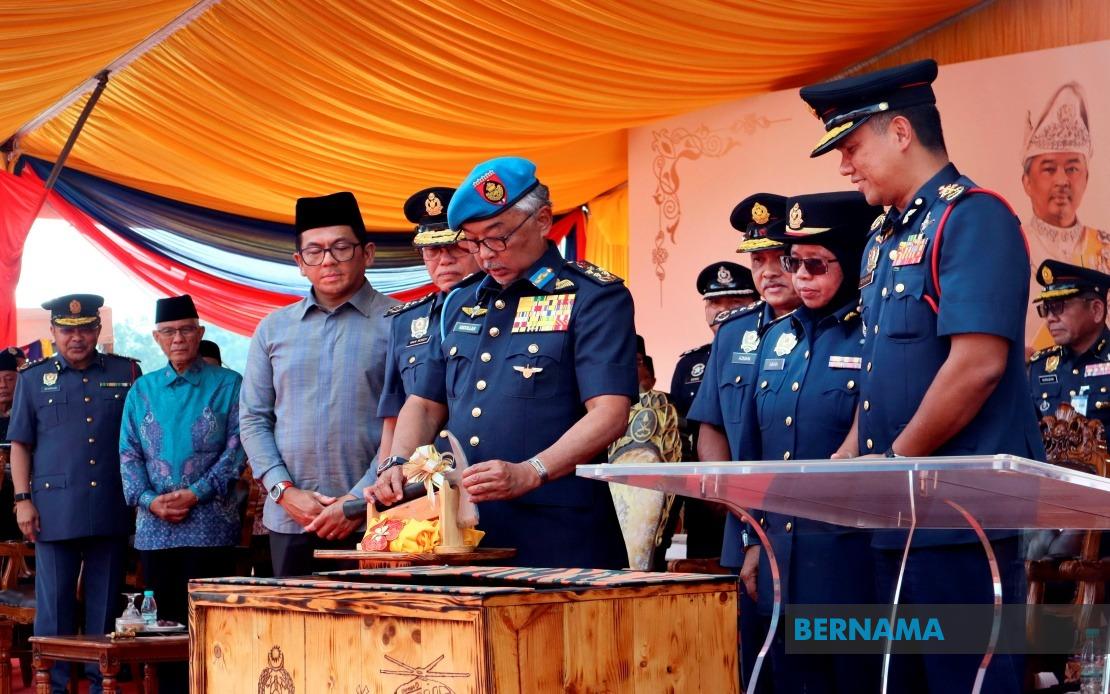
The Sultan of Pahang, Al-Sultan Abdullah Ri'ayatuddin Al-Mustafa Billah Shah, has publicly acknowledged the combined efforts of federal and state administrations in channelling financial resources toward critical development initiatives across the state. Speaking during the formal opening of the Sungai Lembing Fire and Rescue Station in Kuantan on July 2, His Royal Highness emphasised the strategic importance of these allocations in addressing the practical needs of Pahang's residents, with particular focus on disaster preparedness and mitigation infrastructure.
The Sultan underscored that flood management projects rank among the highest priority undertakings requiring substantial public investment, given their direct bearing on community safety during monsoon seasons. His remarks highlighted Sungai Lembing as a critical case study, noting the locality's geographic vulnerability to inundation during periods of heavy rainfall. The area functions as an early warning indicator for broader flooding risks affecting Kuantan and surrounding regions, making targeted interventions there strategically significant for the entire state.
In articulating his gratitude, Al-Sultan Abdullah specifically referenced the scale of financial commitment demanded by modern infrastructure projects, acknowledging that such expenditure reflects a serious governmental commitment to public welfare. The tone of his remarks suggested recognition that infrastructure investment, while essential, places considerable strain on government budgets at both federal and state levels. The opening of the Sungai Lembing Fire and Rescue Station itself exemplifies this commitment, representing a tangible asset designed to improve emergency response capabilities in flood-prone areas.
Beyond flood mitigation, the Sultan issued a directive calling for the deepening of waterways in proximity to residential settlements. This instruction appears aimed at reducing overflow incidence during intense rainfall events, suggesting a proactive approach to environmental engineering solutions alongside structural infrastructure development. The emphasis on this particular measure indicates recognition that flood management requires multifaceted approaches extending beyond station construction or emergency response facilities alone.
The Sultan's public acknowledgment of Fire and Rescue personnel represented a significant component of his remarks, reflecting appreciation for frontline workers who operate in hazardous conditions. His observation that emergency services personnel appear daily in news reports regarding their response to fires, traffic accidents, and disaster scenes underscored the relentless nature of their responsibilities. This recognition carries particular weight given Malaysia's increasing frequency of extreme weather events and urban emergencies requiring rapid professional response.
Perhaps most notably, Al-Sultan Abdullah expressed commitment to continuing personal engagement with emergency services and disaster-affected communities, indicating he would maintain a ground presence alongside Fire and Rescue personnel whenever circumstances allowed. This commitment reflects a deliberate approach to high-level solidarity with both institutional responders and affected populations, blending symbolic acknowledgment with demonstrated support for operational personnel.
The Sultan's proposal for establishing a volunteer fire brigade in Kampung Bantal, located in the remote Ulu Tembeling area of Jerantut, addresses a critical service gap affecting rural communities. His identification of response time delays resulting from geographic remoteness reflects understanding that professional emergency services, while essential, cannot uniformly serve all terrain in a large state like Pahang. Community-based volunteer organisations could bridge this gap, providing initial response capability during the critical window before professional units arrive.
The event itself drew participation from significant state and federal officials, including Pahang Menteri Besar Datuk Seri Wan Rosdy Wan Ismail, Deputy Housing and Local Government Minister Datuk Aiman Athirah Sabu, and Deputy Economy Minister Datuk Mohd Shahar Abdullah, the Member of Parliament for Paya Besar. This high-level attendance underscored the occasion's importance within the state's development agenda and reflected bureaucratic recognition of disaster preparedness as a priority sector deserving coordinated government attention.
The opening of purpose-built fire and rescue infrastructure in Sungai Lembing carries implications extending beyond Pahang's borders. As flood risks intensify across Southeast Asia due to climate variability and urbanisation patterns, facility models developed in Malaysia's northeastern state may inform regional approaches to disaster response architecture. Malaysia's experience managing monsoon-season flooding in complex terrain offers valuable lessons for neighbouring nations confronting similar environmental challenges.
The Sultan's remarks, taken collectively, articulate a vision of governance grounded in tangible responsiveness to community needs. Rather than abstract policy pronouncements, his message centred on concrete projects—stations built, rivers deepened, personnel deployed—with direct bearing on citizen safety. This approach resonates particularly in Malaysia where public confidence in government effectiveness often correlates with visible infrastructure development and demonstrable service delivery.
Looking forward, the Sultan's advocacy for volunteer fire brigade establishment in Jerantut suggests anticipated government action on that front, possibly signalling resource allocation decisions already under consideration. The combination of praise for existing investment and calls for expanded provision indicates satisfaction with progress achieved thus far alongside recognition that implementation remains incomplete. For Pahang residents, particularly those in flood-prone or remote areas, such royal intervention historically carries weight in bureaucratic priority-setting processes.

