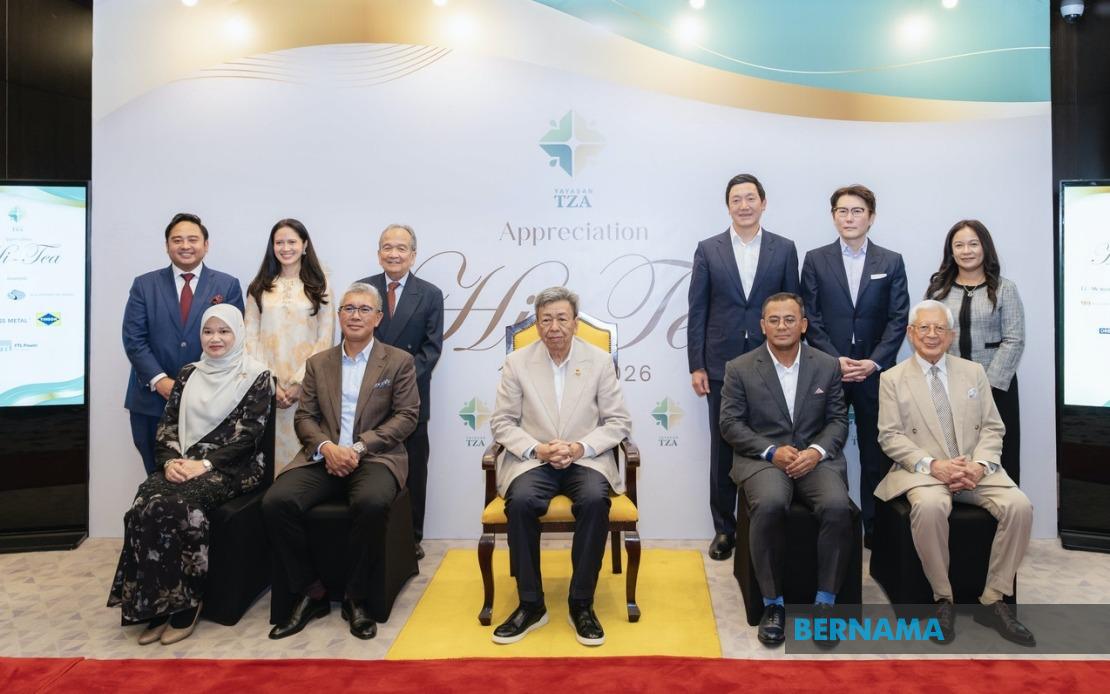
The Sultan of Selangor, Sultan Sharafuddin Idris Shah, attended the Yayasan TZA (YTZA) Appreciation Hi-Tea Ceremony in Kuala Lumpur on June 18, affirming royal support for the foundation's expanding social and educational programmes. His arrival at the event underscored the significance of charitable work within the state and demonstrated the monarchy's continued engagement with grassroots development initiatives. The gathering brought together prominent figures including Selangor Menteri Besar Datuk Seri Amirudin Shari and Education Minister Fadhlina Sidek, reflecting the cross-sectoral commitment to education and community welfare.
Tengku Datuk Seri Zafrul Abdul Aziz, YTZA's advisor, outlined the foundation's comprehensive approach to social development, emphasizing that its programmes extend beyond addressing immediate hardship to create sustainable pathways for individuals and communities. This philosophy distinguishes YTZA from traditional charity models, positioning the organization as a catalyst for long-term empowerment rather than temporary relief. Through educational scholarships, environmental sustainability projects, and community engagement initiatives, the foundation seeks to nurture resilience and self-sufficiency within marginalized populations across Malaysia.
The ACE SPM programme represents YTZA's flagship contribution to educational equity, specifically targeting students from B40 households preparing for the Sijil Pelajaran Malaysia examination. Academic preparedness disparities between affluent and low-income communities remain a persistent challenge in Malaysian education, with disadvantaged students often lacking access to quality tutoring and study resources. By introducing structured academic support, YTZA addresses a critical gap in the national education system and helps level the playing field for vulnerable cohorts who might otherwise struggle to compete academically.
The programme's reach has grown substantially, with 467 students across ten Selangor schools benefiting directly in 2025, while digital learning components extended the foundation's impact to over 4,000 additional learners. This hybrid model—combining in-person coaching with online accessibility—demonstrates adaptive educational delivery relevant to Malaysia's diverse geography and socioeconomic contexts. The scaling of digital initiatives is particularly significant for rural and semi-urban students who face transportation and resource constraints, making technology-enabled learning an essential equity tool in contemporary Southeast Asian education.
During the ceremony, His Royal Highness witnessed the presentation of substantial financial commitments from corporate partners. Kuok Brothers Sdn Bhd pledged RM1 million while YTL Power International Berhad contributed RM300,000, collectively representing RM1.3 million in new funding. These donations exemplify corporate social responsibility alignment with educational development—a model increasingly important as governments seek private-sector partnership in addressing social challenges. For Malaysian foundations, such corporate backing provides stability and enables programme expansion beyond initial government or philanthropic support.
Tengku Zafrul's appreciation remarks highlighted the intricate ecosystem supporting YTZA's operations, acknowledging sponsors, donors, strategic partners, and volunteers whose contributions are indispensable to the foundation's mission. This recognition reflects contemporary understanding that sustained social impact requires collaborative networks involving multiple stakeholders. In Southeast Asia's context, where government resources are often stretched across competing priorities, private philanthropy and volunteer engagement have become critical infrastructure for civil society interventions targeting vulnerable populations.
The foundation simultaneously launched Larian KITA@Klang, a community fun run scheduled for October 10 in conjunction with the Sultan of Selangor's Silver Jubilee celebrations. This represents the fourth iteration of the Larian KITA series, a format combining recreational engagement with cultural celebration and community bonding. Beyond fitness benefits, community fun runs serve as accessible entry points for lower-income participants to engage in organized civic activities, reinforcing social cohesion and reducing isolation among underserved groups. The timing during the Silver Jubilee adds ceremonial significance and amplifies promotional reach through royal association.
The Larian KITA concept merits examination as a model for inclusive community programming in Malaysian urban contexts. By emphasizing the chosen route's cultural and culinary attractions, the event transforms exercise into cultural exploration, benefiting local businesses and heritage preservation while fostering community pride. For Selangor's diverse population, such initiatives provide rare opportunities for cross-cultural interaction and shared civic experience, particularly valuable in increasingly polarized social environments. The accessibility focus—implicit in YTZA's overall mission—ensures that participation spans age groups and fitness levels rather than excluding less athletic community members.
YTZA's expansion trajectory reflects broader trends in Malaysian philanthropy toward strategic, evidence-based social investment. Rather than dispersing resources across numerous small initiatives, the foundation concentrates effort on scalable programmes demonstrating measurable outcomes. The ACE SPM programme's quantified reach—467 direct beneficiaries plus 4,000 digital learners—provides stakeholders with concrete impact metrics, justifying continued investment and enabling comparative assessment against alternative social interventions. This data-driven approach increasingly characterizes professional foundations in Southeast Asia, distinguishing contemporary charity from traditional patronage models.
For Malaysia's education sector specifically, YTZA's work addresses persistent equity concerns that standardized metrics often obscure. While national SPM pass rates may appear adequate, disaggregated analysis reveals significant performance gaps between affluent and B40 students, with compounding effects on tertiary access and career trajectories. By targeting examination preparation directly, ACE SPM interrupts this cycle at a critical juncture. The programme's emphasis on Selangor is strategically significant—as Malaysia's most economically dynamic state, Selangor hosts both extreme wealth concentration and substantial low-income populations, making educational equity initiatives particularly consequential.
The royal patronage demonstrated at this ceremony carries symbolic and practical weight. Beyond conferring legitimacy on YTZA's work, the Sultan's presence signals institutional support for addressing wealth inequality through charitable mechanisms. In Malaysia's constitutional monarchy, such engagement reflects the monarchy's self-conceived custodial role regarding subject welfare. For foundations like YTZA, royal association facilitates donor cultivation, volunteer recruitment, and media visibility—intangible assets that amplify impact beyond direct funding contributions.
Looking forward, YTZA's trajectory suggests sustained expansion contingent on maintaining corporate partnerships and volunteer momentum. The RM1.3 million secured at this ceremony provides meaningful resources, yet reaching significantly larger student cohorts would require multimillion-ringgit annual commitments. As B40 population segments continue growing amid urbanization pressures, educational support demands will intensify. YTZA's current scale positions it as a meaningful but ultimately partial response to systemic educational inequities requiring comprehensive policy integration and public investment alongside private charity. The foundation's success in mobilizing corporate support and royal endorsement nonetheless demonstrates that supplementary mechanisms can meaningfully improve outcomes for vulnerable students while full structural transformation occurs.