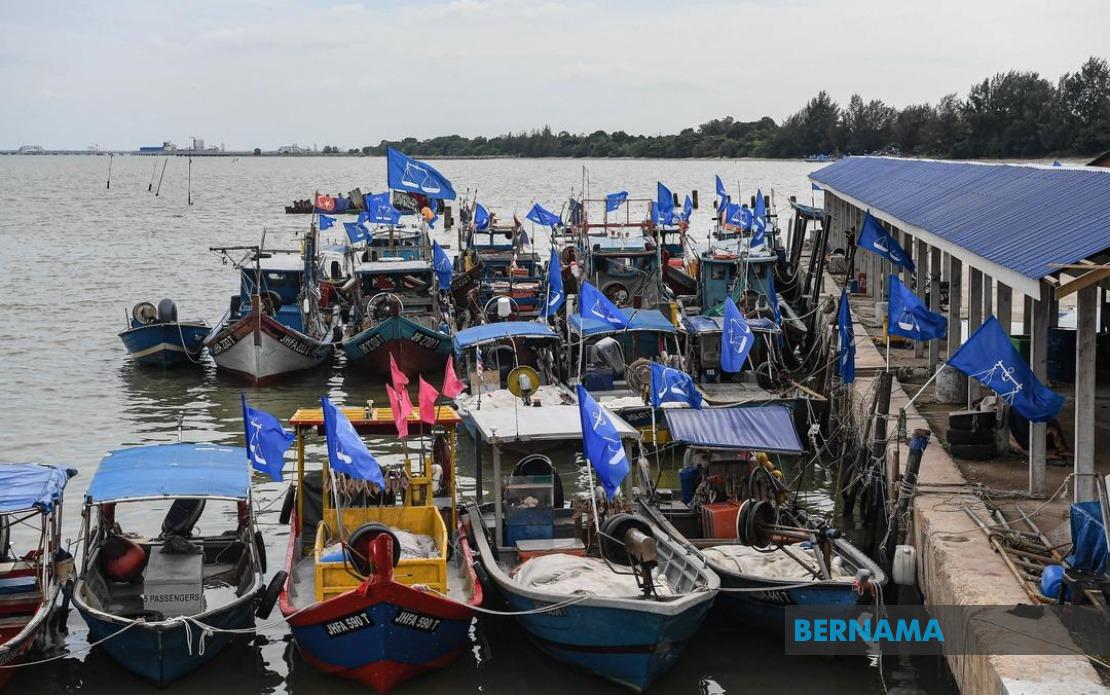
The trading and fishing communities of Sungai Rengit in Johor are placing significant expectations on the winner of the Tanjung Surat state seat to finally resolve persistent infrastructure shortcomings and security vulnerabilities that have hampered their livelihoods for almost a decade. The coastal settlement, which serves as a critical hub for residents and workers employed at the Pengerang Integrated Petroleum Complex, has seen its temporary food court facility become emblematic of delayed development promises and inadequate basic amenities that continue to undermine both commercial operations and public safety.
The Medan Selera Sungai Rengit, a food court facility that was meant to be temporary, has now become the semi-permanent workspace for numerous traders who were displaced from their original location to accommodate a separate development initiative. Despite assurances from authorities that traders would occupy the provisional site for approximately eighteen months, the situation has persisted far longer without transparent explanation from government agencies responsible for the relocation. This extended timeline has left vendors operating under makeshift conditions with minimal protection from environmental elements or criminal activity, fundamentally compromising their ability to conduct business safely and profitably.
Beverage trader Lai Swee Hong, who has operated her stall for three decades, articulated the fundamental dilemma facing the commercial community. While authorities have identified an alternative location for permanent relocation, the proposed site suffers from severe practical limitations including constrained parking capacity and positioning on a one-way thoroughfare that discourages customer access and reduces commercial viability. Lai contended that maintaining operations at the current temporary location, provided it receives proper infrastructure investment and security improvements, would better serve both traders and their established customer base who have become accustomed to the existing venue. The fundamental infrastructure deficiency affecting the entire food court compounds this frustration: vendors operate from structures featuring only basic canvas canopies and plywood partitions, leaving merchandise and equipment vulnerable to weather exposure and criminal theft.
The security dimension has escalated from inconvenience to economic burden for traders. Food vendor Wini Fasiha Zawawi documented multiple theft incidents occurring since the previous year, with stolen kitchen equipment and merchandise directly reducing her operational income and profit margins. Despite lodge official reports with police and submitting complaints to local authorities, security interventions have remained minimal despite routine police patrols. The lack of secured storage facilities and proper structural enclosures for individual stalls creates an environment where crime prevention proves structurally impossible rather than merely difficult. For small-scale traders operating with limited margins, even relatively modest losses from theft create meaningful financial strain that accumulates over time.
The fishing sector faces a different but equally pressing set of challenges centred on operational cost sustainability. Senior fisherman Sin Hock Hwee, who has worked the waters since adolescence, emphasised that existing fuel subsidies represent critical lifelines enabling the fishing community to maintain viable operations despite escalating maritime fuel expenses. The subsidy structure, while helpful, requires both continuation and enhancement to counterbalance the broader inflationary pressures affecting input costs and household expenses throughout the coastal economy. Without adequate cost support mechanisms, younger and mid-career fishermen face genuine risk of abandoning the profession entirely, threatening the long-term viability of Kampung Sungai Rengit's traditional maritime economy.
Younger members of the fishing community articulate broader aspirations extending beyond immediate cost assistance. Fisherman Hidayat Isa emphasised the importance of jetty facility upgrades as fundamental infrastructure supporting safe and efficient maritime operations. He additionally called for the elected representative to demonstrate genuine responsiveness to the specific concerns and priorities voiced by younger fishermen who represent the sector's future. Hidayat's proposal that the incoming assemblyman designate Kampung Sungai Rengit as an adopted village—a symbolic commitment to ongoing development and advocacy—reflects a desire for sustained political attention rather than sporadic intervention during electoral cycles.
The Tanjung Surat state constituency contest features a direct confrontation between Faizul Abdul Ghani, the Pakatan Harapan candidate, and Aznan Tamin, the incumbent Barisan Nasional representative. This competitive electoral environment has created heightened receptivity to community grievances, as both candidates compete for voter support by demonstrating responsiveness to constituent needs and articulating concrete development commitments. For Sungai Rengit's traders and fishermen, the election represents an opportunity to demand accountability and secure binding pledges for infrastructure investment that previous administrations have consistently deferred.
The underlying pattern documented at Sungai Rengit—temporary arrangements calcifying into permanent conditions, development projects stalling indefinitely, and infrastructure investment systematically postponed—reflects chronic governance challenges affecting numerous smaller communities throughout Malaysia's industrial regions. Coastal areas that support petrochemical complexes and maritime industries frequently experience tension between rapid industrial expansion and adequate provision of basic community facilities and security infrastructure. The ten-year duration of Medan Selera Sungai Rengit's temporary status suggests that neither institutional prioritisation nor adequate budget allocation has been directed toward resolving the displacement problem, despite the facility's obvious importance to hundreds of workers and their dependent communities.
The intersection of commercial enterprise and maritime tradition at Sungai Rengit creates distinct development requirements. A single comprehensive infrastructure programme addressing both the food court's physical deficiencies and jetty facility modernisation would likely represent an efficient policy response to documented community needs. Investment in proper food court structures featuring secured individual stalls, adequate parking, improved vehicle access, and professional security systems would immediately address vendor concerns while enhancing the facility's commercial attractiveness. Concurrent jetty upgrades including modern mooring infrastructure, fuel storage facilities, and weather-protected equipment maintenance areas would similarly support fishing community sustainability and potentially attract younger participants to maritime occupations.
The broader significance of Sungai Rengit's infrastructure deficit extends to regional economic development patterns throughout southern Johor. Industrial expansion at the Pengerang Integrated Petroleum Complex has created substantial workforce demand, yet supporting infrastructure for workers and their dependent communities has not expanded proportionally. This imbalance between industrial growth and community service provision creates retention challenges, limits workforce expansion capacity, and generates political grievances that manifest during electoral cycles. Addressing Sungai Rengit's documented deficiencies would establish precedent for systematic community infrastructure assessment across other industrial satellite settlements requiring similar attention.
The electoral outcomes scheduled for July 11 will determine which candidate receives the mandate to address these longstanding grievances, though both contenders have received clear indication of community priorities. The specificity of documented demands—secured market structures, enhanced security surveillance, jetty facility upgrades, and improved fuel subsidy mechanisms—provides clear implementation benchmarks against which constituent satisfaction can be measured. For Sungai Rengit's traders and fishermen, the election represents not merely a choice between personalities but rather an opportunity to establish explicit governance accountability for infrastructure promises that previous administrations have repeatedly failed to fulfill.

