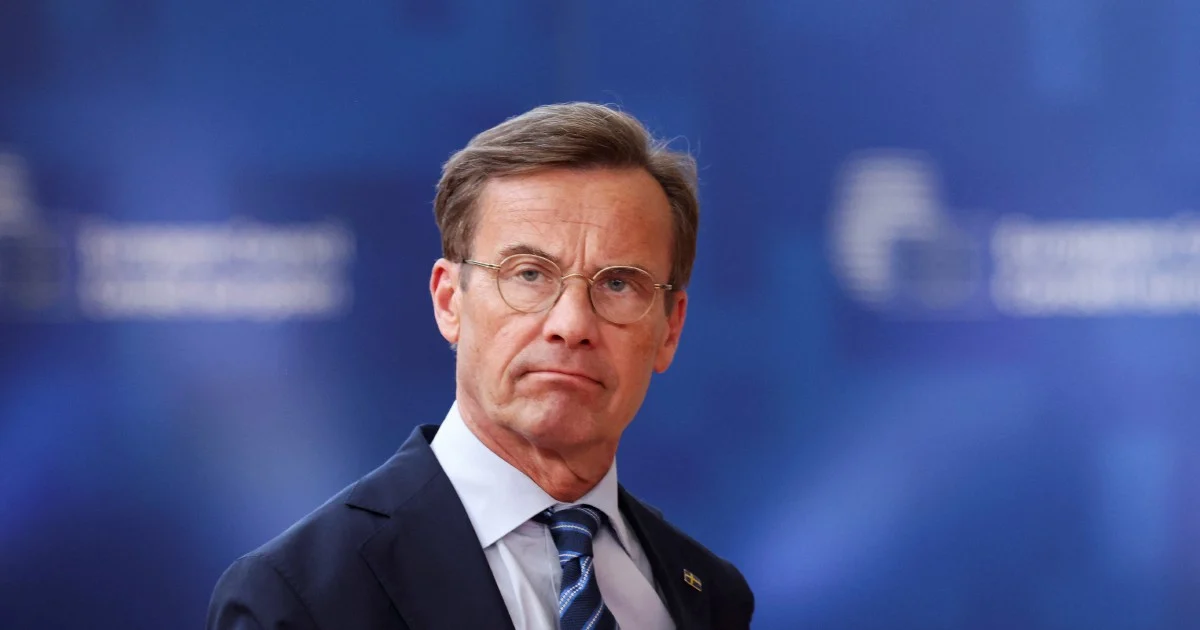
Swedish Prime Minister Ulf Kristersson has demonstrated a remarkable capacity to weather political turbulence throughout his four-year tenure, shedding controversy after controversy without suffering the typical career damage that such incidents usually inflict. Now, as the Nordic nation prepares for legislative elections just three months away, Kristersson confronts fresh allegations of corruption that test whether his apparent political immunity will hold firm during a critical electoral period. The timing presents a significant challenge to a leader whose ability to emerge unscathed from repeated crises has become one of the defining characteristics of his premiership.
The pattern of scandals surrounding Kristersson has been consistent and varied in nature, each seemingly offering an opportunity for political opponents to launch decisive attacks. Yet on each occasion, the Prime Minister has managed to deflect criticism, contain damage, and maintain his position without the profound political consequences that typically follow such incidents in parliamentary democracies. This resilience—or what critics might characterize as a troubling lack of accountability—has become a noteworthy feature of Swedish politics, raising questions about governance standards and the effectiveness of institutional checks on executive authority.
The latest allegations arrive at a particularly sensitive juncture in Sweden's political calendar. With voters set to determine the nation's direction and legislative composition within a quarter year, new corruption claims targeting the head of government introduce additional uncertainty into an already competitive electoral environment. The allegations strike at the heart of public trust in leadership during a period when voters are expected to make consequential decisions about which party coalitions should govern the country. This convergence of scandal and electoral timing magnifies the potential impact on Swedish democracy and public confidence in institutions.
Kristersson's consistent ability to navigate away from controversies reflects various factors that shape modern political accountability. His coalition government, comprising multiple parties with divergent interests, has provided institutional protection through distributed responsibility. Furthermore, media fragmentation and competing news narratives in contemporary Sweden have sometimes diluted the sustained attention that previous political crises might have commanded. Additionally, partisan polarization means that opposition critiques, while vociferous, do not always translate into broader public consensus about the severity of misconduct.
The implications of this pattern extend beyond individual political fortunes. When leaders repeatedly escape consequences from serious allegations, it potentially erodes public confidence in the institutions supposedly designed to enforce accountability—including parliament, the press, and judicial systems. Swedish citizens accustomed to strong governance standards and transparent administration may view the apparent absence of meaningful consequences with growing skepticism about whether their democratic safeguards function as intended. This institutional erosion, if it continues, could have long-term ramifications for public engagement with the political process.
Comparison with governance challenges elsewhere in Northern Europe offers useful perspective. Scandinavian countries have historically prided themselves on relatively low corruption levels and high institutional transparency. The emergence of a pattern where an incumbent prime minister repeatedly escapes accountability from serious allegations represents a departure from these traditions. Other Nordic nations maintain stricter frameworks that typically result in swifter political consequences for comparable misconduct, making Sweden's experience somewhat exceptional within its regional context.
The upcoming election represents an opportunity for voters to signal their preferences regarding accountability standards. Electoral outcomes frequently reflect public sentiment about leadership conduct and institutional integrity, not merely policy positions. If the latest corruption allegations gain substantial traction among the electorate, they could influence voting behavior and potentially alter the balance of power between coalition partners. Conversely, if the allegations follow the pattern of previous controversies, voters may view them as insufficient reason to disrupt existing governmental arrangements.
Sweeden's political opponents face strategic dilemmas as they attempt to capitalize on the new allegations. Previous efforts to mobilize public opinion against Kristersson have met limited success despite documented controversies, suggesting that attacking the Prime Minister's integrity alone may prove insufficient to shift electoral dynamics. Opposition parties must demonstrate how the allegations connect to broader governance failures that matter to ordinary Swedes—whether regarding public services, economic management, or institutional reform—to create a compelling case for electoral change.
The broader Swedish political landscape reflects tensions between traditional governance standards and contemporary political realities. Party loyalty, coalition stability, and the mechanics of forming governing majorities all complicate the straightforward accountability mechanisms that might operate in different institutional contexts. These structural factors partly explain why Kristersson has proven difficult to dislodge despite documented controversies, yet they also raise uncomfortable questions about whether Swedish democracy adequately constrains executive misconduct.
As the election campaign intensifies, these corruption allegations will compete for voter attention alongside economic concerns, immigration policy, security matters, and European integration questions. The relative salience of different issues in determining electoral outcomes will shape whether the latest scandal becomes decisive or remains one controversy among several. Swedish voters must ultimately decide whether alleged corruption meets their threshold for changing their government, a decision that will reveal much about contemporary democratic expectations in one of Europe's most traditionally progressive nations.

