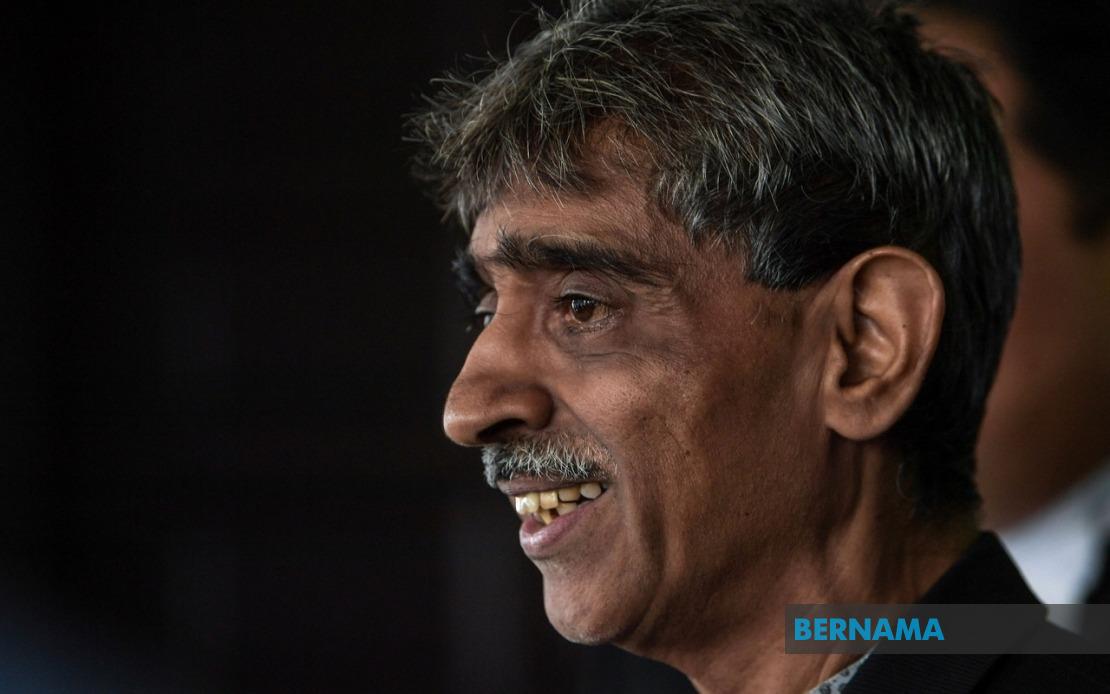
Criminal prosecutions arising from the Tabung Haji Royal Commission of Inquiry must move forward without delay once investigators have compiled sufficient evidence, according to Mohamed Haniff Khatri Abdulla, a lawyer who participated in the RCI proceedings. His intervention comes amid mounting public scrutiny of the troubled pilgrimage savings fund, which has faced years of governance failures and investment losses affecting hundreds of thousands of depositors across Malaysia. The imperative, he stressed, extends beyond mere procedural compliance—swift legal action regardless of the accused's rank or position represents the most effective mechanism for restoring institutional credibility and demonstrating to Malaysians that institutional accountability operates independent of political considerations.
The restoration of public confidence hinges on the government and enforcement agencies demonstrating resolve through concrete judicial outcomes, Mohamed Haniff argued in statements to Bernama. He emphasised that while the RCI's findings are significant, they must translate into prosecutorial action to validate the inquiry's importance. The longer the gap between investigation conclusions and courtroom proceedings, the more sceptical the public becomes about whether genuine wrongdoing will face consequence. This timing concern is particularly acute given Malaysia's history of high-profile cases where investigations conclude without subsequent charges, a pattern that erodes institutional trust and fuels perceptions of selective justice.
Yet Mohamed Haniff simultaneously cautioned against rushing prosecutions prematurely or deploying them selectively based on political calculations. He advocated for staged public communication strategies that acknowledge ongoing investigations while announcing completed prosecutions. This dual approach addresses a critical vulnerability: the danger that staggered charges could be misinterpreted as revenge prosecutions driven by government changes rather than evidence-based enforcement. By providing systematic updates explaining which investigation phases have concluded and which remain active, authorities can insulate judicial proceedings from accusations of political motivation—a concern that carries particular weight in Malaysia's contentious political environment.
The investigative workload is formidable. Nearly 200 individuals have been summoned for questioning by both the Royal Malaysia Police and the Malaysian Anti-Corruption Commission, with their respective institutional frameworks and procedural requirements creating coordination challenges. Mohamed Haniff projected that three to six additional months would be required before the investigation reaches comprehensive completion, given the complexity of examining governance structures, investment transactions, and potential legal breaches across TH's operations. This timeline should temper public expectations that resolution is imminent; complex financial investigations routinely demand such extended periods when multiple agencies coordinate and evidence must satisfy criminal standards of proof.
To streamline the prosecutorial phase, Mohamed Haniff proposed that the Attorney General's Chambers establish a dedicated unit comprising three experienced Deputy Public Prosecutors specialising in anti-corruption matters and conventional criminal law. This centralised mechanism would evaluate investigation papers from both PDRM and MACC in an integrated manner, preventing the siloing of evidence between agencies and reducing the risk that complementary findings from different authorities might be overlooked or inadequately synthesised. The proposal reflects sophisticated understanding of how bureaucratic fragmentation can undermine comprehensive prosecution strategies, particularly in cases spanning multiple investigative domains.
Former Court of Appeal judge Datuk Yaacob Md Sam provided essential legal context, noting that RCI findings, while significant, carry no direct prosecutorial weight under Malaysian law. The Commissions of Inquiry Act 1950 explicitly prevents RCI reports from functioning as evidence in criminal or civil proceedings; only evidence independently gathered and authenticated by enforcement agencies through their own investigations achieves courtroom admissibility. This legal distinction is critical for public understanding: an RCI establishes a factual narrative and makes recommendations, but does not constitute legal proof of criminal conduct. Authorities must therefore essentially re-investigate matters the RCI has examined, subjecting findings to the more rigorous standards demanded by the criminal justice system.
Yaacob, who served as a conducting officer in several RCIs including inquiries into public infrastructure failures, emphasised that law enforcement's investigative burden extends beyond merely validating RCI conclusions. Agencies must determine independently whether evidence supports specific criminal offence charges, a determination requiring legal analysis distinct from the RCI's fact-finding mandate. This distinction explains why the period between an RCI's conclusion and subsequent prosecutions can span considerable time; it reflects not bureaucratic lethargy but rather the fundamental difference between establishing facts and establishing criminal liability under specific statutory provisions.
The Tabung Haji institution itself has emerged from years of accumulated scandals. The fund, which manages savings of approximately 8.6 million Malaysian Muslims designated for pilgrimage expenses, experienced massive investment losses, mismanagement allegations, and governance failures that prompted the RCI's establishment. Recovery of institutional credibility demands not merely that individuals be prosecuted, but that prosecutions demonstrably flow from systematic investigation into specific alleged violations. The public's patience, already strained by revelations of poor stewardship, will diminish further if authorities appear inactive or if charges eventually surface without clear evidentiary foundations.
For Malaysia's financial oversight framework more broadly, the Tabung Haji proceedings carry instructive implications. The case illuminates how specialised institutions managing collective assets require robust governance structures, independent oversight mechanisms, and enforcement architectures capable of responding swiftly when misconduct emerges. The RCI process itself, while valuable for establishing facts, operates at institutional remove from prosecutorial capability; coordination mechanisms between inquiry bodies and enforcement agencies therefore assume critical importance. The Attorney General's Chambers proposal to establish dedicated coordination units reflects lessons applicable beyond this specific instance.
The timeline pressure facing authorities should not translate into prosecutorial shortcuts. Malaysian jurisprudence demands substantial evidence; cases built on inadequate foundations risk collapse at trial, perpetuating rather than resolving public uncertainty. Mohamed Haniff's emphasis on patience paired with steady communication represents pragmatic counsel grounded in litigation realities. Prosecutors must authenticate evidence through proper investigative procedures, secure admissible testimony, and establish causal chains linking alleged actors to specific breaches. These requirements consume time, yet they remain essential to legitimate outcomes that courts will sustain and the public will respect as genuine accountability rather than political theatre.
As investigations proceed, the Malaysian government faces a delicate balance between demonstrating enforcement seriousness through visible prosecutorial progress and maintaining investigative integrity by resisting pressure for premature charges. Public communication strategies merit equal attention as evidentiary gathering. Officials should articulate clearly which investigation phases have concluded, which remain active, and how prosecutorial sequencing reflects evidence availability rather than political preference. This transparency, combined with demonstrated prosecutorial action once evidence solidifies, offers the most effective path toward restoring confidence in both Tabung Haji and Malaysian financial institutions more broadly. The coming months will test whether authorities can navigate these competing imperatives successfully.

