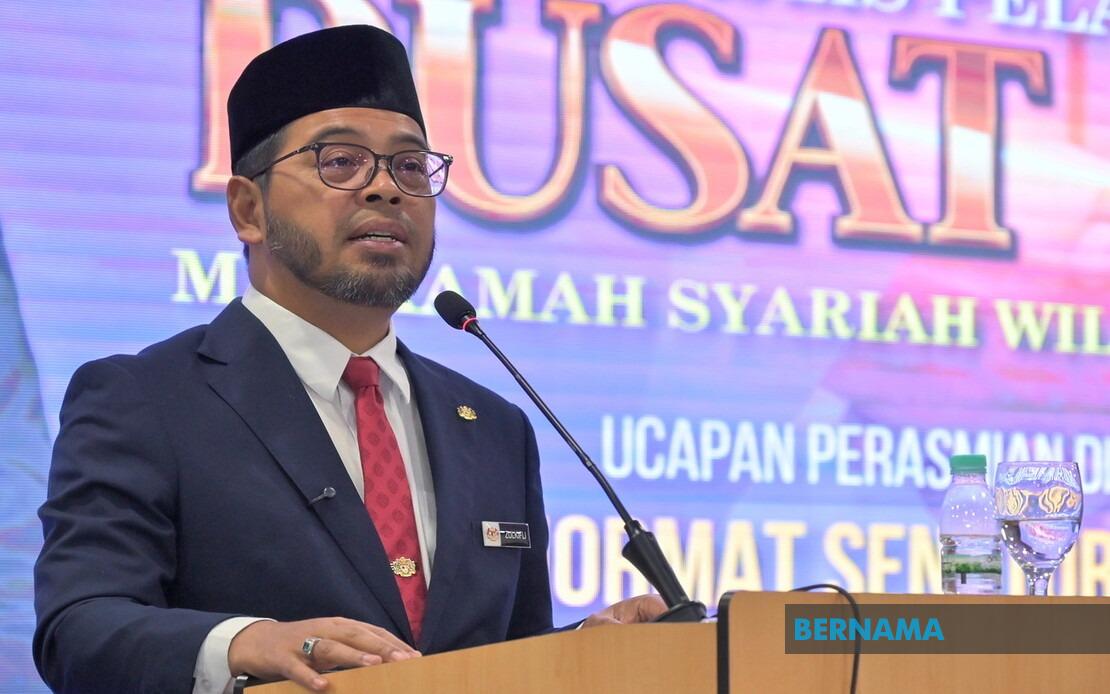
The Federal Territories Syariah Court unveiled its newly branded Sulh Centre and accompanying Fast-Track service on July 27, marking a significant step toward modernising Islamic dispute resolution in Malaysia. The initiative promises to substantially compress resolution timelines, with selected cases now concluding in under an hour, while others are settled within a single day. Religious Affairs Minister in the Prime Minister's Department Dr Zulkifli Hasan framed the launch as integral to government efforts to strengthen both the operational efficiency and public accessibility of Syariah Court services across the federal territories.
The Sulh Centre represents a formal expansion and rebranding of the Sulh Section, which has operated since 2001 but operated with a narrower mandate. The reinvigorated centre has broadened its operational scope to encompass five interconnected service pillars: sulh councils for traditional mediation, arbitration (hakam) for formal dispute adjudication, reconciliation (islah) services, advisory and mediation functions, and dedicated analytics and strategic planning divisions. This structural reconfiguration enables the centre to address a significantly wider portfolio of civil cases (mal) than its predecessor, positioning it as a comprehensive hub for alternative dispute resolution within the Syariah judicial framework.
The performance metrics underpinning the Sulh approach are compelling. Data from 2022 and 2023 indicated that 88 per cent of cases submitted to the sulh process achieved resolution through mutual settlement, a figure that climbed to 90 per cent in 2024. These statistics carry particular weight in Malaysia's context, where court backlogs and protracted litigation timelines remain persistent challenges affecting access to justice. By channelling disputes through the sulh mechanism, the Syariah Court system not only resolves individual cases faster but simultaneously relieves pressure on the broader judicial machinery.
The fast-track component of the initiative targets specific case categories amenable to expedited handling. Minister Zulkifli indicated that the government is actively examining additional enhancements to the fast-track framework, with planned measures spanning three critical dimensions. First, legal framework strengthening seeks to embed the fast-track methodology within clearer statutory parameters. Second, human resource development initiatives aim to elevate the technical competency of sulh officers through targeted professional training. Third, capacity expansion for sulh practitioners will ensure the system scales effectively as caseload volume increases.
The Sulh Centre's physical infrastructure incorporates a dedicated podcast studio, reflecting a broader strategic commitment to public education and awareness regarding Syariah Court services. This multimedia approach acknowledges that many Malaysians remain unfamiliar with alternative dispute resolution mechanisms or retain misconceptions about Syariah Court processes. By leveraging digital platforms, the centre can reach wider audiences beyond those directly engaged in litigation, potentially normalising the sulh approach and encouraging greater voluntary participation in pre-trial settlement efforts.
The appointment of 43 new arbitrators—drawn from serving court officers and specially qualified external practitioners—signals a deliberate resource commitment to scaling arbitration capacity. These appointees will strengthen the hakam (arbitration) service component within the Sulh Centre, expanding the court's ability to handle complex commercial and civil disputes that may benefit from expert adjudication. The decision to recruit externally qualified individuals indicates a pragmatic willingness to supplement internal judicial resources with specialist expertise, a practice increasingly common among forward-thinking judicial institutions in the region.
For Malaysian litigants, the implications are tangible. Parties involved in civil disputes falling within Syariah Court jurisdiction—encompassing areas such as matrimonial property, guardianship, inheritance, and certain commercial transactions—now have access to a demonstrably effective alternative to formal adversarial proceedings. The abbreviated timelines reduce legal costs, minimise emotional and reputational strain, and enable parties to return to their ordinary lives more expeditiously. In societies where communal harmony and family relationships carry significant weight, these benefits extend beyond the purely legal dimension.
The Sulh Centre initiative also carries implications for Malaysia's standing within the broader Southeast Asian Islamic judicial landscape. Countries including Indonesia, Brunei, and Thailand operate analogous Syariah Court systems, and the successful modernisation of Malaysia's dispute resolution mechanisms may serve as a reference model. The emphasis on quantifiable performance metrics, technological integration, and systematic capacity building reflects contemporary best practices applicable across diverse jurisdictions.
Zulkifli emphasised that the strengthened Sulh Centre represents an evolution rather than a departure from established principle. The sulh methodology itself derives from classical Islamic jurisprudence principles favouring reconciliation and mutual agreement, ensuring theological and jurisprudential consistency even as operational methods modernise. This continuity is essential in Malaysia, where the Syariah Court system navigates the dual imperative of respecting traditional Islamic values whilst meeting contemporary standards of judicial efficiency and accessibility.
The presence of Syariah Judiciary Department director-general Datuk Mohd Amran Mat Zin and Federal Territories Chief Syariah Judge Mohd Asri Tahir at the launch underscores institutional alignment across the Syariah judicial hierarchy. Such coordinated leadership support typically facilitates smoother implementation of systemic reforms, as resource allocation, training protocols, and procedural adjustments cascade through established governance channels.
Government stakeholders have flagged an ongoing commitment to refinement, suggesting the fast-track service represents an initial implementation rather than a finalised model. Future iterations may incorporate feedback from early adopters, adjust procedures based on observed bottlenecks, or expand eligibility criteria to encompass additional case categories. This iterative approach allows the system to mature organically in response to practical experience rather than remaining fixed to its launch-day specifications.
The Sulh Centre launch arrives within the context of broader Malaysian efforts to enhance judicial accessibility and court efficiency. Across common law and Syariah systems alike, government initiatives have targeted court backlog reduction through case management reforms, mediation expansion, and procedural streamlining. The Sulh Centre represents a focused manifestation of these broader aspirations within the Islamic judicial domain, with the added advantage that it draws upon indigenous jurisprudential traditions rather than imposing external institutional models.
Looking forward, the success of the Sulh Centre will hinge upon sustained public awareness, consistent quality of dispute resolution processes, and continued judicial and administrative support. The 90 per cent settlement rate in 2024 provides a robust foundation, yet consolidating these gains and extending them across a growing caseload will require diligent attention to training, resource allocation, and procedural refinement as the centre scales operations.

