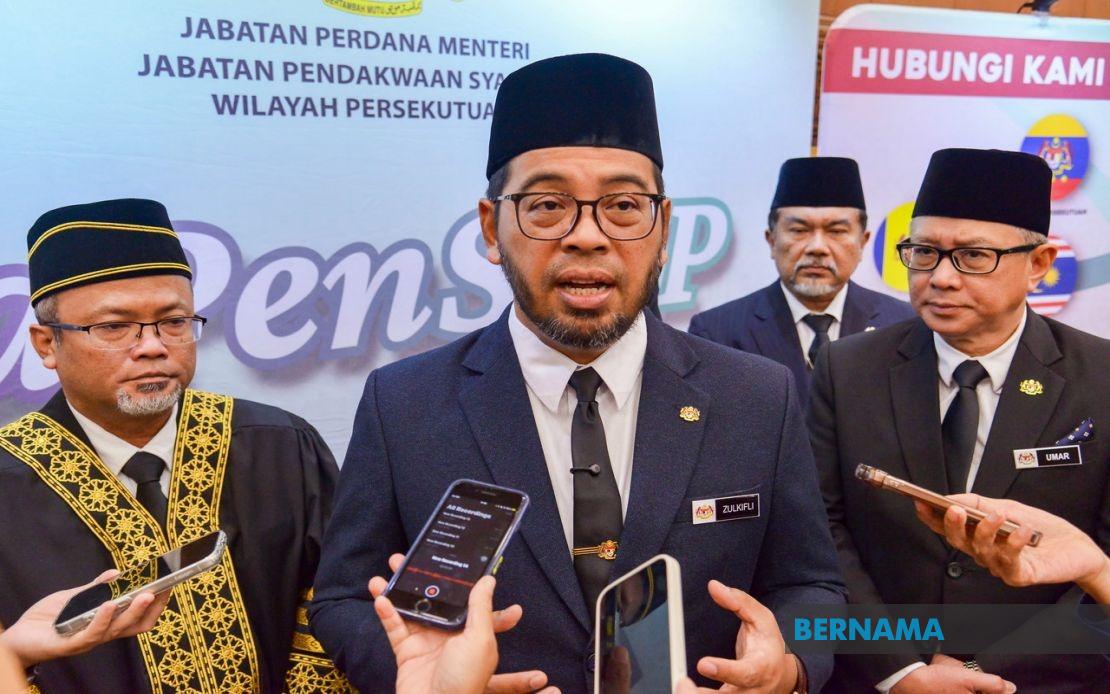
A landmark overhaul of Malaysia's Islamic judiciary is approaching its decisive stage, with the long-awaited Syariah Judges' Remuneration Act edging closer to Cabinet submission. Religious Affairs Minister Dr Zulkifli Hasan revealed that preparatory work on the legislation has reached an advanced point, with core documentation largely prepared and undergoing final refinements before formal presentation to government leadership. The declaration came during his address at the second Malaysia Syariah Prosecutors Conference in Putrajaya on Tuesday, signalling renewed momentum on an initiative that Prime Minister Datuk Seri Anwar Ibrahim pledged to accelerate over a year ago.
The proposed remuneration framework represents a significant administrative undertaking, requiring careful coordination between multiple agencies and state governments that exercise concurrent jurisdiction over Islamic courts. Dr Zulkifli explained that the Department of Syariah Judiciary Malaysia (JKSM), in collaboration with partner bodies, has been conducting a comprehensive examination of the proposal's implications. This extended analytical phase reflects the complexity inherent in restructuring compensation for judicial officers whose salaries have historically lagged behind their civil counterparts, creating retention challenges and professional morale concerns within the Islamic court system.
Financial ramifications constitute a primary reason for the deliberate pace of deliberation. Any enhancement to judicial remuneration necessarily involves budgetary commitments extending across multiple years and potentially affecting federal-state fiscal arrangements, given that states maintain substantial responsibility for Islamic court administration. The minister acknowledged that the proposal encompasses far more than simple salary adjustments, touching upon broader questions of judicial status, career progression, and the structural relationship between Islamic and civil courts. This multifaceted scope demands exhaustive vetting before Cabinet consideration.
Beyond the remuneration legislation, a parallel initiative to establish a dedicated Syariah Prosecution Department (JPSM) is simultaneously advancing through the policy formulation pipeline. Dr Zulkifli disclosed that this companion proposal has also reached maturity at the policy level, with technical documentation progressing toward its own Cabinet presentation phase. The simultaneous development of these two measures reflects a coordinated strategy to modernise Malaysia's Islamic judicial infrastructure, addressing both compensation inequities and prosecutorial independence within a unified reform agenda.
The government's collaborative approach has proven instrumental in shepherding these complex proposals forward without generating the intergovernmental friction that institutional reforms often provoke. Multiple engagement sessions with state administrations have been conducted to incorporate subnational perspectives into the emerging policy framework. Dr Zulkifli emphasised that this consultative methodology ensures that all jurisdictional stakeholders have meaningful input, preventing the imposition of federal designs that disregard local circumstances and constitutional prerogatives. Such consensus-building, while time-consuming, generates the broad ownership necessary for successful implementation across Malaysia's federated system.
Prime Minister Anwar's public commitment in July 2024 to expedite the remuneration act's implementation provided crucial political backing for the technical work underway within JKSM and related agencies. That governmental commitment reflected recognition that the Islamic judiciary's institutional prestige and operational effectiveness depend partly on compensation parity with comparable civil service positions. When Syariah judges earn substantially less than district judges managing similar workloads and bearing equivalent responsibility, the Islamic courts system faces recruitment difficulties and potential exodus of talented jurists toward better-remunerated alternatives in the civil judiciary.
The timing of the announcement at the Syariah Prosecutors Conference also carries symbolic weight. Gathering experienced prosecutors from across Malaysia's Islamic courts provides a natural platform for communicating reform initiatives directly to frontline practitioners whose work would be affected by both the remuneration act and the proposed prosecution department. These gatherings offer valuable opportunities for officials to solicit informal feedback from experienced personnel while simultaneously demonstrating governmental commitment to strengthening Islamic judicial institutions. Such bottom-up consultation complements the formal stakeholder engagement already undertaken.
For Malaysian readers and observers of governance developments, the protracted but deliberate progression of these reforms illustrates the inherent tensions between the desire for rapid institutional change and the imperative of thorough analysis when policies carry significant fiscal and constitutional implications. The Islamic judiciary affects millions of Malaysians across personal and family law matters, particularly in states where Syariah courts exercise exclusive jurisdiction. Any structural changes or compensation modifications therefore warrant comprehensive examination across multiple governmental and societal perspectives before implementation.
The reference to gathering additional feedback in the final documentation phase suggests that JKSM and its partner agencies have not yet received complete alignment from all consulted parties. This ongoing refinement process may accelerate once Cabinet receives the proposals, as senior ministers can potentially resolve outstanding policy disagreements or jurisdictional questions that lower-level agencies cannot themselves settle. Cabinet consideration would represent the threshold beyond which implementation timelines and resource allocations become government-sanctioned commitments rather than technical planning exercises.
Regional observers note that Malaysia's approach to Islamic judicial modernisation carries implications for other Southeast Asian jurisdictions with substantial Muslim populations and established Islamic court systems. Singapore, Brunei, and Indonesia all grapple with comparable questions regarding Islamic judicial compensation, independence, and institutional status. The solutions Malaysia develops and implements may influence how neighbouring governments address analogous challenges within their own legal frameworks and constitutional arrangements.
Looking forward, the convergence of these two major reform initiatives—remuneration enhancement and prosecutorial restructuring—could reshape the operational dynamics and professional character of Malaysia's Islamic judiciary. Successfully implementing both measures would signal sustained governmental commitment to elevating institutional capacity within a judicial sphere that touches the lives of virtually all Malaysian Muslims and intersects significantly with questions of national identity and constitutional governance. The finalisation and Cabinet submission of these proposals therefore represents a pivotal moment in Malaysian judicial development.

