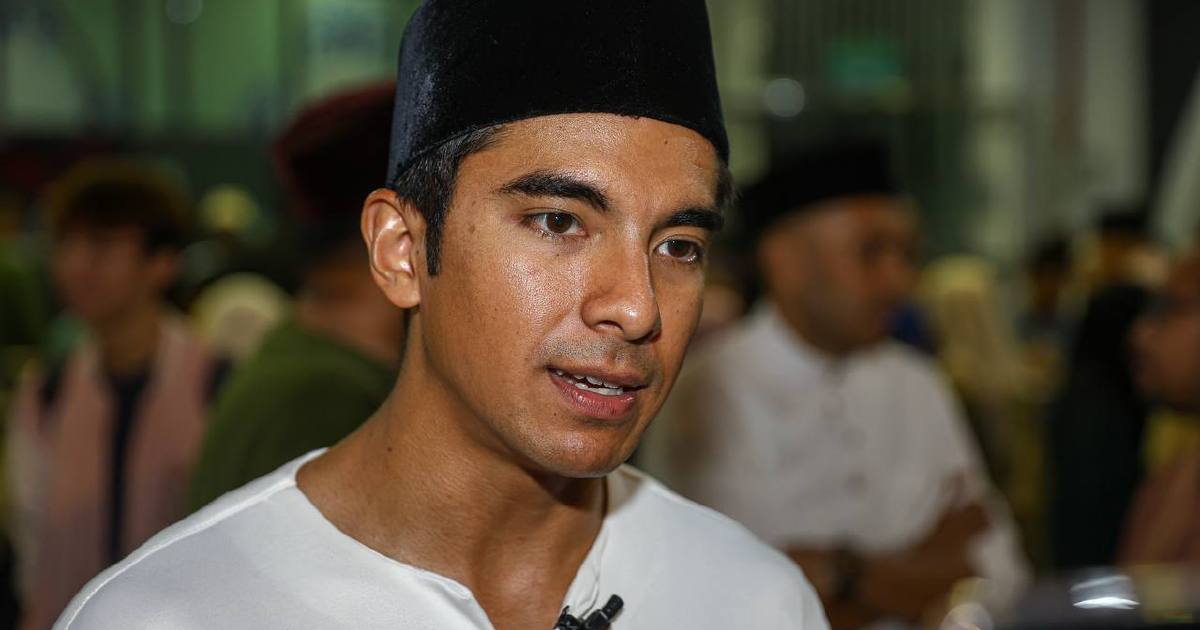
The political fortunes of Syed Saddiq Barisan Melaka now rest with Malaysia's apex court as the Federal Court prepares to deliver a judgment that could fundamentally alter the trajectory of his career and influence the broader dynamics of the country's opposition movement. The former youth and sports minister has adopted a posture of quiet resignation ahead of the verdict, expressing that he has submitted the matter to God's will—a characteristic response from a politician facing an uncertain legal outcome that extends far beyond personal consequences.
Syed Saddiq's predicament stems from electoral offences that have shadowed his political ambitions since his meteoric rise within the Malaysian political establishment. At one point heralded as a youthful reformer and moderniser within the ruling coalition, his standing deteriorated following allegations of financial impropriety related to campaign financing. The charges he faced carried potential implications for his eligibility to hold elected office, making the forthcoming court decision consequential not merely for his personal circumstances but for the institutional framework governing political participation in Malaysia.
The timing of this case reflects a broader pattern of legal and electoral contestations that have characterised Malaysian politics over the past five years. Questions surrounding the legitimacy of certain politicians and the application of electoral laws have become increasingly prominent, often intersecting with the country's complex factional alignments and coalition politics. For Syed Saddiq specifically, his transition from being a cabinet minister under the previous government to his current legal difficulties illustrates the volatility of Malaysian political fortunes and the vulnerability of individual politicians to shifting institutional and electoral circumstances.
Regional observers note that the outcome carries implications extending beyond Syed Saddiq's personal trajectory. Malaysian opposition politics has fragmented considerably since 2022, with competing claims to reformist credentials and struggles over party machinery and grassroots support. Should the Federal Court rule against Syed Saddiq, it would remove a figure who has maintained some capacity to appeal to younger, urban voters—a demographic segment that remains contested ground between opposition and government coalitions. Conversely, a favourable ruling could position him as a rehabilitated political actor capable of bridging generational divides within opposition ranks.
The uncertainty surrounding Malaysian electoral law and its interpretation has become a recurring concern for domestic analysts and international observers alike. Cases involving political eligibility determinations have occasionally provoked questions about judicial consistency and the evidentiary standards applied to assess candidate fitness. This particular case, involving a relatively high-profile political figure, provides another opportunity to observe how Malaysia's courts navigate the intersection of technical legal requirements and the practical realities of party politics.
Syed Saddiq's own positioning ahead of the judgment demonstrates the political calculus required of Malaysian politicians navigating contested legal terrain. By invoking divine will and refraining from aggressive public advocacy regarding his case, he has attempted to maintain dignity while signalling acceptance of judicial authority—a necessary balancing act for any politician whose legal standing determines future viability. This approach also reflects the religious and cultural dimensions that characterise Malaysian political discourse, where appeals to faith provide both a genuine expression of conviction and a publicly resonant framing for acceptance of adverse outcomes.
Within his party structure, subordinates and allies have maintained careful silence, avoiding the appearance of mounting pressure on the judiciary while signalling their continued support and investment in his political future. This restraint itself communicates important information about how various political factions assess the likely outcome and calibrate their own strategies accordingly. The absence of vocal public campaigns demanding his vindication suggests some resigned acceptance of the judgment's potential direction.
From a comparative Southeast Asian perspective, Malaysia's handling of such cases contributes to its broader governance reputation within the region. The transparency and perceived fairness of judicial determinations regarding political eligibility influence investor confidence and international perceptions of institutional stability. Legal controversies touching on election integrity and candidate qualification thus carry consequences extending beyond domestic political rivalries to encompass the country's international standing and credibility.
Looking ahead, irrespective of the Federal Court's direction, the decision will ripple through opposition party calculations regarding candidate selection, coalition strategies, and the broader battle for control of legislative space. If Syed Saddiq emerges legally unencumbered, his rehabilitation could provide opposition factions with a recognisable reformist figure. Should the court rule against him, opposition parties will confront the necessity of developing alternative leaders capable of mobilising younger constituencies increasingly sceptical of traditional political hierarchies.
The resolution of this case will mark another data point in Malaysia's evolving narrative regarding judicial independence, political accountability, and the mechanisms through which electoral competition occurs. For Syed Saddiq himself, whatever the outcome, the experience underscores the precarious position of individual politicians in Malaysian party systems where factional allegiances and institutional circumstances can shift with remarkable speed. His invocation of God's will, while perhaps reflective of genuine faith, ultimately acknowledges that his political future now rests entirely beyond his personal capacity to influence—a position that many Malaysian politicians have occupied and that few navigate without experiencing permanent diminishment of their influence.

