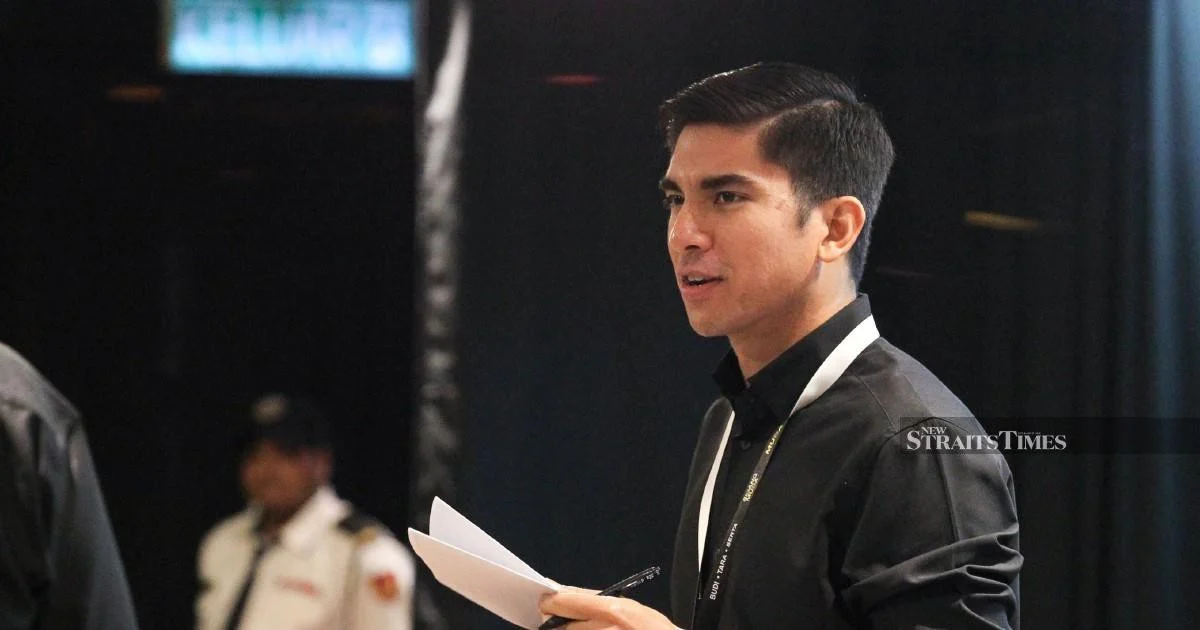
The Muar member of parliament, Syed Saddiq Syed Abdul Rahman, has announced plans to dedicate RM115,000 derived from a newly acquired part-time role directly to advancing his constituency's interests and infrastructure. This commitment represents a tangible effort by the young politician to bridge parliamentary responsibilities with local community engagement, a balancing act increasingly scrutinised in Malaysian politics as lawmakers juggle multiple income sources.
The decision to channel the entirety of his side income to Muar reflects a growing recognition among constituency representatives that transparent financial management builds public trust. In recent years, Malaysian politicians have faced mounting criticism over perceived conflicts of interest when maintaining commercial or advisory roles while serving in parliament. By publicly pledging to redirect this income to constituency work, Syed Saddiq is positioning himself within a faction of lawmakers who emphasise accountability in their financial arrangements.
Muar, located in the southern state of Johor, encompasses diverse communities ranging from urban centres to rural agricultural areas. The constituency faces persistent development needs including infrastructure maintenance, youth employment programmes, and small business support initiatives. The RM115,000 allocation provides meaningful resources for targeted interventions, though the scale of funding also highlights ongoing challenges in matching constituency demands with available parliamentary resources.
Syed Saddiq's announcement carries particular significance given his profile as a reform-oriented politician who has championed transparency and anti-corruption measures throughout his political career. His public commitment to earmarking this income demonstrates alignment between his stated principles and personal financial conduct—a consistency that supporters argue distinguishes him within Malaysia's political landscape. Conversely, the announcement itself may be viewed by some observers as a calculated public relations move designed to preempt criticism before it materialises.
The identification of a concrete figure—RM115,000—suggests Syed Saddiq has already secured the new part-time position and can forecast his earnings with reasonable certainty. The specificity differentiates this announcement from vague pledges to support constituencies, offering constituents a baseline expectation for incoming development assistance. However, details regarding the nature of the part-time engagement, its duration, and potential expansion remain unspecified in available information.
For Malaysian readers tracking parliamentary conduct, this development intersects with broader conversations about legislative remuneration and supplementary income. Many MPs maintain diverse income sources including directorships, consultancies, and professional practices, arrangements technically permissible under parliamentary rules but occasionally generating controversy when perceived as creating divided loyalties. Syed Saddiq's move suggests an attempt to navigate this grey area by maintaining transparency about the existence and disposition of additional earnings.
The Muar constituency has historically experienced competitive electoral contests, with demographic shifts and shifting political allegiances creating dynamic representation challenges. Syed Saddiq's visible investment of personal resources signals confidence in retaining his seat while simultaneously addressing constituent grievances. Whether this strategy translates into electoral advantage remains speculative, though research on Malaysian voting behaviour suggests that tangible constituency development projects do influence voter perceptions of representative effectiveness.
From a regional perspective, Southeast Asia's democratic practitioners increasingly grapple with balancing parliamentary transparency against preserving private sector participation among elected officials. Syed Saddiq's approach offers one model for resolving this tension, though implementation consistency over time will determine whether such commitments generate genuine systemic change or merely constitute isolated gestures.
The allocation methodology—whether through direct personal disbursement, formal constituency development initiatives, or established charitable frameworks—remains to be clarified. Different delivery mechanisms carry distinct implications for accountability, bureaucratic efficiency, and constituent accessibility. Transparent mechanisms enabling constituent input into spending priorities would strengthen the legitimacy and impact of the RM115,000 investment compared to unilateral parliamentary allocation decisions.
Looking forward, Syed Saddiq's commitment invites scrutiny regarding follow-through and outcomes. Constituents and observers will assess whether the promised RM115,000 materialises in visible community benefits and whether the model extends beyond this single initiative. Should implementation prove successful and transparent, the approach could establish precedent for parliamentary conduct expectations across Malaysia's broader legislative ecosystem, contributing to incremental shifts toward more stringent accountability standards.

