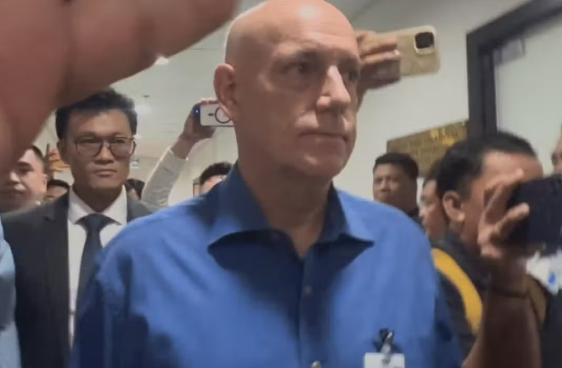
Tab Baldwin, the former head coach of Ateneo de Manila University's men's basketball team, has made his long-awaited appearance before the National Bureau of Investigation on Tuesday afternoon, arriving at the agency's Homicide Division at approximately 1:45pm. The meeting comes after Baldwin's repeated absences from scheduled questioning sessions, raising questions about the pace and cooperation in the high-profile investigation into the deaths of two young athletes during a team activity. Baldwin was accompanied by his legal representative, Karl David, and remained at the bureau's offices as of the time of reporting.
The investigation centres on the drowning deaths of Rene Baterbonia and Divine Adili, both Ateneo basketball players, who lost their lives during a team-building activity in Dipaculao, Aurora, earlier this month. The incident has generated substantial public concern and scrutiny, given the involvement of a prestigious educational institution and questions surrounding the circumstances that led to the tragedy. The deaths have prompted parallel investigations by both the National Bureau of Investigation and the Philippine National Police-Criminal Investigation and Detection Group, reflecting the seriousness with which authorities are treating the matter.
Baldwin's appearance on Tuesday represents his first direct engagement with NBI investigators after two previous no-shows. The former coach had initially failed to appear on June 16, with his legal counsel subsequently claiming that Baldwin was in poor physical condition and unable to attend the proceedings. This absence raised eyebrows among observers tracking the investigation's progress, particularly given the importance of obtaining statements from those directly involved in or responsible for the activities that preceded the drowning incident.
A second scheduled appointment on June 19 was also missed by Baldwin, though on that same day he chose instead to give his statement to investigators from the Philippine National Police-Criminal Investigation and Detection Group. This selective approach to questioning—appearing before one agency while absent from another—created an apparent inconsistency in his cooperation with the parallel investigations. The strategic timing and Baldwin's apparent preference for one investigative body over another have added a layer of complexity to understanding the progression of the case.
NBI Director Melvin Matibag has indicated that a key aspect of Tuesday's meeting involves comparing Baldwin's account as provided to the NBI with the testimony he previously delivered to the CIDG on Friday. This comparative analysis is intended to identify any discrepancies or variations in his statements across the two investigations, which could prove significant in establishing a comprehensive understanding of what occurred during the fateful team activity. Such consistency checks are standard investigative practice, particularly in cases involving potential negligence or improper safety protocols.
The involvement of two separate investigative agencies, while ensuring thorough scrutiny, has also highlighted the complexity of the case and the multiple jurisdictions and concerns at play. The NBI's Homicide Division typically handles serious cases with potential criminal implications, while the CIDG's involvement reflects the police system's interest in the matter. Their parallel probing suggests that investigators are considering various angles regarding culpability and the circumstances surrounding the deaths.
Baldwin's tenure as head coach at Ateneo de Manila University positioned him as a prominent figure in Philippine basketball circles, and his potential legal jeopardy in connection with the deaths has attracted considerable media attention. The coach's legal team's emphasis on his health condition as the reason for previous absences may signal a broader strategy of demonstrating that any statements made should be considered within the context of his physical well-being at the time of questioning, potentially affecting how evidence is weighted or interpreted.
The National Bureau of Investigation has publicly committed to concluding its investigation into the deaths of the two Ateneo basketball players by the end of the week, indicating that a determination regarding charges or administrative findings could be forthcoming soon. This timeline suggests that investigators have substantially completed their fact-gathering and are now in the final analysis phase of the inquiry. The conclusion of the NBI's formal investigation would represent a significant milestone in the case, potentially leading to recommendations regarding prosecution or disciplinary action.
The drowning tragedy has raised broader questions within Philippine collegiate sports about team activity safety protocols, supervision standards, and institutional accountability. These questions extend beyond the specific circumstances of the Ateneo incident and have implications for how other educational institutions conduct off-campus or water-based team activities. The investigation's outcome will likely influence future guidelines and practices across the collegiate sports landscape in the Philippines.
For Malaysian observers of Philippine sports and higher education, the case underscores the importance of robust safety frameworks and the liability that coaches and institutions assume when organizing team activities. The procedural challenges evident in the investigation—including Baldwin's multiple absences and the complications of parallel inquiries—also reflect broader issues with coordinating investigations across multiple Philippine law enforcement agencies, a concern that extends to the region more broadly.

