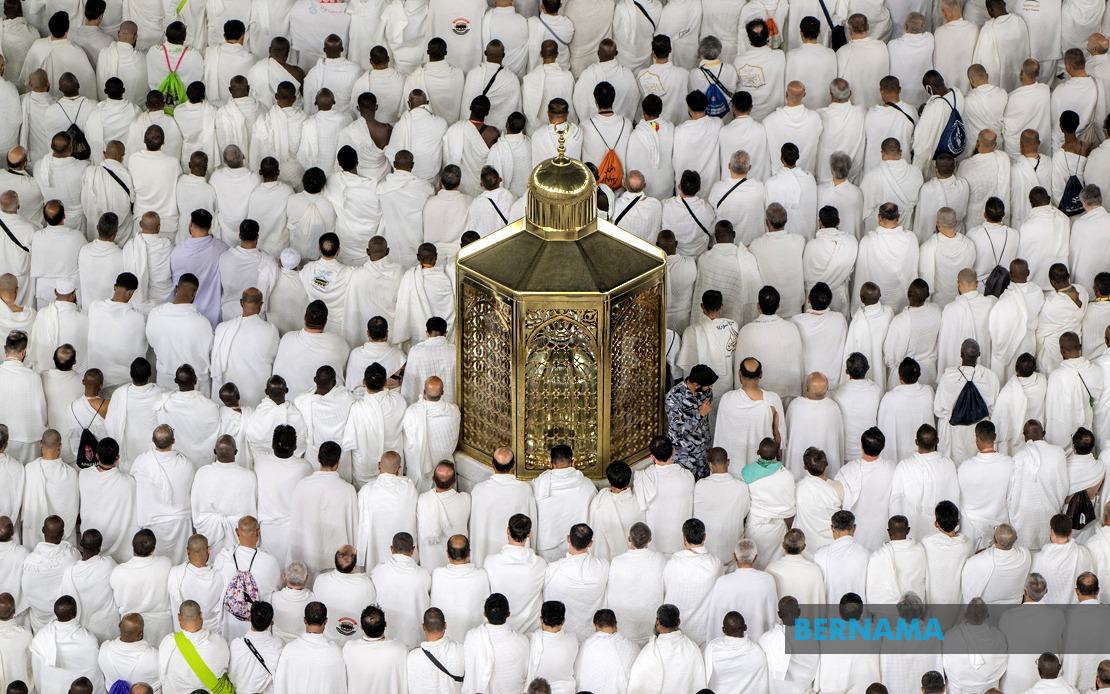
Tabung Haji will persist with its established queue-based system for allocating hajj opportunities, rejecting proposals to create expedited pathways for specific groups of depositors. The decision reflects the organisation's commitment to maintaining impartiality across its entire membership base, which includes millions of Malaysians saving towards performing the Islamic pilgrimage.
Marhamah Rosli, Deputy Minister in the Prime Minister's Department (Religious Affairs), outlined the reasoning during parliamentary proceedings on July 13. She explained that introducing preferential categories would undermine the integrity of the existing waiting list and create disadvantages for those who have accumulated seniority through years of patient contribution and saving. The first-registered, first-served principle ensures that length of membership and dedication to saving directly correlates with pilgrimage opportunity, rather than subjective criteria that might favour certain demographic groups.
The comments responded to a parliamentary question from Abdul Latiff Abdul Rahman (PN-Kuala Krai), who had inquired whether the government would consider creating a special hajj allocation for retiring public servants receiving gratuity payments. The proposal acknowledged that compulsory retirees often possess immediate financial capacity to fund their pilgrimage but face protracted waiting periods due to their later entry into the savings scheme. Despite the apparent logic of such an arrangement, Marhamah dismissed it as incompatible with established fairness protocols.
Transparency and equity form the stated pillars of Tabung Haji's administrative approach, according to the deputy minister. These principles guide how the organisation communicates with depositors about their anticipated hajj year and encourages financial and spiritual preparation across the eligible population. Every member receives advance notice of their expected opportunity, allowing individuals years to arrange healthcare assessments, complete hajj education programmes, and accumulate necessary funds beyond their Tabung Haji savings.
This year, Tabung Haji introduced a new financial requirement affecting all prospective pilgrims. Applicants must now maintain a minimum savings balance of RM15,000 before receiving their hajj offer letter, although the complete pilgrimage package costs RM33,300. This additional threshold aims to ensure that selected pilgrims possess adequate resources to cover the full expense without financial hardship, protecting both individual pilgrims and the broader hajj experience from complications arising from inadequate funding.
For depositors not yet eligible for hajj offers, Tabung Haji maintains an appeal mechanism allowing members to request early consideration based on specific circumstances. These petitions undergo individual assessment against established criteria rather than blanket exemptions, preserving the principle that exceptions remain exceptional rather than becoming routine loopholes undermining the queue system.
Malaysia's hajj capacity remains constrained by Saudi Arabian quota allocations, which determine the maximum number of pilgrims each nation may send annually. For this year's hajj season, the kingdom approved 31,600 pilgrims from Malaysia, a figure that Marhamah characterised as the official entitlement subject to Saudi discretionary adjustment. The Saudi government retains absolute authority over quota distribution and any supplementary allocations, reflecting its sovereign control over the pilgrimage infrastructure and religious oversight of the annual event.
Despite these limitations, Tabung Haji pursues additional quota increments through annual applications to Saudi authorities, acknowledging the persistent gap between Malaysian demand for hajj opportunities and available places. The organisation recognises that demographic growth and increasing prosperity among the Malaysian Muslim population continuously expand the pool of potential pilgrims, creating sustained pressure on existing allocations that no domestic policy adjustment can independently resolve.
Security and fraud prevention represent parallel concerns within the hajj administration framework. During the 1447 Hijrah hajj season, the dedicated Haj Fraud Task Force comprising Tabung Haji, the Royal Malaysia Police, and the Ministry of Tourism, Arts and Culture documented zero reported fraud cases affecting hajj packages. This achievement reflects intensified enforcement mechanisms and widespread public education initiatives, particularly the "No Visa, No Haj" campaign, which reinforces the Saudi Arabian government's mandatory "No Haj Without Permit" policy.
The fraud prevention success demonstrates that coordinated institutional effort and public awareness can effectively deter opportunistic schemes that historically targeted pilgrims through fraudulent package offers and counterfeit documentation. Malaysian authorities view this alignment with Saudi requirements as mutually beneficial, as it protects pilgrims from scams while ensuring Malaysia's compliance strengthens its credibility within the kingdom's pilgrimage administration.
For Malaysian Muslims navigating the hajj system, the maintenance of the first-registered, first-served principle provides predictability and transparency regarding their eventual opportunity. While waiting periods for many depositors extend across decades, the elimination of discretionary categories ensures that advancement depends solely on savings tenure rather than political connections, administrative favour, or demographic characteristics. This approach, while sometimes frustrating to those facing long queues, establishes a clear framework wherein persistence and financial commitment yield measurable progress toward pilgrimage eligibility.
The broader regional context reveals varying approaches to hajj administration across Southeast Asia, with different nations employing distinct methodologies for allocating limited Saudi quotas among expanding Muslim populations. Malaysia's commitment to queue-based fairness contrasts with alternative systems elsewhere, positioning the country's approach as emphasising equity over flexibility. As demand for hajj opportunities continues expanding throughout the Islamic world, the decisions that nations make regarding allocation principles will increasingly reflect their fundamental values regarding justice and institutional impartiality.

