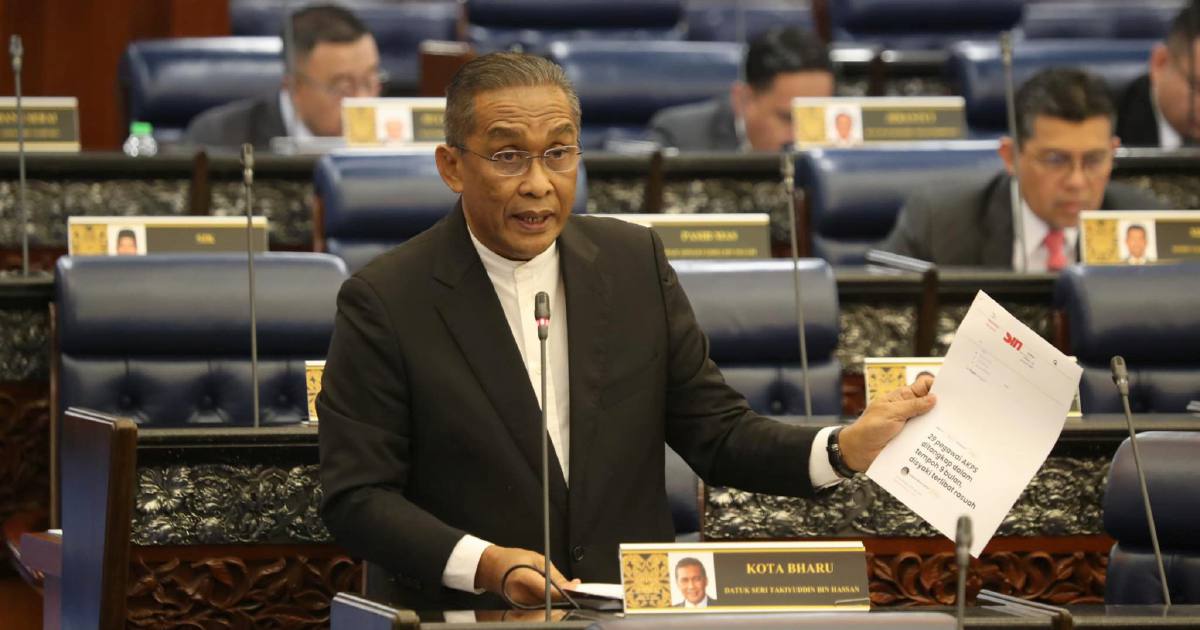
Opposition chief whip Datuk Seri Takiyuddin Hassan has made a formal request for the special parliamentary sitting dedicated to examining the Royal Commission of Inquiry (RCI) report on Tabung Haji to be rescheduled. His stated reason is that Prime Minister Datuk Seri Anwar Ibrahim should be present during the crucial debate, suggesting the matter is significant enough to warrant the head of government's direct participation in the proceedings.
The call to postpone reflects broader parliamentary protocol considerations and the importance attached to debates involving major institutional reviews. Takiyuddin's intervention highlights how the timing of parliamentary business remains subject to political negotiation and tactical decisions, even when scrutiny of sensitive institutions like Tabung Haji is at stake. The opposition's positioning on this matter may carry strategic implications for how the findings are ultimately discussed and addressed by lawmakers.
Tabung Haji, Malaysia's pilgrimage fund that manages investments and savings for Muslims performing the hajj, has been under scrutiny following concerns about its financial performance and governance. The establishment of the RCI underscores the seriousness with which authorities have treated questions surrounding the institution's management and accountability. The inquiry's findings are expected to shed light on matters that have captured public attention, particularly among the millions of Malaysians who maintain savings accounts with the fund.
The timing of parliamentary debates on RCI reports typically carries weight, as they often lead to legislative action or policy adjustments. In this instance, Takiyuddin's suggestion that the Prime Minister's attendance is necessary implies that substantive governmental responses or commitments may emerge from the discussion. The opposition chief whip's positioning could be seen as a way to ensure maximum ministerial accountability and direct engagement with the inquiry's conclusions.
Anwar Ibrahim's current absence from Parliament, which prompted Takiyuddin's postponement request, reflects either parliamentary recess schedules or official duties requiring the Prime Minister's attention elsewhere. Regardless of the reason, the opposition's emphasis on waiting for his return signals that this is not regarded as routine parliamentary business but rather as a matter warranting executive-level engagement. This framing could influence both the scope and depth of parliamentary discussion when it ultimately occurs.
The dynamics surrounding the Tabung Haji RCI debate illustrate how institutional scrutiny in Malaysia's Westminster-based parliament operates within a framework of political negotiation and procedural consideration. Opposition parties maintain instruments to influence parliamentary scheduling and emphasis, whilst the government balances multiple demands on executive time. These competing interests create a rhythm of parliamentary business that reflects broader political considerations beyond the technical substance of any single issue.
For Malaysian savers who depend on Tabung Haji for their pilgrimage and investment needs, the parliamentary examination of the RCI report carries practical significance. Any recommendations emerging from the inquiry could potentially affect how the fund operates, how investments are managed, or what governance safeguards are implemented. The public has maintained keen interest in Tabung Haji's affairs, making parliamentary accountability mechanisms particularly relevant.
The postponement request also underscores the evolving relationship between Malaysia's opposition and government in the post-2022 political restructuring. Rather than obstruction for its own sake, Takiyuddin's move appears calibrated to ensure robust governmental engagement rather than to block the debate entirely. This reflects a more sophisticated parliamentary opposition approach focused on substantive accountability rather than purely partisan confrontation.
Should the debate proceed after Anwar's return, it will likely address the RCI's specific findings regarding Tabung Haji's investment decisions, financial governance, and any lapses or irregularities identified during the inquiry. The presence of the Prime Minister would enable direct questioning on whether the government intends to implement recommendations or pursue remedial action. This enhanced accountability mechanism justifies, in the opposition's view, the temporary postponement.
The situation also reflects how Malaysian parliament operates amid competing institutional demands. Multiple government agencies require ministerial attention simultaneously, necessitating careful scheduling of parliamentary business. The opposition's recognition that certain debates warrant full governmental attendance demonstrates a pragmatic approach to parliamentary oversight that prioritizes effectiveness over procedural speed.
Looking forward, the eventual parliamentary sitting on the Tabung Haji RCI will likely generate significant public interest and media coverage. The quality of parliamentary scrutiny will depend partly on the thoroughness of the inquiry itself, but also on how effectively lawmakers engage with the findings and what commitments ministers make during the debate. Takiyuddin's call for postponement, therefore, may ultimately serve to enhance the accountability process by ensuring maximum governmental presence and preparedness for substantive parliamentary engagement.

