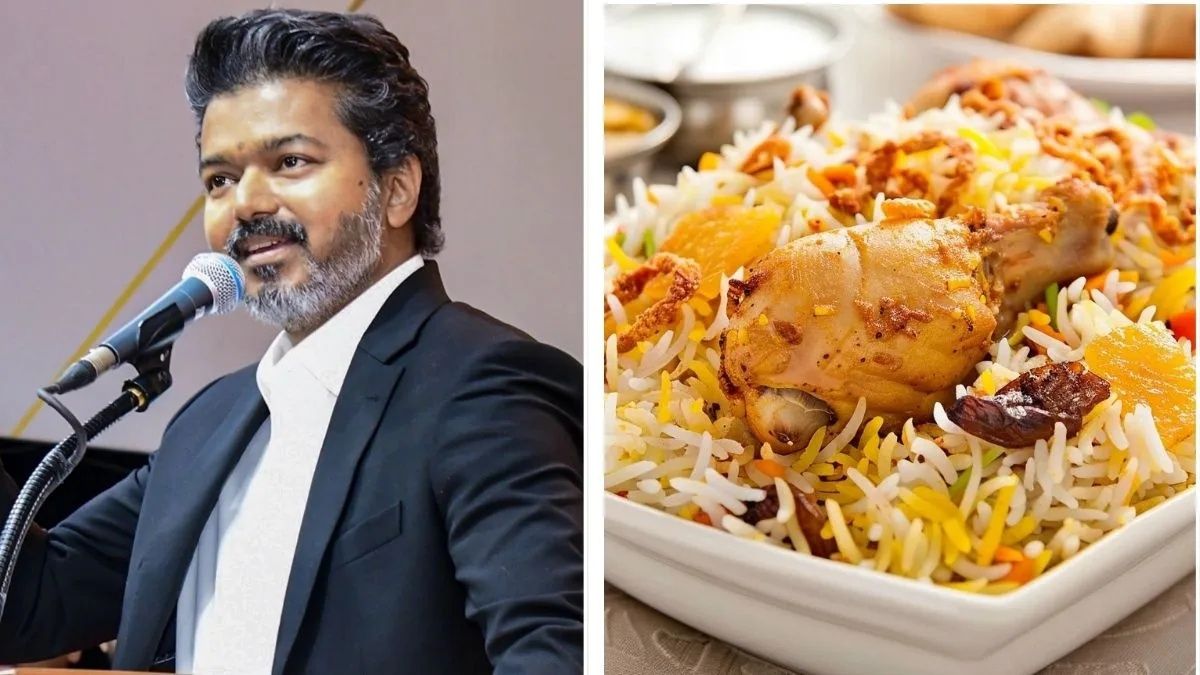
Tamil Nadu's government school lunch programme could be substantially enriched if a proposal currently under review progresses to implementation. School Education Minister A. Rajmohan has confirmed that the state government is seriously considering introducing chicken biryani as a weekly menu item under the midday meal scheme, a staple of India's public education nutrition strategy. The proposal, already submitted to the Chief Minister's office, emerged from intensive discussions with representatives of more than 80 teacher associations during a pre-budget consultation meeting held in late July.
The timing of this initiative reflects the state's broader reassessment of how it supports student welfare ahead of the Tamil Nadu state Budget presentation scheduled for early August. The inclusion of chicken biryani would mark a notable shift in meal variety and nutritional composition for students across government schools, particularly in a state where rice-based meals dominate the current lunch offerings. However, officials have signalled that final approval will require coordination between multiple government departments, specifically the Social Welfare and Women Empowerment Department, which oversees implementation of the noon meal scheme. This bureaucratic requirement suggests the proposal, while viewed sympathetically by education authorities, remains subject to budgetary and administrative considerations.
The chicken biryani proposal formed just one element of a comprehensive reform agenda articulated by teacher associations during their consultation with the government. Educators pressed the administration to upgrade the quality of rice supplied to schools, arguing that improved ingredient standards would enhance both nutritional value and appeal to students. This focus on ingredient quality reflects a recognition that midday meal schemes, while crucial for food security and student attendance, have historically struggled with perceptions of poor or monotonous fare. By combining enhanced rice quality with the introduction of more appetising dishes like biryani, the state could simultaneously address nutrition and palatability concerns.
The expansion of existing nutrition programmes emerged as another major theme in the negotiations. Currently, the Chief Minister's Breakfast Scheme extends only to Classes 1 through 8, reaching approximately 32 lakh children following a recent expansion of the initiative. The midday meal scheme, meanwhile, operates only up to Class 10 and serves roughly 40 lakh students. Teacher associations have repeatedly pressed the government to extend both schemes to cover students through Class 12, arguing that this would benefit an additional 8 lakh adolescents during critical developmental years. This demand carries particular weight in the context of school dropout rates and nutrition-related health disparities that disproportionately affect older students from economically disadvantaged backgrounds.
Beyond nutrition, teacher groups used the consultation to advance long-standing workplace and professional demands that have accumulated over years of engagement with successive governments. The question of regularising the services of noon meal workers—those who prepare and serve school lunches—emerged as a priority issue, reflecting concerns about precarious employment and inadequate compensation for workers performing essential functions. Associations also requested that management of the Chief Minister's Breakfast Scheme be transferred from current administrative structures to noon meal workers, a proposal that would fundamentally reshape how the programme operates and potentially enhance employment security for this vulnerable workforce.
The Special Teacher Eligibility Test (TET) dispute represents perhaps the most contentious issue on the education reform agenda. Following a Supreme Court ruling that declared TET mandatory for eligible teaching appointments, the state initiated special examinations. However, teacher associations contend that the test framework as currently configured disadvantages experienced educators. They have demanded that the government provide weightage for teaching experience, reduce qualifying marks, and establish uniform pass marks across all communities. A. Mayavan, heading the Tamil Nadu High and Higher Secondary School Graduate Teachers' Association, articulated the unions' core argument: the special TET should facilitate the continuation of service for existing educators, not function as a recruitment mechanism for new teachers, and therefore should acknowledge and reward pedagogical experience accumulated over years in the classroom.
The question of pay equity for secondary grade teachers represents another enduring grievance. Teacher associations have repeatedly called for equal pay for equal work across different categories of secondary educators, a demand that touches on fundamental principles of fairness and professional recognition. Similarly, associations have sought increased maintenance grants for government schools, resources essential for maintaining infrastructure, facilities, and learning materials that directly impact educational quality. These financial demands, while routine in labour negotiations, take on particular significance in the Indian context where government school funding often lags behind actual operational needs.
Minister A. Rajmohan's response to the teacher associations signalled a receptive posture toward their concerns, though his emphasis on process rather than specific commitments reflected bureaucratic prudence. He announced that the government would digitise all representations submitted during the consultation and categorise them to accelerate resolution of grievances. This undertaking, while potentially valuable for administrative efficiency, represents a mechanism for organisation rather than a commitment to specific outcomes. By pledging to prioritise demands and address as many issues as possible, the Minister acknowledged the legitimacy of teacher concerns while maintaining flexibility regarding implementation timelines and budgetary allocations.
The proposal to introduce chicken biryani must be understood within this broader context of education sector pressures and competing resource demands. For Tamil Nadu, a state with significant government school enrolment and a history of relatively robust public education investment, the proposal carries symbolic significance beyond its immediate nutritional impact. It represents a willingness, at least rhetorically, to modernise school meal programmes and move beyond purely functional approaches to student nutrition. Whether the proposal achieves implementation will depend on budget allocations, inter-departmental coordination, and the government's capacity to balance teacher sector demands against broader fiscal constraints.
For Malaysian observers, the Tamil Nadu situation illuminates ongoing challenges in managing government school nutrition and employment in South Asia. Malaysia's own school feeding programmes, while differently configured, face comparable pressures to enhance quality, expand coverage, and address worker welfare. The experience of Tamil Nadu suggests that education stakeholders increasingly view nutrition and employment conditions as integrated elements of overall school quality rather than peripheral welfare functions. The state's willingness to engage substantively with teacher associations, despite bureaucratic complexities, also reflects broader trends across South Asia toward more consultative governance mechanisms in education policy. As Tamil Nadu proceeds with its budgetary deliberations, the fate of the chicken biryani proposal and the broader reform agenda will offer instructive lessons regarding the feasibility of school sector transformation in resource-constrained contexts.

