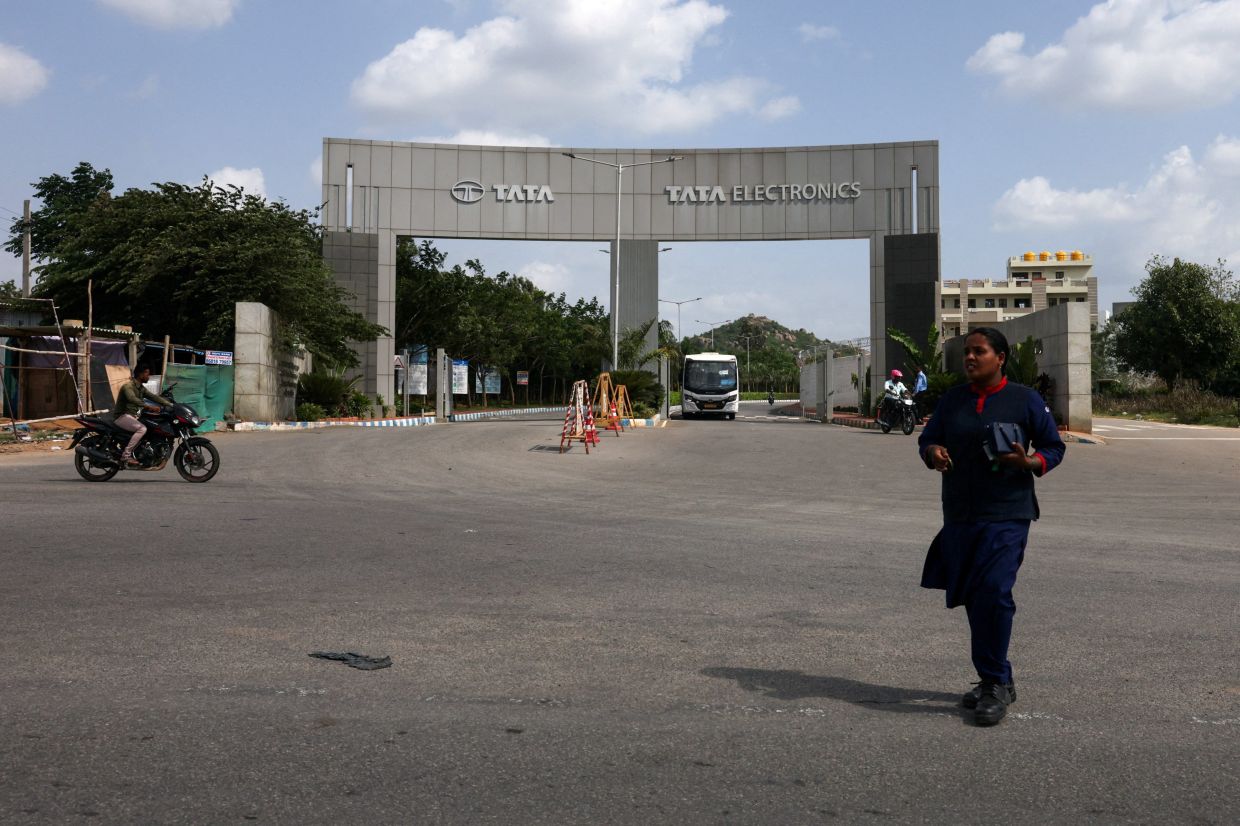
A significant cybersecurity incident at Tata Electronics has exposed confidential design specifications and trade secrets belonging to Apple and Tesla, raising fresh concerns about the security of India's rapidly expanding electronics manufacturing sector. The breach, detected by Tata earlier this month, has resulted in a ransomware group known as World Leaks publishing more than 200,000 files—totalling over 630 gigabytes—on the dark web, according to security researchers who reviewed the stolen data for Reuters. The incident marks a serious challenge to India's broader industrial ambitions and underscores the vulnerability of companies managing increasingly complex global supply chains.
Tata Electronics, which has become one of Apple's most critical manufacturing partners outside China, confirmed the cybersecurity incident on Monday after researchers identified the data dump. In a statement to Reuters, the company said it had deployed response protocols immediately following detection and maintained that the breach had no operational impact on its business divisions. However, the incident carries significant implications beyond immediate operational concerns, touching on India's aspirations to reduce dependence on Chinese manufacturing and establish itself as an alternative production hub for the world's largest technology companies. The timing is particularly sensitive given Prime Minister Narendra Modi's flagship initiative to transform India into an electronics manufacturing powerhouse, with Tata positioned as a central pillar of this strategy.
The stolen files reportedly include comprehensive component design documents, specification papers, and internal communications related to both Apple and Tesla products currently manufactured at Tata facilities. According to cybersecurity researcher Rajshekhar Rajaharia, who examined the World Leaks database, the breach encompasses materials spanning several years, including employee passport copies, event logs, and emails from both Apple and Tesla personnel and contractors. A 52-page Apple document bearing proprietary markings detailed quality inspection standards for iPhone circuit board components, while Tesla materials included purported specifications for chargeport controllers used in upgraded Model Y vehicles and internal design drawings for Project Highland, the codename for Tesla's revamped Model 3 sedan scheduled for update in 2025.
The breach assumes particular gravity because Tata Electronics currently manufactures approximately one-third of Apple's iPhone production in India, with Foxconn handling the remainder. Tata's Hosur facility in Tamil Nadu state, which serves as the company's primary iPhone assembly plant, featured prominently in the stolen data, with 33 distinct file sets identified during searches of the World Leaks database. This concentration of Apple's Indian manufacturing capacity in a single facility creates a structural vulnerability that the cyber incident has now exposed to public view. Tata's role in Tesla production, though less officially publicized, represents an additional dimension of the breach's significance, particularly given Tesla's expansion plans in India and the strategic importance of its manufacturing partnerships.
World Leaks, the ransomware group claiming responsibility for the breach, has previously conducted similar operations against other major manufacturers, including Nike. The group's posting of Tata Electronics data on the dark web, a part of the internet inaccessible to conventional search engines, suggests a calculated attempt to maximize exposure while demanding ransom payments. A source familiar with the matter confirmed to Reuters that Tata Electronics had received a ransom demand related to the incident, though neither Tata nor Apple would comment on specific ransom details. This follows the established pattern of contemporary ransomware operations, where attackers steal sensitive data and threaten public disclosure unless payment is made, effectively holding corporate reputation hostage alongside operational concerns.
The timing of this incident compounds existing challenges for Tata's relationship with Apple. In parallel with this cyber breach, Tata Electronics faces scrutiny over alleged environmental contamination at or near its iPhone parts manufacturing facility, according to Reuters reporting. These mounting operational and reputational challenges risk undermining Tata's position as a reliable alternative to established manufacturing partners like Foxconn, particularly as Apple evaluates supply chain resilience and operational security. The convergence of environmental, cybersecurity, and operational concerns creates a complex situation that could influence Apple's future manufacturing allocation decisions, potentially impacting India's broader industrial development trajectory.
This breach is not Tata's first experience with sophisticated cyber attacks. Last year, Tata's British subsidiary Jaguar Land Rover suffered a significant cyberattack that resulted in a six-week production halt, demonstrating that even established companies with substantial resources face challenges in defending against determined threat actors. The pattern of attacks on Tata operations suggests either that the conglomerate's systems represent attractive targets for their perceived commercial value, or that underlying security architectures require strengthening. For a company positioned as a cornerstone of India's manufacturing renaissance, such incidents carry broader implications for the country's capacity to secure sensitive industrial information and maintain corporate confidence in the security of operations conducted within its borders.
Apple, which confirmed it was investigating the breach and conducting a full analysis, did not respond to requests for detailed comment. Tesla similarly remained silent on the matter. The reluctance of these companies to make public statements reflects the delicate situation facing major technology firms when supply chain partners experience security breaches. Any public criticism risks damaging relationships with manufacturing partners they depend upon, while silence permits competitors and security researchers to interpret the significance of the breach according to their own analysis. This communications vacuum allows speculation about the potential impact on product development timelines, competitive advantage in upcoming product generations, and the commercial sensitivity of exposed intellectual property.
For Malaysian readers and broader Southeast Asian stakeholders, this incident carries particular relevance as the region competes for manufacturing investment and supply chain diversification by multinational technology companies. India's emergence as an alternative to Chinese manufacturing has generated both opportunities and cautionary tales about the infrastructure, security protocols, and regulatory frameworks required to attract and retain high-value production activities. The Tata breach demonstrates that geographic diversification of supply chains, while strategically sound for risk reduction, introduces new cybersecurity vulnerabilities that require coordinated responses across borders and jurisdictions. As companies throughout Southeast Asia pursue similar manufacturing expansion, this incident provides a sobering reminder of the investment required in cybersecurity infrastructure, incident response capabilities, and regulatory oversight.
The Indian Computer Emergency Response Team, the government agency responsible for coordinating cybersecurity incident responses, has not yet publicly commented on the breach or announced any formal investigation. This absence of rapid public acknowledgment from Indian authorities contrasts with the swift detection and disclosure by Tata Electronics itself, raising questions about inter-agency coordination and the speed with which government resources are mobilized for incidents of this magnitude. Effective government response to such breaches typically requires coordination between cybersecurity agencies, law enforcement, and business regulators, alongside communication with international partners where foreign companies and potentially transnational threat actors are involved. The incident underscores the need for India to develop mature institutional responses to supply chain cybersecurity threats as manufacturing becomes increasingly central to the nation's development strategy.
The authenticity of the stolen files, while not independently verified by Reuters at the time of reporting, appears substantiated by technical details and formatting consistent with the described materials. The presence of files with standard corporate footers explicitly marked as proprietary and confidential to Apple and Tesla, combined with the technical specificity of manufacturing documentation and internal project codenames, suggests a genuine data breach rather than fabricated materials. However, the verification challenge itself highlights a broader issue in cybersecurity incident response: the difficulty of definitively establishing the scope and authenticity of breaches while investigations remain ongoing and sensitive commercial interests counsel against detailed public disclosure.
Beyond the immediate operational impacts on Tata, Apple, and Tesla, this incident carries implications for the entire Indian electronics manufacturing ecosystem and Southeast Asia's positioning in global supply chains. As countries throughout the region invest in manufacturing capacity and infrastructure to attract multinational technology companies, the Tata breach demonstrates the necessity of viewing cybersecurity not as an afterthought but as a foundational element of manufacturing infrastructure. Companies considering expansion in India, or indeed anywhere in Southeast Asia, will inevitably factor cybersecurity track records and incident response capabilities into location decisions. The incident also highlights the interconnected nature of modern supply chains, where a breach at a single facility can expose proprietary information belonging to multiple companies simultaneously, amplifying the impact and complexity of incident response.

