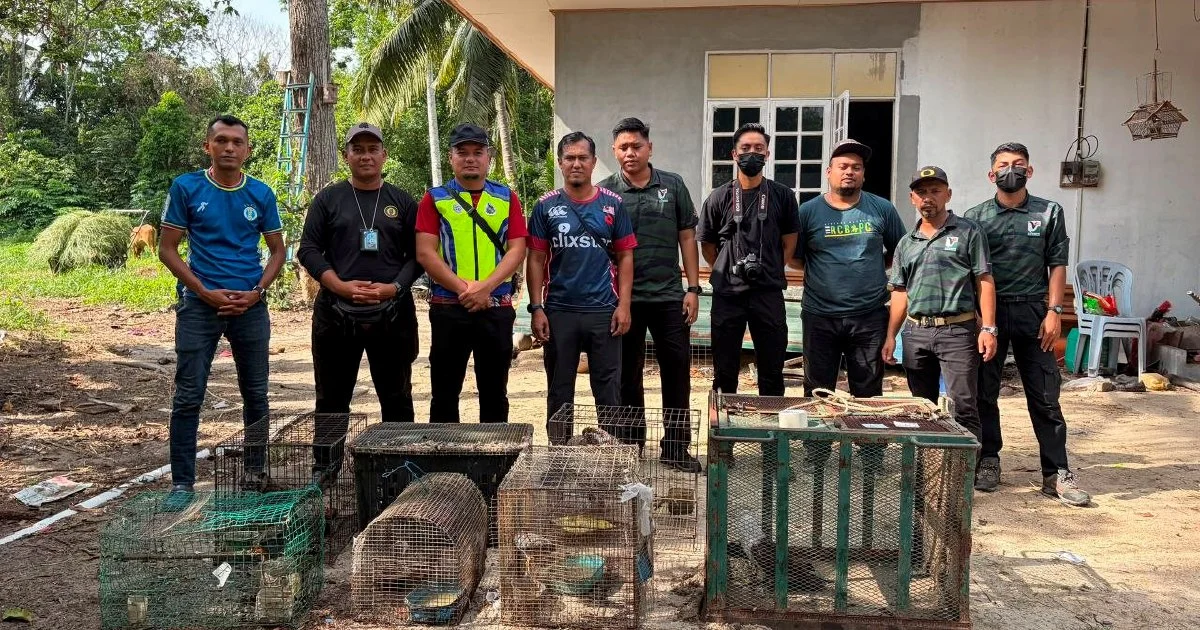
Wildlife enforcement officers in Tumpat have arrested an 18-year-old teenager following the discovery of protected animals worth approximately RM48,500 during a raid conducted today. The teenager was found in possession of four distinct species that fall under Malaysia's wildlife protection legislation, marking another significant seizure in the ongoing battle against illegal animal trafficking in the country.
The arrest underscores the persistent challenges facing Malaysian authorities in combating the illegal wildlife trade, a problem that extends beyond national borders and connects to broader Southeast Asian trafficking networks. Tumpat, located in Kelantan, sits within a region known for its biodiversity and remains a focal point for enforcement operations targeting poachers and dealers operating within the state.
The identity of the specific species seized has not been disclosed in official statements, though the substantial valuation of the animals suggests they represent high-demand creatures targeted by traffickers. Protected species in Malaysia are safeguarded under the Wildlife Conservation Act 2010, which prescribes penalties for unauthorized possession, sale, or trade. The legislation encompasses a wide range of animals, from primates and big cats to reptiles and birds, many of which command significant prices on black markets across the region and internationally.
The apprehension of a teenager reflects a troubling trend in wildlife crime where younger individuals are sometimes drawn into trafficking operations, either as couriers or collectors operating on behalf of larger criminal networks. Law enforcement agencies have increasingly noted that organized trafficking rings deliberately recruit younger participants, calculating that youth offenders may face lighter consequences within Malaysia's juvenile justice system. This discovery may therefore point to a larger supply chain rather than isolated individual criminal activity.
Enforcement operations of this nature demonstrate the commitment of Malaysia's wildlife authorities to intercept trafficking at critical junctures. Raids on suspected locations depend on intelligence gathering, community reporting, and inter-agency coordination between federal wildlife officers, state authorities, and local police units. The timing and execution of today's operation suggest that officials had received credible information warranting the intervention.
The economic value assigned to the seized animals reflects market demand in illegal trade channels. Protected species command inflated prices precisely because their capture and sale carry legal penalties and enforcement risks. Buyers spanning Southeast Asia, China, and further afield are willing to pay premium rates for rare animals destined for private collections, exotic pet markets, or use in traditional medicine industries. These economics create perverse incentives that drive poaching and trafficking despite protective legislation.
Malaysia's battle against wildlife trafficking occurs within a global context of accelerating species loss and ecosystem degradation. The United Nations and international conservation bodies have repeatedly identified wildlife trafficking as one of the world's most lucrative illegal trades, valued at billions of dollars annually. Southeast Asia remains both a source region for trafficked animals and a transit corridor for contraband moving toward final destination markets, making countries like Malaysia critical frontlines in global conservation efforts.
The legal consequences facing the arrested teenager could range considerably depending on the specific species involved, the quantities seized, and whether evidence emerges suggesting criminal intent or commercial dealing. Malaysia's wildlife laws provide for imprisonment and substantial fines. Repeat offenders and those convicted of trafficking for profit face enhanced penalties. The case will likely proceed through the courts in coming months, providing insight into how the juvenile justice system addresses wildlife crime.
This seizure adds to Malaysia's growing record of wildlife enforcement successes, though experts caution that such victories represent only a fraction of the overall trafficking problem. Many trafficking operations evade detection entirely, and enforcement resources remain stretched across vast territories. Coordinating efforts across state boundaries and international borders remains a persistent challenge, particularly given the transnational nature of modern trafficking networks that exploit weak enforcement capacity and corruption in specific jurisdictions.
The incident also highlights the importance of community vigilance and reporting mechanisms. Many successful busts emerge from tips provided by concerned citizens, local residents, or whistleblowers within criminal networks. Public awareness campaigns about the illegality of wildlife possession and the conservation imperatives behind protection laws remain crucial components of enforcement strategy alongside regulatory action.
Looking forward, the case underscores why policymakers and law enforcement continue advocating for enhanced coordination, increased funding for wildlife enforcement units, and international cooperation frameworks addressing trafficking routes. Malaysia's strategic location within biodiversity hotspots creates both opportunities and responsibilities regarding species conservation. As habitat destruction accelerates globally and demand for exotic animals continues, enforcement agencies face mounting pressure to prevent species from disappearing into illegal trade networks.

