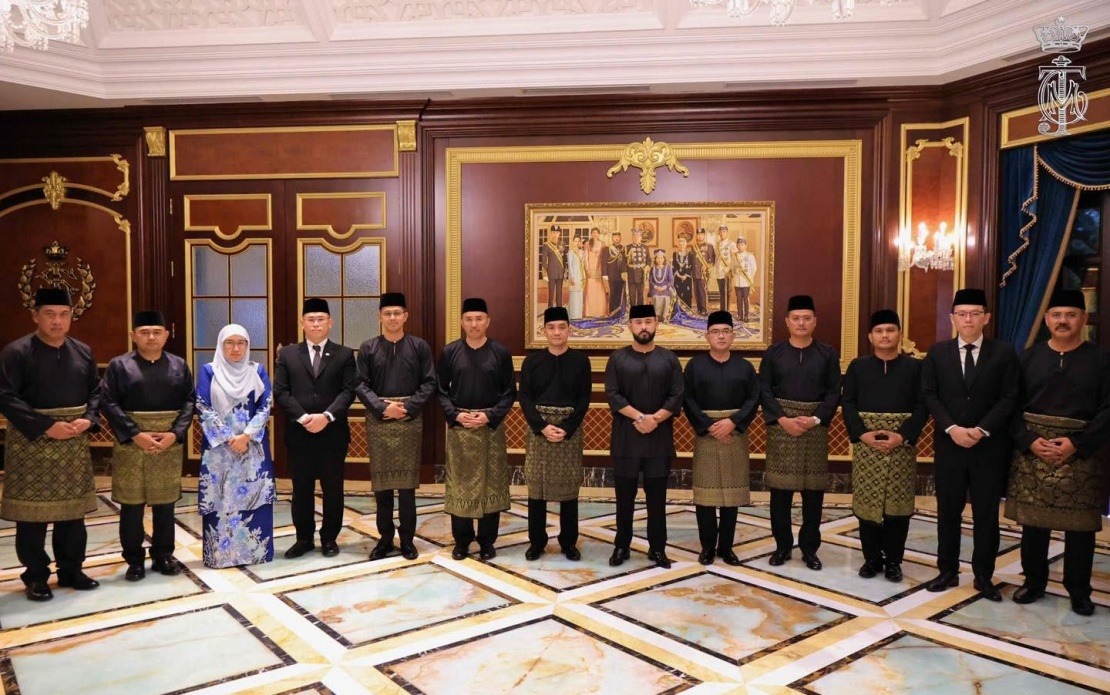
The formation of Johor's new State Executive Council took shape on July 18 when ten assemblymen took their oaths of office before the Regent of Johor, Tunku Mahkota Ismail, in a ceremony held at Istana Bukit Serene. The appointment represents the first major step in translating the coalition's electoral mandate into a functioning state administration, with the fresh executive lineup reflecting both continuity and generational change within the Barisan Nasional administration.
The newly minted Exco members comprise a mix of experienced legislators and newcomers to executive roles. Among those reappointed to ministerial responsibilities are Mohd Hairi Mad Shah representing Larkin, Datuk Mohd Jafni Md Shukor from Bukit Permai, Mohd Fared Mohd Khalid of Semerah, Ling Tian Soon from Yong Peng, Lee Ting Han representing Paloh, and Mohamad Fazli Mohamad Salleh of Bukit Pasir. These individuals bring varying degrees of administrative experience to their portfolios, having previously served in executive capacities or demonstrated significant legislative engagement.
Four assemblymen entered the executive fold for the first time, signalling an infusion of fresh perspectives into state governance. Md Israk Abdullah from Kukup, P. Pannir Selvam representing Perling, Hasrunizah Hassan of Pulai Sebatang, and Muhammad Naqib Md Ghazali from Panti round out the executive team. The inclusion of newcomers alongside seasoned administrators reflects a deliberate strategy to maintain institutional knowledge while broadening representation and introducing contemporary policy approaches to the state administration.
The ceremonial swearing-in was attended by key governmental figures, including Menteri Besar Datuk Onn Hafiz Ghazi, Royal Court Council Yang Dipertua Datuk Dr Abdul Rahim Ramli, and State Secretary Datuk Mohammed Ridha Abd Kadir. The presence of these senior officials underscored the formal significance of the occasion and established the constitutional legitimacy of the newly constituted executive council in the eyes of both the royal institution and the state bureaucracy.
The appointment ceremony concluded a sequence of political developments that began with the 16th Johor state election, which proved decisive in consolidating Barisan Nasional's dominance in one of Malaysia's most significant states. Just days before the Exco oaths were administered, Onn Hafiz had himself been sworn in as Menteri Besar for a second consecutive term, positioning him as the chief executive for what promises to be a substantial period of governance.
Onn Hafiz's personal electoral performance demonstrated the strength of the coalition's ground game in critical constituencies. The Machap assemblyman secured his seat with a majority exceeding 15,000 votes, a commanding result that signalled strong voter confidence in his leadership and the broader coalition agenda. His decisive personal victory in a traditional political stronghold helped establish psychological momentum for the broader coalition campaign across the state.
The election outcome delivered Barisan Nasional a supermajority in the Johor State Assembly, securing 48 seats out of a possible 56. This commanding position—representing more than 85 percent of parliamentary representation—provides the state administration with considerable latitude in pursuing its policy agenda and managing legislative affairs without dependence on independent or opposition cooperation. Such majorities are relatively rare in Malaysian state politics and typically signal voter approval for incumbent administrations or strong rejection of alternative coalitions.
For Malaysian and Southeast Asian observers, the Johor outcome carries significance beyond state boundaries. Johor remains economically substantial and strategically important, serving as a gateway to Singapore and a centre for manufacturing, logistics, and trade. The state's governance choices often influence regional policy direction and can affect broader national political trajectories. A strong, mandate-backed state administration in Johor therefore has implications for economic planning, cross-border cooperation, and the stability of the broader federal system.
The composition of the new Exco suggests an attempt to balance several competing priorities. The inclusion of representatives from multiple constituencies, including rural and urban areas, indicates an effort to maintain geographic representation. The demographic mix of the appointed members also reflects the state's ethnic diversity, though the specific allocation of portfolios—not disclosed in the ceremony details—will ultimately determine how effectively the cabinet represents constituent interests across the state.
The smooth transition from electoral victory to cabinet formation demonstrates institutional stability within Johor's political system. Unlike some Malaysian states where coalition negotiations drag on or prove contentious, the Johor transition occurred swiftly, suggesting either strong internal party discipline or clear pre-election agreements about cabinet composition. This efficiency may reflect the Barisan Nasional's organisational discipline in one of its traditional strongholds.
Looking forward, the Exco's effectiveness will be measured against the economic and social challenges facing Johor, including infrastructure development, manufacturing competitiveness, urban planning pressures, and integration with Singapore's economy. The balance achieved between retaining experienced administrators and introducing fresh talent will be tested as the administration confronts these complex governance issues. The coming months will reveal whether this particular configuration of leadership can translate electoral support into tangible improvements in state governance and service delivery.

