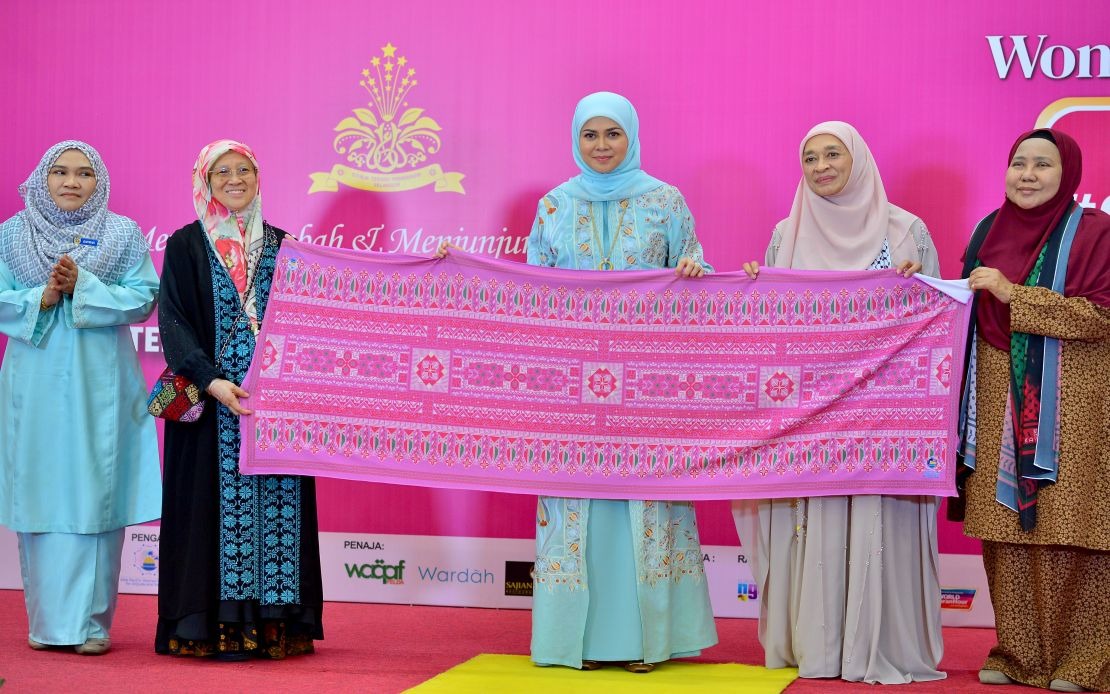
Tengku Permaisuri Norashikin officially inaugurated the Women Summit & Women #QuranHour 2026 programme at the Dahlia Auditorium within Sultan Salahuddin Abdul Aziz Shah Mosque in Shah Alam on Monday, marking a significant milestone in a grassroots initiative aimed at empowering women across Malaysia and the broader Asia-Pacific region. The royal presence underscored the importance of the gathering, which attracted approximately 400 participants representing multiple states within Selangor as well as visitors from Singapore and Indonesia, all united by a shared commitment to deepening their understanding of Islamic teachings and building personal resilience.
The event was jointly organized by Yayasan Warisan Ummah Ikhlas (WUIF) and the Asia Pacific Women's Coalition for Al-Quds and Palestine (ApWCQP), two organizations working to strengthen Islamic knowledge and advocacy across the region. Upon her arrival at 9.30 in the morning, Tengku Permaisuri Norashikin was welcomed by WUIF's chief executive officer Marhaini Yusoff and ApWCQP president Dr Fauziah Mohd Hasan, alongside other prominent figures including IIUM's Associate Prof Dr Nora Mat Zin from the Department of Psychiatry and 2014 International Quran Recitation Champion Tirmizi Ali.
Centred around the theme "Women of Grit", the programme deliberately drew inspiration from the experiences of Palestinian women, particularly those in Gaza who have maintained their faith and family structures while enduring the profound challenges of armed conflict, bereavement, displacement and material loss. This thematic choice reflects growing awareness among Malaysian Islamic organizations of the intersection between personal spiritual development and global humanitarian concerns, positioning the initiative as one that connects intimate spiritual practice with broader geopolitical consciousness among Muslim women in Southeast Asia.
The underlying philosophy of the gathering emphasizes that resilience grounded in Quranic principles extends beyond mere endurance through hardship. Programme director Gharizah Hashim articulated this nuanced understanding when explaining that the initiative seeks to cultivate women who can achieve inner calm, exercise discernment in decision-making, and move through life guided by divine revelation. Rather than promoting a stoic or reactive form of strength, the programme advocates for what might be termed "purposeful resilience"—the capacity to recover from adversity while simultaneously contributing meaningfully to family and community life.
This strategic emphasis on character development through Islamic scholarship carries particular relevance for Malaysian women navigating increasingly complex social, economic and personal circumstances. The organizers deliberately framed their work as addressing a gap in how women are supported through life's multifaceted challenges, suggesting that conventional secular approaches to wellness and empowerment may not fully address the spiritual dimensions that many Muslim women consider central to their wellbeing and decision-making. By anchoring the programme in Quranic teaching rather than secular psychology or self-help frameworks, the organizers position Islamic learning as a comprehensive tool for personal development.
The expansion strategy outlined by Marhaini signals ambitions to scale this initiative significantly beyond the Shah Alam launch. The organization plans to disseminate the Women #QuranHour 2026 agenda through Rumah Ngaji, a network of free Quranic learning circles that operate throughout Malaysia with support from local community sponsors. This decentralized model represents a deliberate shift from centralized programming toward community-embedded structures, potentially allowing the initiative to reach women in both urban and rural settings who might not otherwise have access to such organized learning opportunities. The presence of Rumah Ngaji representatives from multiple states at the inaugural summit suggests existing institutional capacity to support this expansion.
The choice to establish the programme as a sustained annual initiative rather than a one-off event reflects confidence in market demand and organizational commitment. By anchoring the work in 2026 and beyond, the organizers acknowledge that character development and spiritual resilience cannot be achieved through isolated workshops or conferences but require sustained engagement and community reinforcement. This longitudinal approach distinguishes the initiative from typical awareness-raising campaigns and positions it within a longer arc of institutional development within Malaysian Islamic civil society.
The inclusion of psychological expertise through IIUM's Dr Nora Mat Zin indicates a recognition that effective women's empowerment requires integration of Islamic scholarship with contemporary understandings of mental health and wellbeing. This interdisciplinary approach acknowledges that Quranic teachings operate most effectively when complemented by practical understanding of how people actually process trauma, build resilience, and sustain motivation through difficulties. Such integration remains relatively uncommon in Malaysia, where Islamic learning and secular psychology often operate in separate institutional domains.
The programme's explicit international dimension, drawing participants from Singapore and Indonesia alongside Malaysian women, suggests emerging regional consciousness around women's issues within Islamic communities. Rather than remaining siloed within national boundaries, these organizations are building cross-border networks that allow women to learn from one another's experiences and contexts. This regional approach proves particularly significant given the demographic diversity and different legal-political contexts affecting Muslim women across Southeast Asia, where insights from one nation can illuminate challenges faced in others.
The thematic focus on Palestinian women's experiences raises important questions about how Malaysian women's organizations situate their domestic work within global Islamic concerns. By explicitly drawing on Palestinian women's resilience as inspiration, the programme connects intimate personal development to broader struggles for Muslim dignity and autonomy globally. This positioning may appeal particularly to younger Malaysian women seeking to understand how their spiritual practices relate to contemporary geopolitical realities affecting Muslim communities worldwide, though it also carries the potential to invite political scrutiny in Malaysia's complex domestic environment.
Moving forward, the success of this initiative will likely depend on whether the programme can maintain the momentum generated by the vice-regal endorsement and successfully translate the ambitions articulated at the Shah Alam launch into sustainable structures at state and community levels. The Rumah Ngaji network provides a foundation, but translating the specialized knowledge and facilitation approaches developed for a 400-person summit into locally-managed weekly circles will require substantial investment in training, materials development and ongoing organizational support. Whether adequate resources and institutional capacity exist to support such scaling across all Malaysian states remains an open question that will determine the initiative's ultimate reach and impact.

