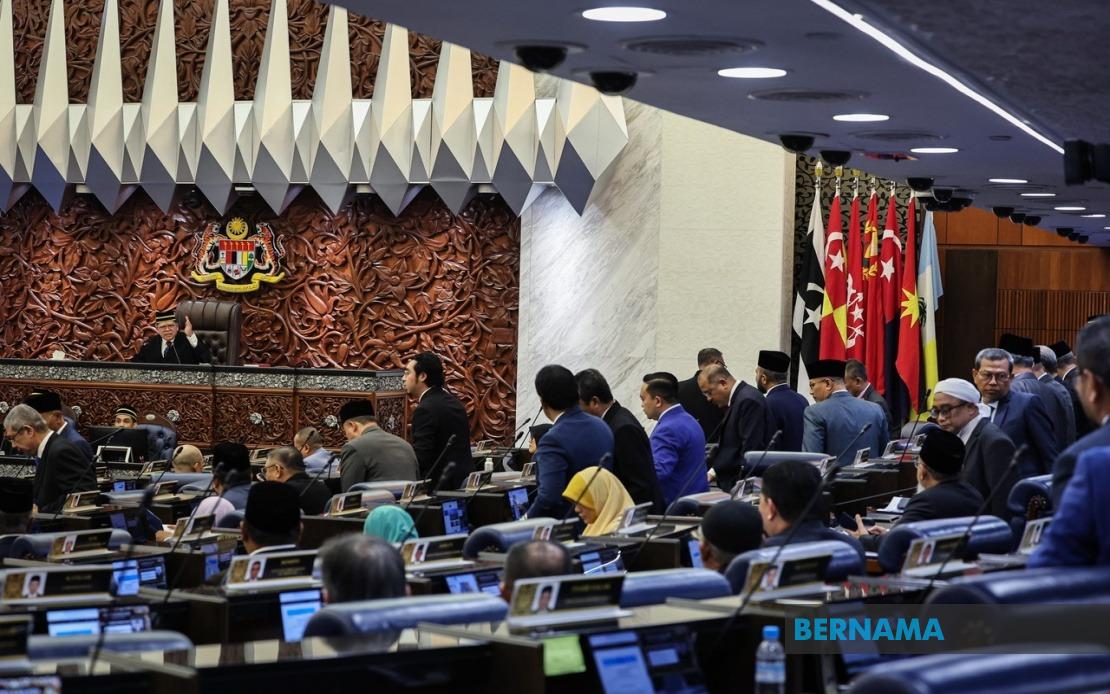
Tengku Datuk Seri Zafrul Tengku Abdul Aziz, the Prime Minister's Senior Political Adviser, has pushed back against opposition lawmakers who boycotted parliament's discussion of the Lembaga Tabung Haji (TH) Royal Commission of Inquiry report, contending that their absence from the chamber represents a dereliction of parliamentary duty. Speaking through social media on August 11, Tengku Zafrul emphasised that the special sitting on the RCI findings should not be overshadowed by the fact that the Prime Minister was not physically present in the Dewan Rakyat, arguing that the substance of the debate transcends any single individual.
The parliamentary session in question was convened to examine and deliberate on the 211-page RCI report concerning TH's management and operations spanning 2014 to 2020. Minister in the Prime Minister's Department (Religious Affairs) Dr Zulkifli Hasan tabled the findings, which had been made public on July 29 following the government's decision to release the comprehensive document to the Malaysian public. This transparency measure reflected the administration's commitment to addressing what has become one of the most significant controversies affecting the Muslim and Malay economic sector in Malaysia's modern history.
Notably, several Perikatan Nasional (PN) opposition MPs, including Opposition Leader Datuk Seri Hamzah Zainudin, chose to exit the chamber rather than participate in the substantive discussion. Their decision to walk out was replicated by PN chief whip Datuk Seri Takiyuddin Hassan and party chairman Datuk Seri Dr Samsuri Mokhtar. This coordinated withdrawal from the parliamentary process prompted Tengku Zafrul's robust critique, which sought to reframe the conversation away from personalities and towards the institutional responsibilities of elected representatives.
Tengku Zafrul's commentary underscores a fundamental principle of parliamentary democracy: that legislators have an obligation to engage with matters of significant public interest regardless of who presides over the session. He questioned the logic of opposition MPs using the Prime Minister's absence as justification for their disengagement, asking rhetorically whether the absence of the chief executive officer should somehow absolve backbenchers from their duty to listen, interrogate, and participate in national discourse. This challenge reflects broader frustrations within government circles about what is perceived as the opposition's performative rather than substantive engagement with parliamentary business.
The Tabung Haji issue represents far more than a routine governance matter. The institution manages the savings of millions of Malaysian Muslims accumulated through a dedicated savings scheme designed to facilitate religious pilgrimages and provide financial security. Allegations of mismanagement, reported investment losses, and governance failures have shaken public confidence in an organisation that holds deep cultural and religious significance for Malaysia's Muslim majority. The stakes involve not merely corporate malfeasance but questions of fiduciary responsibility towards a vulnerable segment of the population who have entrusted their religious and financial aspirations to state-managed institutions.
Tengku Zafrul articulated a broader argument about parliamentary conduct, suggesting that lawmakers should embrace their scrutiny function constructively. He contended that if opposition members possessed factual objections to government positions, they should articulate these concerns clearly and forcefully rather than signalling displeasure through symbolic walkouts. He encouraged MPs to distinguish between disagreement on policy grounds and disagreement rooted in principle, emphasising that substantive critique backed by evidence represents a legitimate and necessary component of democratic governance. The distinction he drew between performative protest and engaged opposition reflects an ongoing tension within Malaysian politics regarding the nature of constructive dissent.
For Malaysian and regional observers, this episode illuminates the challenges of maintaining productive parliamentary dialogue amid polarised partisan relationships. The walkout by opposition MPs, even if intended as a protest against government handling of the TH matter, risks obscuring the genuine policy questions at stake. The RCI report likely contains findings that warrant thorough parliamentary examination and potential legislative response, yet such processes depend on the presence and participation of elected representatives from across the political spectrum. When opposition leaders choose to absent themselves, they forfeit the opportunity to shape how these findings are interpreted and what remedial actions may follow.
The timing of Tengku Zafrul's intervention also merits consideration within the context of Malaysia's current political climate. As an adviser close to the Prime Minister, his public criticism of the opposition's parliamentary conduct carries institutional weight and reflects official government thinking. His emphasis on the importance of the TH issue to Muslim economic interests attempts to elevate the discussion beyond partisan positioning, framing it as a matter of collective concern to all lawmakers regardless of coalition affiliation. This framing seeks to create moral and political pressure on opposition MPs to reconsider their boycott stance and engage substantively with the RCI findings.
The walkout itself suggests deeper disagreements about the RCI process, its conclusions, or the government's handling of the TH crisis. Opposition parties may view their withdrawal as a protest against what they perceive as inadequate accountability mechanisms or insufficient remedial action. However, by physically removing themselves from the chamber, they arguably cede the narrative to government voices and limit their ability to present alternative interpretations of the RCI report or propose competing solutions to TH's systemic problems. Constructive opposition requires presence and participation, however uncomfortable such engagement might be.
Looking forward, the challenge for Malaysian parliament involves establishing norms that encourage genuine policy debate over symbolic theatre. The TH situation demands serious legislative attention, potentially including oversight mechanisms, governance reforms, and assurances to affected depositors. Whether opposition MPs will reconsider their boycott approach and re-engage with the parliamentary process remains to be seen, but Tengku Zafrul's intervention has clearly staked out the government's position that their absence represents a failure of parliamentary responsibility rather than a principled protest. This disagreement over parliamentary norms itself reflects broader questions about how Malaysian democracy functions when partisan divisions run deep and trust between government and opposition remains fractured.

