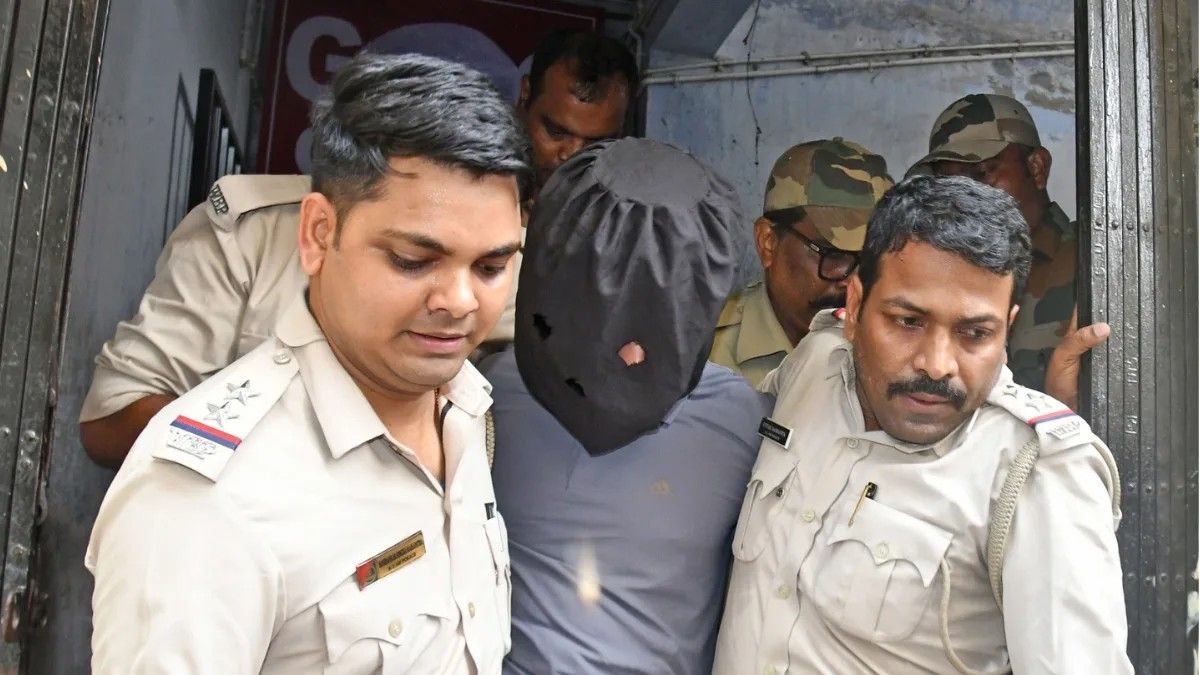
A 24-year-old resident of East Bardhaman in West Bengal has been arrested on suspicion of maintaining contact with the terrorist organisation Jaish-e-Mohammed, marking another security concern for the state more than twelve years after a significant militant cell was dismantled following the 2012 Khagragarh bombing. The arrest of Hamim Mondal has once again thrust the district into the spotlight, reminding authorities and residents alike that recruitment networks linked to cross-border militant groups continue to operate in the region despite heightened security measures.
According to statements from the Special Task Force, Mondal allegedly cultivated relationships with terrorist operatives functioning on both sides of the India-Pakistan border, with particular associations to members of Jaish-e-Mohammed. Investigators claim the young man was part of a module led by an individual named Sajjad Bhat and had engaged in suspicious purchasing patterns that suggested preparation for infiltration into high-security operations. Among his online purchases were uniforms designed to replicate those worn by the Central Reserve Police Force, acquisitions that law enforcement officials believe were intended to facilitate illegal entry into the security detail protecting Chief Minister Suvendu Adhikari during official movements.
The apprehension occurred at a gymnasium located within Renaissance Township, a residential area on Bardhaman's outskirts, where Mondal reportedly maintained a regular fitness routine. Officers coordinated a simultaneous raid on a rented apartment in Rohini Tower within the same township where the suspect had been residing for approximately three months. Digital devices seized during these operations, including a mobile telephone and laptop computer, allegedly contained encrypted communications directed to individuals associated with Pakistan's intelligence services. The data recovery process has become central to the investigation, as investigators seek to establish the breadth of the alleged conspiracy and identify other potential operatives within the network.
Mondal's background presents a picture of apparent normalcy that neighbours and associates found difficult to reconcile with the serious allegations. The suspect is the son of Moniruddin Mondal, a private sector employee based in Kolkata, and had pursued entrepreneurial interests following his education, establishing a small business engaged in label printing in the Pilkhana area of Howrah. His accommodation arrangement, facilitated through a local grocer named Mohammad Ali, was ostensibly secured for his younger siblings, though investigators now view the residential situation with considerable suspicion given the proximity to major cities and transportation networks that would enable rapid movement across state boundaries.
The investigation took an unexpected turn when authorities traced a telephone threat directed at Minister of State Umesh Rai back to Mondal, having followed leads involving a mobile number belonging to a woman from Birbhum district. This connection ultimately exposed a broader pattern of activity that police characterise as extending far beyond simple extremist sympathies. According to official statements, the accused engaged in recruitment operations targeting local individuals, coordinated procurement of military-grade equipment, collected intelligence regarding prominent public figures, and allegedly participated in plans encompassing abduction and assassination. The scope of these allegations places the case within a framework of serious national security implications rather than isolated ideological concerns.
The suspect's family home is situated in Dignagar village within the Manteswar block of East Burdwan, approximately 25 kilometres north of the district headquarters, a rural area where Mondal spent formative years residing with his grandmother in Bankra, Howrah. Neighbours and local residents expressed profound shock at the revelations, with schoolteacher Ashis Mondal describing the arrested man as calm, quiet and soft-spoken, characteristics that stood in stark contrast to the criminal conspiracy charges now confronting him. Such observations underscore a persistent challenge for security agencies: the difficulty in identifying individuals engaged in clandestine militant activities when they maintain cover identities and conduct themselves in ordinary, unremarkable ways within their communities.
Family members have strenuously denied the allegations, with his grandfather Nasiruddin Mondal and uncle Suman Mondal questioning the veracity of police claims and suggesting that their relative lacked both the motivation and capability to engage in sophisticated terror activities. Nasiruddin, a farmer by occupation, argued that the youth's age and background made such involvement implausible, attributing the arrest to possible police reliance on faulty intelligence. These assertions, while predictable given familial loyalty, have not deterred investigators who maintain confidence in their evidence and the trajectory of their inquiry.
The arrest brings into sharp focus the persistent security challenges confronting West Bengal, a state that has experienced recurring militant activity over the past two decades. The 2012 Khagragarh explosion and the subsequent unmasking of the Jamaat-ul-Mujahidin sleeper cell demonstrated conclusively that extremist organisations possessed the capability to establish dormant networks within the state's population, networks capable of remaining quiescent until activated. The emergence of Jaish-e-Mohammed elements more than a decade later suggests that rather than eliminating such threats, authorities are engaged in an ongoing contest against regenerating recruitment pipelines that exploit technological connectivity, ideological messaging platforms, and cross-border facilitation networks.
From a Southeast Asian perspective, the case illustrates vulnerabilities that extend beyond West Bengal or even India itself. The sophisticated use of encrypted communications, online procurement channels, and cross-border coordination mechanisms mirrors patterns observed in regional terror investigations across Malaysia, Indonesia, and Bangladesh. Pakistan-based handlers working through multiple intermediaries to cultivate operatives in Indian territory employs techniques increasingly common in transnational militant networks operating throughout South and Southeast Asia. The apparent targeting of senior state officials suggests operational sophistication beyond opportunistic recruitment.
Legal proceedings have moved swiftly, with Mondal being produced before the Chief Judicial Magistrate's Court in Bardhaman where he was remanded to police custody for fourteen days. Formal charges have been filed under Sections 61 and 152 of the Bharatiya Nyaya Sanhita 2023, alongside relevant provisions of India's Information Technology Act and Immigration Act. Investigators subsequently transported the suspect to Kolkata for extended interrogation, indicating that authorities view this as part of a larger investigation network potentially spanning multiple jurisdictions.
The broader implications of this arrest extend to questions about the effectiveness of border security measures, intelligence gathering capabilities, and the challenge of identifying and interrupting recruitment efforts conducted primarily through digital means. The case demonstrates that despite substantial investments in security infrastructure and surveillance capacity, determined militant organisations continue finding pathways to identify, contact, and cultivate Indian recruits. Whether individual cases of arrests represent disrupted plots or merely intercepted nodes within larger continuing networks remains an open question requiring sustained investigation and intelligence analysis across multiple agencies.

