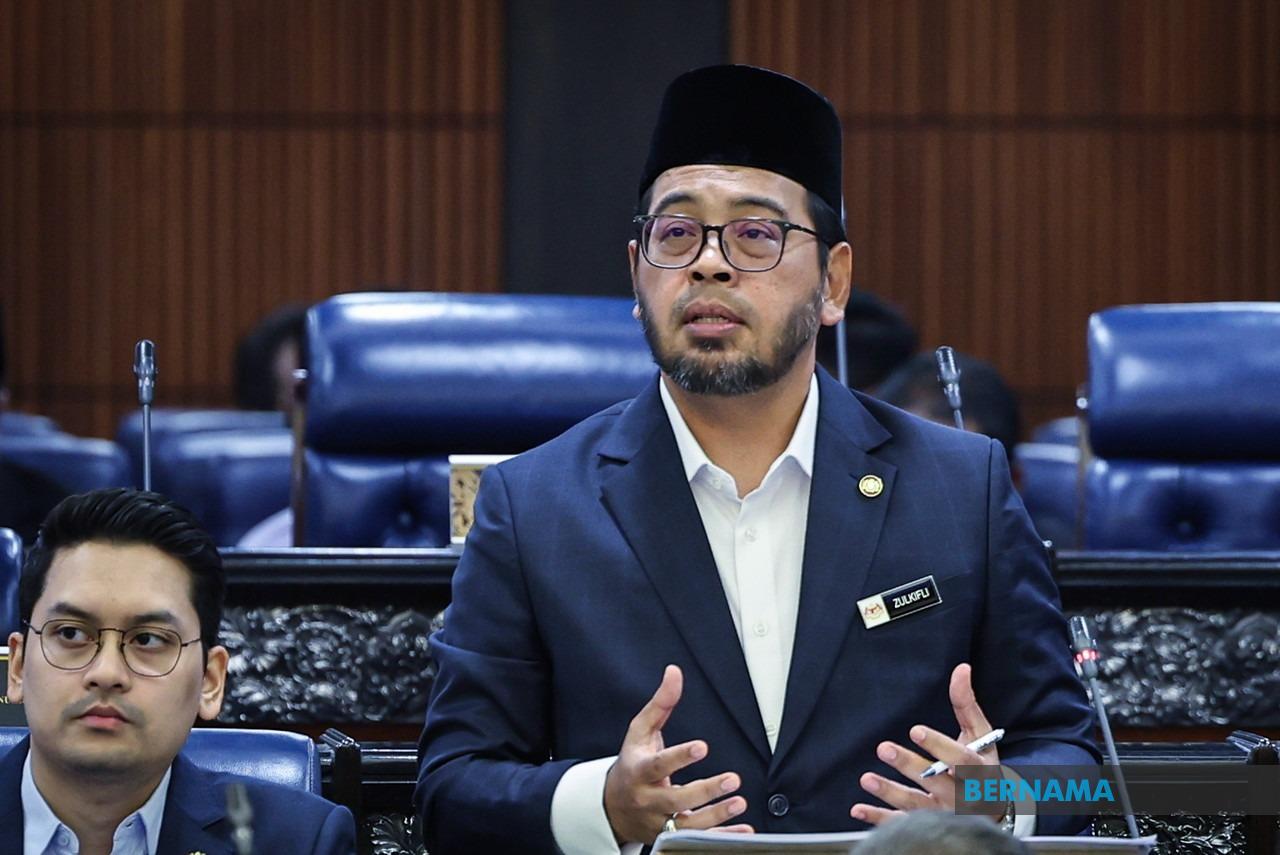
The Malaysian government has committed to comprehensive amendments to the Tabung Haji (TH) Act 1995 designed to prevent future mismanagement at the Islamic pilgrimage fund, with changes targeting both governance structures and financial transparency mechanisms. Minister in the Prime Minister's Department (Religious Affairs) Dr Zulkifli Hasan outlined the proposed reforms during a parliamentary briefing on the Royal Commission of Inquiry (RCI) report, which examined TH's operations across a critical six-year period from 2014 to 2020. The overhaul represents a significant response to institutional weaknesses that undermined public confidence in one of Malaysia's largest faith-based financial entities managing billions in pilgrim savings.
Central to the legislative amendments will be the introduction of explicit accounting standards and enforcement provisions that carry meaningful penalties for financial statement misreporting. These legal safeguards aim to create a more robust framework for detecting and deterring fraudulent or negligent disclosure practices that might otherwise escape detection in routine audits. The inclusion of prescribed accounting standards represents an acknowledgment that TH's previous regulatory environment lacked sufficiently prescriptive guidance, enabling management discretion that ultimately contributed to the problems identified by the RCI inquiry.
A particularly significant shift involves the proposed division of regulatory responsibilities between different authorities. The government has established an inter-agency task force chaired by TH's chairman and including both the Bank Negara Malaysia governor and Securities Commission chairman to finalise oversight arrangements. According to Dr Zulkifli, this body has already recommended that the Securities Commission assume regulatory control over TH's fund management and investment operations, while the Minister for Religious Affairs would retain supervisory authority over the hajj pilgrimage management function itself. This bifurcated structure reflects a strategic decision to leverage specialist expertise from different regulatory bodies rather than consolidating all oversight under a single agency.
The maintenance of TH as a single, integrated institution despite this regulatory reorganisation speaks to the government's desire to preserve institutional identity while fundamentally transforming how it operates. This distinction carries practical importance for Malaysian pilgrims who rely on TH's comprehensive services spanning savings mobilisation, investment management, and hajj logistics. The separation of regulatory oversight therefore reflects functional rather than structural division, allowing religious affairs authorities to focus on the spiritual and practical dimensions of pilgrimage while financial regulators impose stricter discipline on investment management practices.
Executive compensation represents another area receiving immediate attention. TH has already abandoned the practice of distributing excessively inflated bonuses to senior management and staff, instead adopting a performance-based compensation framework tied to the institution's overall financial results and achievement of institutional key performance indicators. Critically, all bonus payments now require approval from both the religious affairs and finance ministers, introducing a dual gatekeeping mechanism that prevents unilateral executive decisions on remuneration. This represents a direct response to RCI findings documenting instances where bonus structures appeared disconnected from institutional performance or shareholder value creation.
Financial transparency regarding profit distributions has similarly undergone structural improvement. Since 2022, TH has announced dividend rates exclusively on the basis of independently audited annual financial statements, eliminating scope for estimates or provisional figures that might later require adjustment. This practice aligns with the RCI's core recommendation for clearer, more explicit provisions governing how TH calculates and distributes profits to account holders. The consistency and timing of these announcements now provides investors with reliable information upon which to make savings and investment decisions.
Board governance and leadership selection procedures are undergoing fundamental reimagining through mechanisms outlined in the proposed amendments. The reforms would introduce specific eligibility criteria and expertise-based selection procedures for board appointments, replacing systems that may have previously accommodated political preferences or patronage networks. The proposed prohibition on active politicians serving as TH chairman or board members addresses a structural vulnerability where elected officials could theoretically prioritise political considerations over fiduciary duties to pilgrims and account holders. These constraints echo international best practice for institutional fund governance across Islamic banking, insurance, and investment sectors throughout Southeast Asia and the broader Muslim world.
The implementation of "fit and proper" selection criteria modelled on Bank Negara Malaysia's established framework provides TH with a proven methodology for identifying qualified leadership. Dr Zulkifli's assertion that Malaysia possesses "many capable, competent and trustworthy technocrats and individuals of integrity" available to lead TH suggests confidence that the talent pool can sustain institutional leadership without requiring political appointments. This represents an implicit critique of previous governance practices while projecting forward-looking optimism about institutional reform capacity.
Compliance with international accounting standards has already been achieved, with TH's financial statements fully adhering to relevant standards since 2018. This foundational element demonstrates that technical accounting capacity exists within the organisation, and that deficiencies identified by the RCI stemmed from governance, oversight, and disclosure frameworks rather than accounting function capabilities. The establishment of legislative requirements for maintaining these standards provides protective mechanisms ensuring future leadership cannot weaken compliance without explicit legislative action.
The 211-page RCI report, publicly released on July 29 following government disclosure authorization, provides the factual foundation for these reforms. The parliamentary special sitting enabled MPs to scrutinise findings and debate recommendations across multiple sessions, with ministerial wind-ups by Dr Zulkifli and Finance Minister II Datuk Seri Amir Hamzah Azizan. This legislative engagement reflects parliamentary accountability for implementing inquiry recommendations and represents broader transparency objectives in addressing institutional failures affecting millions of Malaysian pilgrims and savers.
For Malaysian Muslim savers, these reforms address fundamental trust deficits that emerged following media reporting and RCI findings concerning TH's investment decisions, governance practices, and transparency standards. The accumulation of structural changes spanning financial reporting, executive compensation, board selection, and regulatory oversight creates a more constraining governance environment for future management. While legislative amendments still require parliamentary passage and implementation timelines remain to be formalised, the government's commitment to comprehensive reform suggests recognition that superficial adjustments would prove insufficient to restore public confidence in an institution central to Malaysian Islamic finance infrastructure and pilgrims' religious obligations.
The implications extend beyond TH itself to broader governance expectations across Malaysia's faith-based financial institutions and government-linked companies more generally. The introduction of prescriptive accounting standards, regulatory specialisation, and explicit governance constraints represents a template potentially applicable to similar institutions requiring institutional reform. For regional observers, the TH case study demonstrates how inquiry processes can translate into tangible legislative and operational improvements, providing potential models for other Southeast Asian countries addressing institutional governance challenges within Islamic finance sectors.

