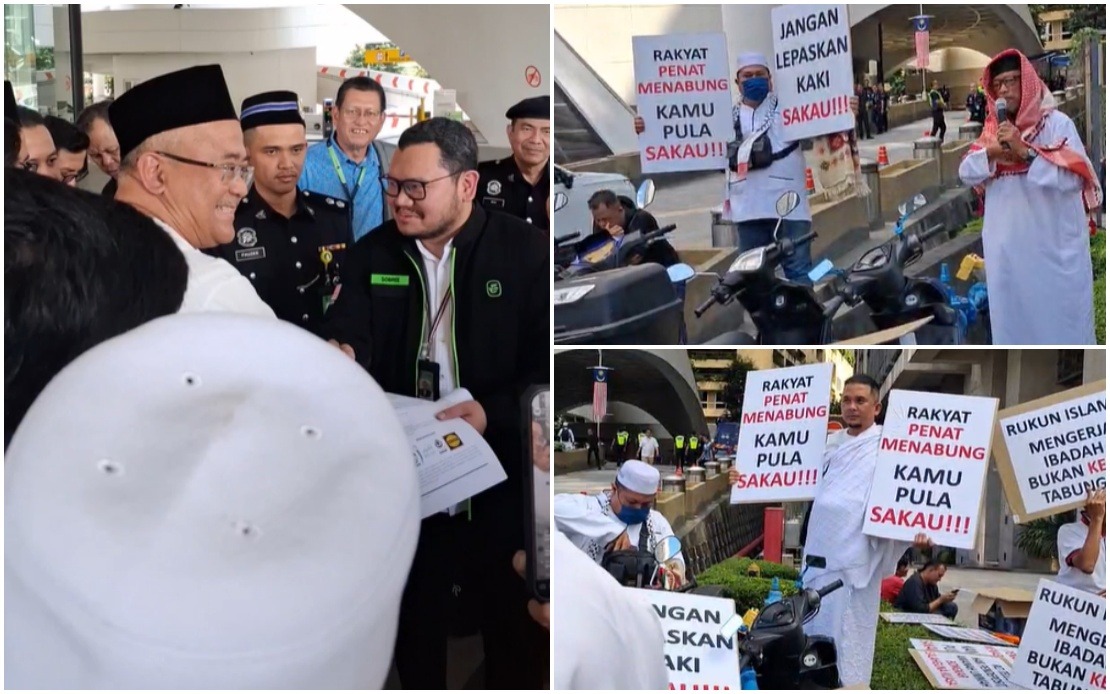
The call for independent investigations into the Royal Commission of Inquiry findings concerning Lembaga Tabung Haji's operational management between 2014 and 2020 has intensified, with prominent Islamic civil society figures warning against political meddling that could compromise the integrity of the legal process. Amir Zuhair Abdull Khalid, chairman of MADANI, made the appeal during a solidarity gathering at Menara TH in Kuala Lumpur, underscoring the critical importance of allowing authorities to pursue their investigations without external pressure or obstruction from any quarter.
The RCI report, which examined over six years of governance at the hajj pilgrimage fund manager, has generated significant public interest given the institution's stewardship of deposits belonging to millions of Malaysian Muslims. For depositors who have entrusted their life savings to Tabung Haji for their religious obligations, the findings represent more than a routine administrative matter—they reflect broader concerns about accountability within institutions managing public or community-held financial resources. The stakes are particularly high in Malaysia's context, where Tabung Haji carries both religious and financial significance for a substantial portion of the Muslim population.
Amir Zuhair's remarks directly addressed apprehensions that political considerations might overshadow the pursuit of accountability. His statement—urging the government not to interfere with the Malaysian Anti-Corruption Commission's investigations and emphasizing that courts alone should determine culpability—reflects a measured approach balancing the need for swift action with respect for due process. This distinction matters considerably in Malaysia's institutional landscape, where perceptions of political interference in anti-corruption efforts have historically undermined public confidence in investigative outcomes.
The RCI investigation itself uncovered serious allegations regarding political interference in governance structures and board appointments during the period under review. These findings suggest that some of the operational challenges facing Tabung Haji may have roots in appointment decisions influenced by political rather than merit-based considerations. Such structural vulnerabilities, if left unaddressed, could perpetuate similar governance weaknesses, making it essential that investigations explore not merely individual misconduct but systemic failures.
A coalition of Islamic civil society organizations, including HIKAM and its member organizations—WADAH, IKRAM, HALUAN, and ABIM—has submitted a comprehensive ten-point action list to the government. Their demands extend beyond prosecuting potentially culpable individuals to encompassing asset recovery, implementation of the RCI's reform recommendations, and sustained governance improvements under the current administration. This approach reflects recognition that institutional transformation requires both accountability measures and preventive structural changes.
The question of legal accountability versus political pragmatism has proven contentious in Malaysian discourse on governance reform. Amir Zuhair's intervention suggests that civil society expects clear separation between political leadership's support for investigations and actual interference in their conduct. His framing—that guilt or innocence can only be determined through proper judicial processes—establishes an important principle: public pressure for accountability should not translate into predetermined outcomes or circumvention of legal procedures.
For Malaysian readers and the broader Southeast Asian context, the Tabung Haji situation illustrates recurring tensions in institutional governance across Muslim-majority democracies. Financial institutions holding religious trust funds operate under heightened scrutiny precisely because their legitimacy depends on both operational competence and perceived moral authority. When governance failures emerge, they undermine not merely investor confidence but the trust communities place in institutions designed to facilitate religious observance.
The timing of these calls for transparent investigation also reflects Malaysia's recent political transitions and the current government's stated commitment to anti-corruption measures under the MADANI framework. The credibility of those commitments depends substantially on how thoroughly and impartially such investigations proceed, particularly in high-profile cases involving institutions of national significance. A perceived whitewashing of the RCI findings would substantially damage both the administration's reform credentials and public faith in institutional accountability mechanisms.
Implementation of the RCI's reform recommendations presents its own complexity, requiring sustained political will and resource allocation across multiple government administrations. The coalition's emphasis on continued governance reforms suggests recognition that short-term accountability measures, while necessary, cannot address systemic vulnerabilities without complementary structural changes to appointment processes, board oversight mechanisms, and financial accountability frameworks.
The broader implications extend to how Malaysian institutions manage public and community assets. Tabung Haji's case will likely inform future governance standards for similar organizations, whether religious, cultural, or socially significant in character. Clear establishment of investigative independence and transparent accountability therefore serves interests extending well beyond the immediate case.
Moving forward, the success of the investigation and subsequent reforms will depend on sustained vigilance by civil society actors, institutional independence of investigative and prosecutorial bodies, and political leadership's genuine commitment to allowing legal processes to unfold without interference. For depositors and the broader Muslim community that has entrusted resources to Tabung Haji, meaningful accountability requires not merely identification of wrongdoing but comprehensive institutional reform ensuring similar failures cannot recur.
The gathering at Menara TH represents an important public statement that Malaysian civil society expects rigorous accountability and transparent processes. Whether subsequent actions by authorities align with these expectations will substantially determine public confidence in institutional governance and anti-corruption efforts across Malaysia's institutional landscape.

