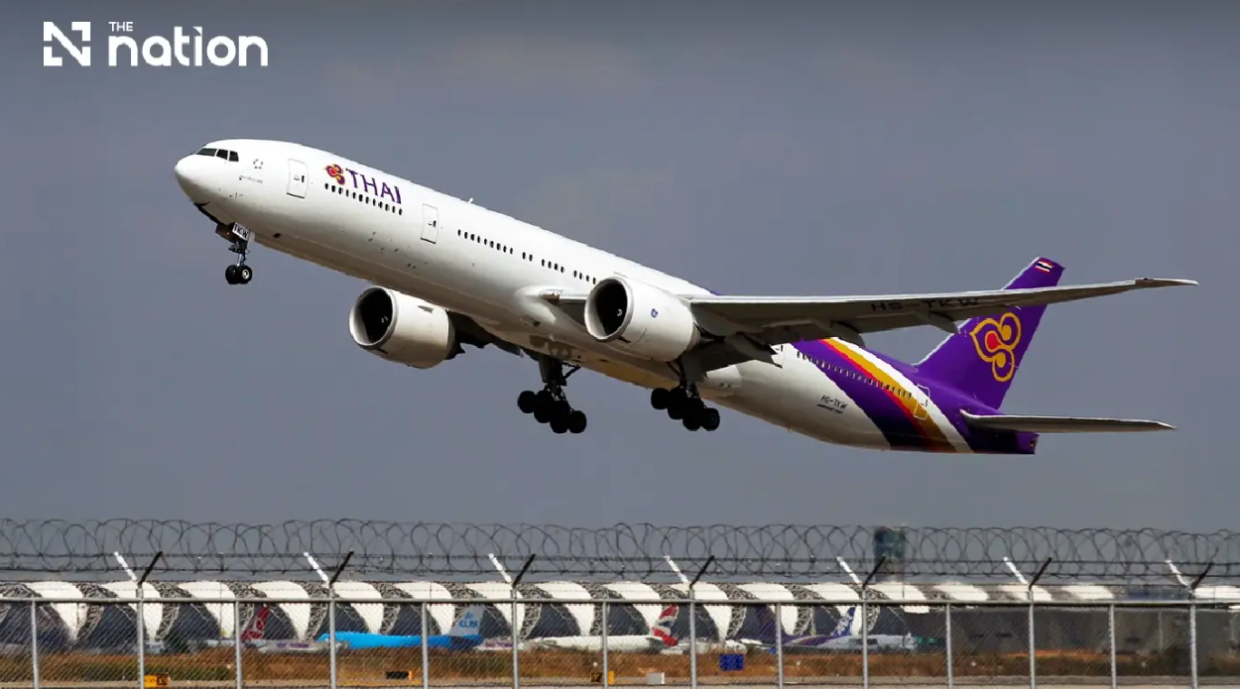
Thai Airways International has committed to complete transparency in assisting Australian law enforcement following the arrest of one of its cabin crew members at Melbourne Airport in late June, with the airline's chief executive emphasizing that it will not intervene in legal proceedings while simultaneously launching its own internal investigation into the alleged breach of company conduct standards.
Chief executive Chai Eamsiri stated that the airline recognizes the severity of the situation and will allow Australian authorities to handle the criminal investigation without interference from Thai Airways management. The crew member, a 26-year-old Thai national, was detained after airport officials discovered more than one kilogramme of heroin in her luggage upon arrival on flight TG465 from Bangkok on June 25. Australian law enforcement authorities valued the seized narcotics at approximately A$500,000, equivalent to about 11.5 million baht, marking a significant drug trafficking case involving an airline employee.
The Australian Federal Police and Australian Border Force have charged the suspect with two offences: importing a marketable quantity of a border-controlled drug and possessing a marketable quantity of a border-controlled drug. Each count carries a potential prison sentence of up to 25 years. Following her initial remand in custody on June 26, the woman is scheduled for a court appearance in Melbourne Magistrates' Court on September 14, giving authorities and legal representatives several months to prepare their cases.
On the company's side, Thai Airways has moved decisively to address the incident through its internal governance structures. The airline suspended the crew member immediately and established a fact-finding and disciplinary panel to conduct a comprehensive investigation within seven days. Chai made clear that if the internal inquiry substantiates the allegations, the airline will impose its harshest penalty—termination of employment—demonstrating a commitment to maintaining professional standards among its workforce of over 4,000 cabin crew members and more than 1,000 pilots.
Chai acknowledged the significant reputational damage the incident inflicts on Thai Airways, particularly given the airline's standing in Southeast Asia and internationally. He expressed concern that the case could create additional scrutiny for Thai crew members and Thai nationals traveling to Australia, potentially complicating entry procedures and travel experiences. However, he expressed cautious optimism that foreign authorities would assess cases on individual merit rather than imposing blanket restrictions based on a single employee's misconduct.
The airline has emphasized its existing regulatory framework, which requires all personnel—from pilots to ground staff—to receive comprehensive briefings before each flight. These sessions cover international aviation regulations, prohibited items, and the legal boundaries surrounding controlled substances. Chai stressed that employees receive clear instruction on what constitutes lawful and unlawful cargo, suggesting that awareness should not be an issue. Nevertheless, he acknowledged the inherent challenge of monitoring the conduct of thousands of employees, particularly across geographically dispersed operations, and announced that the airline intends to strengthen supervisory mechanisms following this incident.
Thailand's Civil Aviation Authority, the primary regulator of the nation's aviation sector, has initiated parallel inquiries to assess whether procedures at Thai checkpoints and during baggage screening meet international standards. The regulator confirmed that screening protocols at Thai airports comply with requirements established by the Civil Aviation Authority of Thailand and align with standards set by the International Civil Aviation Organization. The CAAT clarified that aviation security measures focus primarily on preventing items that could endanger aircraft safety, passengers, and crew members from being carried aboard.
The CAAT also delineated the boundaries of its regulatory authority, noting that narcotics enforcement falls outside aviation safety oversight and remains the responsibility of dedicated law enforcement agencies. The regulator emphasized that effective drug control requires cooperation among multiple domestic and international bodies, reflecting the complexity of preventing smuggling through international airports. The CAAT has instructed Thai Airways to provide updates on its internal investigation and, should the preliminary inquiry confirm wrongdoing, the regulator indicated it may pursue action against the crew member's aviation credentials to protect aviation safety standards and maintain public confidence in Thailand's civil aviation system.
For Malaysia and the broader Southeast Asian region, the case highlights the ongoing vulnerability of aviation supply chains to drug trafficking despite increasingly sophisticated screening measures. The incident demonstrates that determined smugglers may exploit human actors within airline operations—individuals with legitimate access to boarding procedures and baggage handling—to circumvent conventional security barriers. The A$500,000 value of the seized heroin suggests a sophisticated trafficking operation, indicating that organized crime networks continue to view airlines as viable smuggling routes despite the severe legal consequences.
The matter also reflects the complex jurisdictional and procedural challenges that arise when aviation incidents involve international flights and multinational workforces. Thai Airways' commitment to cooperating with Australian authorities while conducting its own investigation illustrates how modern airlines operate within overlapping frameworks of national law, international aviation regulations, and company-specific policies. Malaysian carriers and other Southeast Asian airlines face similar pressures to maintain rigorous internal standards while respecting the independence of foreign legal systems.
The case underscores the importance of employee vetting and ongoing monitoring within the aviation sector, particularly for personnel with access to aircraft and baggage systems. As regional airlines expand their international networks, particularly on lucrative routes to developed nations, they must balance operational efficiency with security protocols that discourage insider participation in smuggling schemes. The involvement of a crew member, rather than a passenger or external actor, may prompt airlines throughout Southeast Asia to review their internal controls and employee supervision practices.

