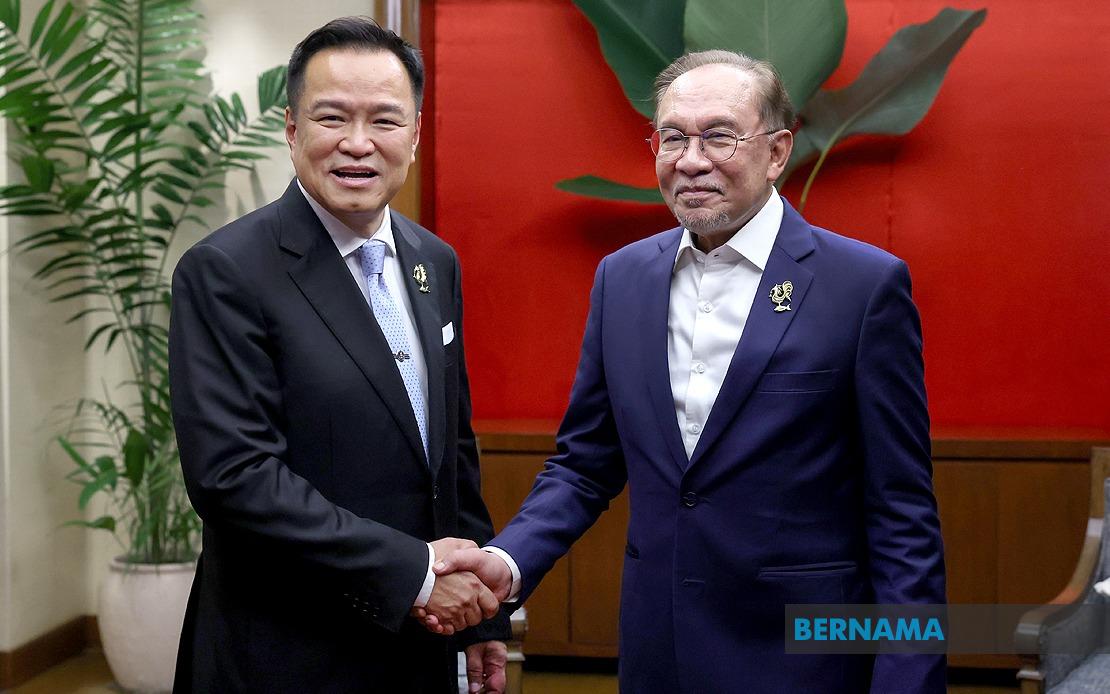
Thai Prime Minister Anutin Charnvirakul will arrive in Malaysia on Thursday for a two-day official visit, with the timing strategically aligned to coincide with the inauguration of a major new border infrastructure project. The visit, extended at the invitation of Malaysian Prime Minister Datuk Seri Anwar Ibrahim, precedes the opening of the new permanent Sadao border checkpoint on July 11, signalling the high-level political importance both governments attach to facilitating seamless movement of goods and people across their shared frontier.
The new Sadao Customs, Immigration and Quarantine Complex in Songkhla province represents a significant investment in borderlands infrastructure. When operational, it will directly connect with Malaysia's Bukit Kayu Hitam checkpoint in Kedah, creating a modern gateway designed to streamline the cross-border experience. Thai government spokesperson Ratchada Thanadirek confirmed that the Cabinet approved the transition from the existing Sadao crossing to this newly constructed facility, which will operate daily from 5 am to 11 pm Thailand time under a Ministry of Interior notification.
Beyond the symbolic value of inaugurating modern infrastructure, both Bangkok and Kuala Lumpur view this checkpoint as a catalyst for broader economic integration. The project addresses longstanding bottlenecks that have frustrated traders, transport operators and tourists navigating the heavily trafficked Thailand-Malaysia border. By replacing ageing facilities with a purpose-built complex, authorities aim to reduce processing times and administrative friction that have previously discouraged cross-border commercial activity.
Thailand's government has recognised that opening the checkpoint requires more than constructing buildings. The Cabinet has directed relevant agencies to prioritise supporting infrastructure, including new connecting roads on the Thai side designed to optimise traffic flow toward and away from the checkpoint. These complementary projects acknowledge that a modern CIQ facility performs optimally only when embedded within a broader transport network that prevents congestion from overwhelming the new crossing.
Additional measures underscore Thailand's commitment to making the transition seamless for both businesses and residents. Shuttle bus services linking the checkpoint with inland areas have been approved to ensure connectivity for travellers without private vehicles. Public awareness campaigns will educate residents and business operators in Dan Nok and surrounding border communities about revised traffic routes, updated customs procedures and streamlined immigration processes specific to the new checkpoint.
The timing of Anutin's visit also reflects both governments' determination to maximise the political symbolism of the opening. Government spokesperson Ratchada indicated that the journey demonstrates Thailand and Malaysia's shared commitment to advancing bilateral cooperation and delivering tangible outcomes. Notably, the visit comes against the backdrop of preparations for the 70th anniversary of diplomatic relations between the two countries in 2027, suggesting that current infrastructure projects are being positioned as foundational developments for the next phase of bilateral engagement.
For Malaysian observers, this visit marks Anutin's third journey to the country since his elevation to prime minister, following his attendance at the ASEAN Summit and Related Summits in Kuala Lumpur in October 2023 and a subsequent official visit on November 26 the same year. The frequency of high-level visits underscores Thailand's prioritisation of Malaysia within its regional diplomatic calendar, a positioning that reflects the economic and strategic importance of the bilateral relationship.
The new checkpoint carries particular relevance for Malaysia's Kedah and Perlis states, which have long depended on cross-border trade and tourism revenue. Traders operating in these northern regions have repeatedly flagged congestion and inefficient customs clearance as impediments to competitiveness. A modernised checkpoint offers tangible potential to unlock economic activity that geographic proximity to Thailand should naturally encourage. For Malaysian importers and exporters, faster clearance translates directly to reduced logistics costs and improved supply chain reliability.
From a Southeast Asian perspective, the Sadao-Bukit Kayu Hitam corridor exemplifies how upgrading bilateral infrastructure can contribute to broader regional integration objectives. The ASEAN Secretariat has long advocated for eliminating non-tariff barriers that burden intra-regional commerce, and modern border facilities represent concrete progress toward that goal. Thailand and Malaysia are demonstrating that political will and investment in shared infrastructure can yield measurable improvements in trade facilitation.
Tourism represents another critical dimension of the checkpoint's potential impact. The corridor connects Thailand's southern provinces with Malaysia's Peninsular regions, and smoother border passage encourages leisure travellers to venture beyond their home country. Hoteliers, restaurants and tourist attractions on both sides of the border stand to benefit from reduced friction that previously discouraged spontaneous cross-border trips. During peak holiday periods, the new checkpoint's capacity and efficiency will be tested, but its design aims to prevent the severe delays that have occasionally characterised the existing crossing.
The investment in complementary infrastructure reveals that Thailand's government understands modern border management as extending beyond the checkpoint building itself. Effective border infrastructure requires integrated planning that addresses traffic management, alternative transport options and community engagement. By directing agencies to implement shuttle services and awareness campaigns, Thai authorities acknowledge that infrastructure projects succeed or fail partly based on how well surrounding communities adapt to change.
For businesses already operating across the border, the July 11 opening arrives with considerable anticipation tempered by logistical caution. Companies will require time to understand revised procedures and optimise their transit planning accordingly. Initial weeks will inevitably feature teething problems as both checkpoint staff and regular users familiarise themselves with new layouts and systems. However, the framework Thailand has put in place suggests authorities are prepared to monitor early operations and address emerging issues promptly.
Anutin's visit ultimately symbolises more than ribbon-cutting ceremonies. It underscores that both prime ministers view infrastructure development as integral to their broader bilateral agenda. The checkpoint opening provides a concrete platform to announce additional cooperation initiatives, whether in trade, investment or security matters. As Thailand and Malaysia approach their 70th diplomatic anniversary, positioning contemporary infrastructure projects as legacy achievements positions both leaders as architects of deepened integration and shared prosperity.

