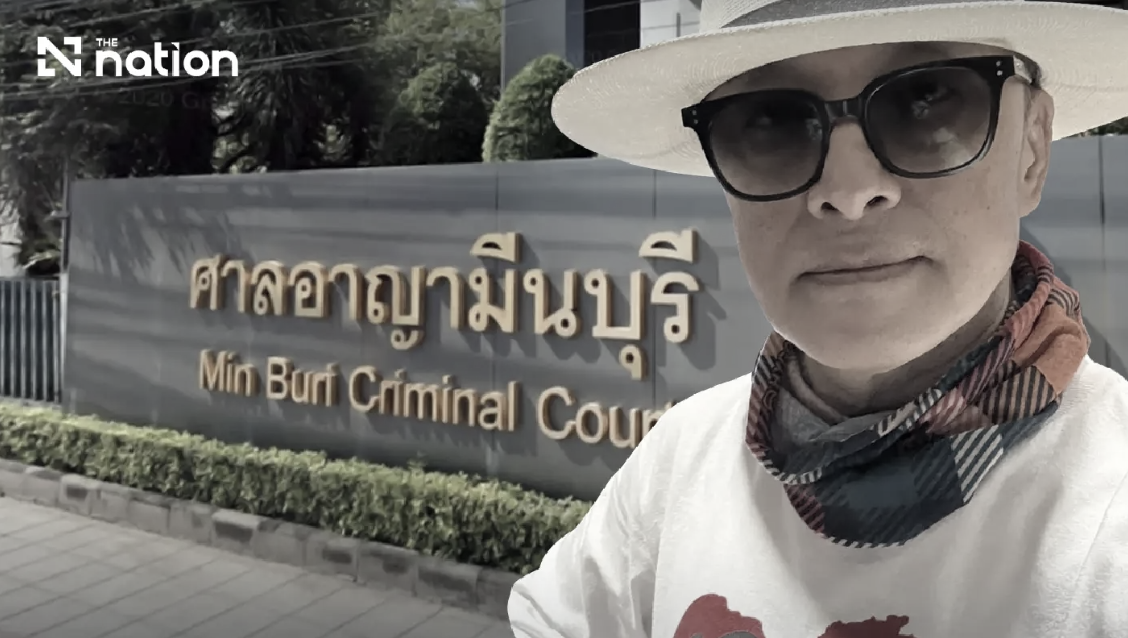
A Bangkok court has handed down a two-year prison sentence to Manasawin Nantasen, the celebrated Thai entertainer better known as Tik Shiro, following his conviction for driving under the influence and causing deaths on public roads. The verdict marks a rare case of legal accountability for a prominent Thai celebrity, coming at a time when public confidence in equal justice remains fragile across the Southeast Asian nation.
Nantasen, now 64, achieved stardom during the late 1980s and 1990s as a distinctly Thai musical phenomenon, distinguishing himself through signature fashion choices including wide-brimmed fedora hats and leather jackets paired with polished dance choreography that inevitably drew international comparisons to Michael Jackson. His influence extended across generations of Thai audiences who grew up watching his performances on television and at concert venues throughout the kingdom.
The incident that would derail his career unfolded on a Bangkok bridge in October 2024 when Nantasen's vehicle struck a stationary motorcycle. The collision proved catastrophic for two siblings who were on the bike: a 28-year-old woman died at the scene from severe injuries sustained in the impact, while her 21-year-old brother was violently thrown from the bridge by the force of the collision. Despite emergency medical intervention and hospital care, the younger brother succumbed to critical injuries days later, bringing the death toll to two.
The tragedy gained wider attention beyond the immediate victims' circle when footage emerged showing Nantasen kneeling beside the wreckage in apparent emotional distress. That moment, captured on video and rapidly shared across Thai social media platforms, sparked national conversation precisely because many observers interpreted it as a calculated public relations gesture. The display of remorse proved polarizing in a country where visible contrition from wealthy or famous individuals has frequently preceded lenient legal outcomes or, in extreme cases, virtual immunity from prosecution.
Thailand's experience with celebrity justice has cultivated deep public cynicism. The most notorious example remains the 2012 case involving Vorayuth Yoovidhya, heir to the Red Bull fortune, who was accused of driving his Ferrari through a Bangkok neighbourhood and fatally striking a police officer. Despite an investigation being launched, prosecutors never filed charges against Yoovidhya, who eventually fled the country. Another high-profile incident from 2001 involved a son of then-Pheu Thai MP Chalerm Yubamrung, who allegedly discharged a firearm inside a crowded Bangkok nightclub during an altercation, killing a patron. The defendant was ultimately acquitted on grounds of insufficient evidence, a verdict that many Thais viewed as reflecting privilege rather than legal merit.
Nantasen's sentencing therefore carries symbolic weight beyond the individual case. The criminal court recognized his guilty plea and cooperation with proceedings as mitigating factors, noting in its formal statement that the defendant had demonstrated remorse through attendance at the victims' funeral and provision of financial compensation to their bereaved families. These gestures clearly influenced judicial discretion, as did his surrender to authorities rather than attempting to evade responsibility.
The court did impose one permanent consequence: revocation of Nantasen's driver's license, ensuring he will never legally operate a motor vehicle again in Thailand. This permanent sanction, coupled with the custodial sentence, suggests the judiciary attempted to calibrate a response acknowledging both the seriousness of the offence and the defendant's subsequent conduct.
The case arrived alongside another celebrity legal matter that reinforced the unpredictable nature of Thailand's treatment of famous figures. Rock musician Sek Loso was released from prison on the same day as Nantasen's sentencing, having completed just slightly over one year of incarceration for drug possession and unlawful firearm ownership. The juxtaposition of these two celebrity cases—one resulting in a two-year term and the other involving early release—further illustrated the inconsistencies that erode public faith in neutral application of the law.
For Malaysian and broader Southeast Asian audiences, the Nantasen case offers both a cautionary tale and a potential precedent. Thailand's entertainment industry remains deeply intertwined with its legal system, where celebrity status can function as a double-edged sword. While Nantasen's conviction demonstrates that even high-profile entertainers face serious consequences for traffic fatalities caused by intoxication, the moderating influence of remorse, compensation, and cooperation suggests that wealth and fame retain significant capacity to shape sentencing outcomes.
The practical implications extend beyond Thailand's borders. Rising road casualties across Southeast Asia, particularly those involving alcohol impairment, represent a public health crisis that demands consistent legal consequences regardless of a defendant's professional standing or social connections. If prominent figures escape proportionate punishment, the deterrent effect weakens for ordinary citizens contemplating similar dangerous choices.
Nantasen's fall from entertainment prominence also reflects the dramatic personal consequences accompanying such legal judgements. A performer who spent decades cultivating iconic status and cultural relevance now faces imprisonment and permanent professional damage. His case will likely influence how Thai celebrities and their management teams assess legal and personal risks, potentially triggering broader conversations about accountability in the entertainment sector.
Looking forward, whether the Nantasen conviction signals genuine reform in Thailand's approach to celebrity justice or represents merely an exception to established patterns remains unclear. Public perception often matters as much as legal outcome in countries with complex histories of privilege and accountability. Thai society will be watching closely to ensure that his imprisonment actually occurs as sentenced and that future celebrity cases maintain comparable standards of judicial consistency.

