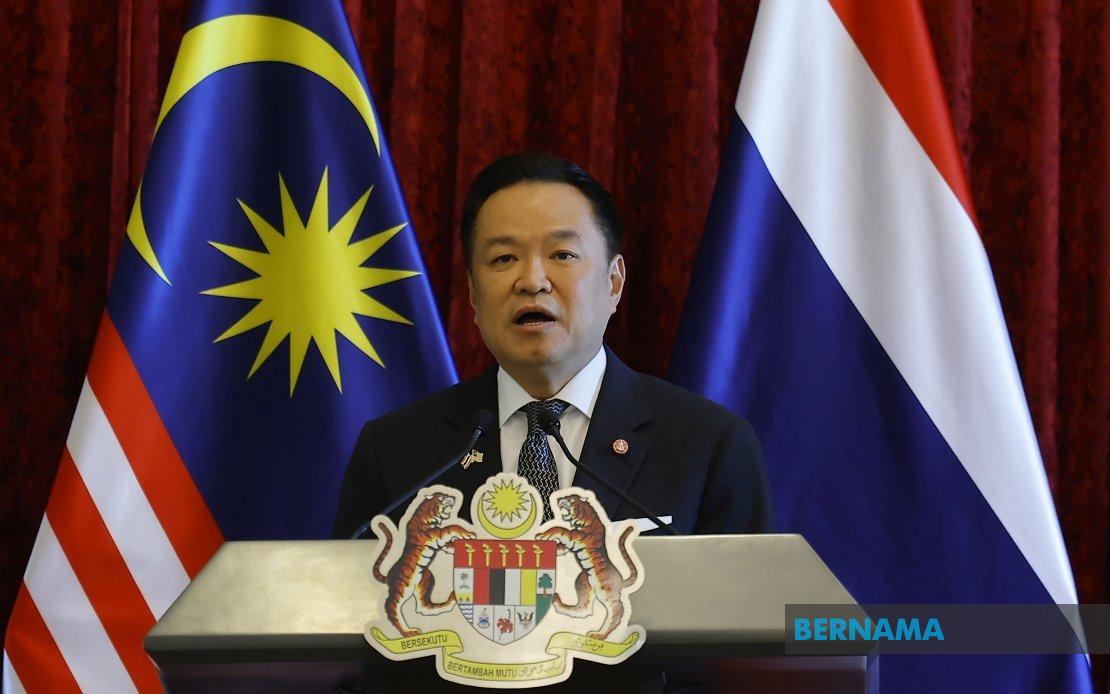
Thailand's Prime Minister Anutin Charnvirakul offered his encouragement to Malaysian Prime Minister Datuk Seri Anwar Ibrahim on Friday as the country prepares for a significant electoral contest in Johor, one of Malaysia's largest and most politically influential states. The gesture came during a joint press conference in Putrajaya following their bilateral discussions, underscoring the warm personal rapport between the two Southeast Asian leaders and their commitment to maintaining strong regional relationships despite domestic political calendars.
The Johor state election, set to take place this Saturday, represents a critical test for Anwar's coalition government and demonstrates the continued importance of electoral performance in individual states for the ruling administration's broader political legitimacy. The contest will see 172 candidates competing across all 56 state assembly constituencies, providing voters with a comprehensive range of choices across the peninsula's southernmost state. The sheer number of candidates and seats involved makes this election one of the more substantial sub-national contests within Malaysia's federal system.
Packatan Harapan, the coalition comprising PKR, DAP, and Amanah that forms the government at federal level, has adopted an inclusive approach by fielding candidates in every available seat. This strategy reflects confidence in the coalition's appeal while also signalling a commitment to contest even traditionally competitive or opposition-held areas. The candidate slate represents a deliberate mix of seasoned political figures with established track records and fresher faces intended to broaden the coalition's appeal to voters seeking new perspectives and renewal within the political establishment.
Anwar characterised his encounter with the Thai premier as both cordial and substantive, drawing parallels to a reunion among long-standing associates rather than a formal diplomatic encounter. His remarks highlighted the ease and familiarity that has developed between the two leaders, suggesting that Malaysian-Thai relations have transcended the purely transactional nature of official government-to-government business. Such personal warmth between neighbouring leaders often translates into deeper cooperation on practical matters affecting ordinary citizens in both countries.
Anutin's visit marks his first return to Malaysia following his reappointment to the Thai premiership in March 2026, a timing that carries diplomatic significance. His decision to visit Malaysia as one of his early international engagements following his political reconfirmation sends a clear signal about Thailand's regional priorities and the importance Bangkok places on maintaining strong ties with Kuala Lumpur. The visit was conducted at Anwar's personal invitation, underscoring the strength of bilateral relations at the leadership level.
The two-day official visit encompasses more than ceremonial exchanges, with both governments viewing the occasion as an opportunity to review existing cooperation frameworks and identify new areas for collaborative effort. Malaysia and Thailand share numerous common interests spanning trade, tourism, security cooperation, maritime issues, and people-to-people connections. Border provinces in both countries have long-standing cultural and economic links that require ongoing government attention and coordination to ensure mutual benefit and problem-solving.
For Malaysian observers, Anutin's presence and well-wishes during an election period carry subtle but meaningful implications. International support, particularly from a neighbouring government, can provide domestic political validation without appearing to constitute foreign interference. The Thai premier's public expression of confidence in Anwar's electoral prospects reflects satisfaction with the current Malaysian government's regional positioning and bilateral relationship management from Thailand's perspective.
The timing of this visit also reflects broader Southeast Asian dynamics where strong intra-ASEAN relationships have become increasingly important amid regional geopolitical shifts. Malaysia and Thailand, as neighbouring economies with interconnected markets and shared security concerns, benefit from maintaining political stability and continuity in their bilateral relationship. Leadership changes or electoral uncertainties in either country can create periods of adjustment, making visits that demonstrate continuity and goodwill particularly valuable.
Anwar's description of the meeting atmosphere—emphasising comfort, happiness, and the absence of formality—suggests that Malaysia's relations with Thailand have moved beyond any lingering tensions from previous periods. This represents a significant achievement in regional diplomacy, particularly given the complex history of Malaysian-Thai relations spanning maritime disputes, trade disagreements, and occasional bilateral tensions over various issues affecting both nations.
From a Malaysian domestic perspective, the Johor election will serve as an important bellwether for assessing public sentiment towards the federal government and the Pakatan Harapan coalition's continued hold on power. Results in Malaysia's second-largest state by population will provide insights into voter preferences, coalition cohesion, and the effectiveness of the government's messaging across different demographic groups. The election will also test whether the coalition's strategy of presenting a balanced slate of candidates resonates with the electorate.
The international dimension added by the Thai premier's visit—even if largely symbolic in nature—contributes to a broader narrative about Malaysia's standing in regional affairs and the stability of its government institutions. For investors, business partners, and regional observers, foreign leaders' public expressions of support for Malaysian political leadership offer reassurance about the country's political environment and diplomatic relationships.
Looking ahead, the outcome in Johor will have ramifications extending beyond state-level governance, potentially influencing perceptions of federal government strength and the coalition's electoral viability in future national contests. The election represents more than a routine state poll; it serves as a crucial test of Pakatan Harapan's ability to retain support and govern effectively across Malaysia's diverse political landscape, while simultaneously demonstrating that Malaysia continues to maintain productive relationships with important regional neighbours.

