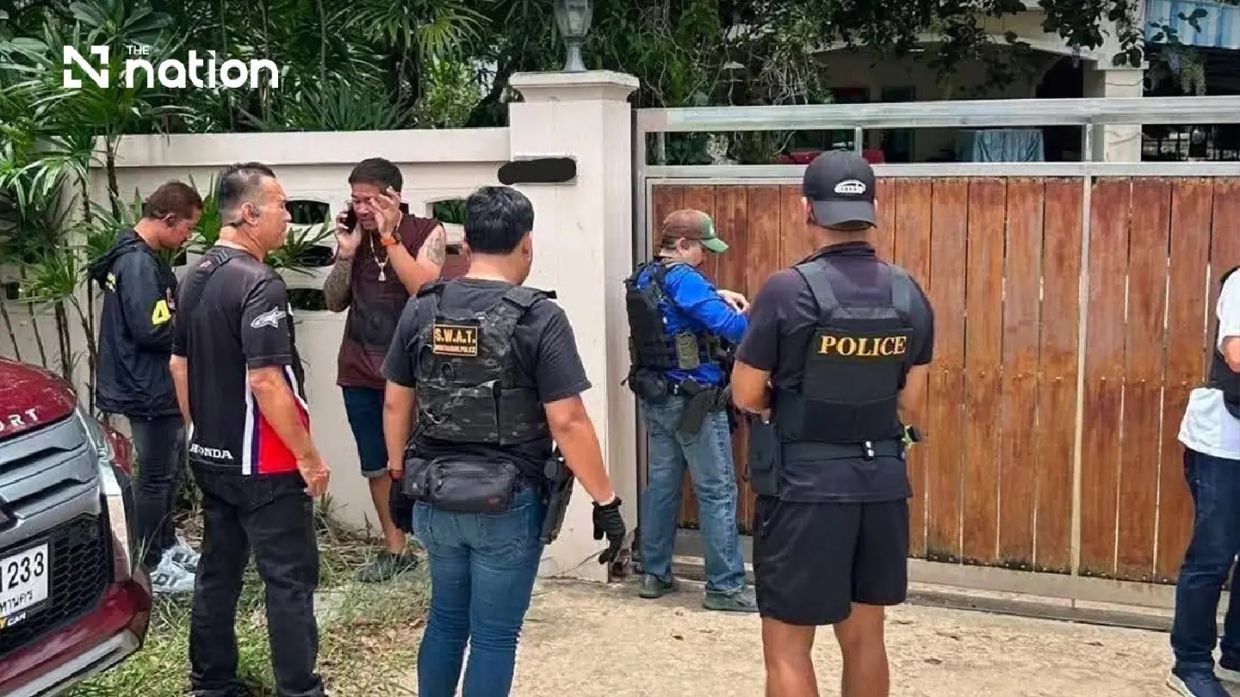
A secondary school student in Thailand's Nonthaburi province fatally shot his grandparents at their home before launching an attack on Debsirin Nonthaburi School on Friday morning, August 7, in an incident that left seven people dead and 15 others wounded, according to police investigations. The suspected attacker, a Mathayom 2 student, obtained a CZ 9mm handgun registered to his grandfather and used the same weapon in both the family killing and the subsequent school shooting that shocked the region.
Investigators found both grandparents deceased at their residence in a housing estate along Soi Wat Lat Pla Duk in Bang Khu Rat subdistrict, Bang Bua Thong district, Nonthaburi, after examining the premises. Police determined the deaths occurred earlier that morning and believe the firearm used in the school attack was the murder weapon. The juvenile lived with his paternal grandparents at the time, making them his primary caregivers rather than his parents, a detail that raises questions about his family structure and potential underlying issues.
Royal Thai Police spokesman Pol Lt Gen Trairong Phiwphan confirmed that officers had successfully contained the violence at the school and brought the situation under control. Emergency response teams worked to evacuate injured victims and secure the premises. The coordination between school authorities and law enforcement enabled the rapid cessation of the attack, though the casualty toll demonstrates the danger posed by a juvenile with access to functional firearms in an educational setting.
A critical focus of the ongoing investigation centres on how a minor managed to access, remove and carry the grandfather's registered handgun from the family home without detection. While authorities have confirmed that the weapon belonged to the elderly family member and was properly registered, the circumstances surrounding the student's acquisition of the gun and ammunition remain unclear. Police must reconstruct the sequence of events that allowed a secondary school student to overcome whatever security measures, if any, were in place to restrict access to the firearm.
The psychological profile and motivation of the suspected attacker form another investigation priority. Pol Lt Gen Trairong acknowledged that establishing motive requires deeper examination into the teenager's behaviour patterns, social environment, academic relationships and personal circumstances before the incident. Police have made initial contact with the student's guardians, but such investigations typically unfold slowly as authorities interview family members, school staff, peers and mental health professionals.
The case raises significant concerns about firearm safety regulations and enforcement in Thailand, particularly regarding how weapons registered to family members are stored and secured in residential settings where minors live. The registration system exists on paper, but the practical implementation of storage safety standards and monitoring of gun ownership appears insufficient to prevent access by troubled youth. This incident will likely prompt policy discussions about strengthening regulations around firearm storage in homes where children reside.
The incident also highlights the vulnerability of educational institutions despite their role as sanctuaries for learning and development. Southeast Asian countries have generally experienced lower rates of school violence compared to Western nations, but when such incidents occur, they provoke intense public concern and debates about security protocols. Schools across Thailand and the broader region may now reassess their emergency response procedures and perimeter security measures.
National Police Chief Pol Gen Kitrat Phanphet issued comprehensive directives to preserve evidence and document the crime scene meticulously. He instructed officers to clear the area, collect forensic evidence and prepare detailed scene plans that will support the investigation and potential prosecution. This attention to procedural detail reflects the gravity authorities place on the case and the need for ironclad evidence handling.
Recognising the severe psychological impact on students, teachers and other school community members, Pol Gen Kitrat deployed mental health specialists and psychologists from Police General Hospital to provide immediate support. This intervention acknowledges the lasting trauma caused by witnessing or experiencing violent incidents at educational institutions. The psychological care initiative represents an important commitment to addressing not just the immediate casualty response but also the long-term wellbeing of survivors and witnesses.
The seven fatalities include the two grandparents and the suspected attacker, with five others killed during the school shooting. The 15 injured individuals are receiving medical treatment for gunshot wounds of varying severity. The removal of all bodies and casualties from the school grounds was a crucial step in securing the area and initiating formal investigations.
This incident underscores complex questions about youth mental health, family dynamics, access to weapons and educational security in Thailand and Southeast Asia. The teenager's living arrangement with elderly grandparents rather than parents may indicate family complications or circumstances that deserve examination. The case will likely influence discussions among policymakers, educators and law enforcement agencies throughout the region about preventing similar tragedies and protecting vulnerable young people from becoming perpetrators of violence.
As investigations continue, authorities will examine communications, financial records, school attendance and disciplinary history to build a comprehensive understanding of the circumstances leading to the shooting. The findings may reveal warning signs that should have prompted intervention from family members, school administrators or mental health professionals. Such post-incident analysis often yields insights that inform preventive strategies and early warning systems for future incidents.

