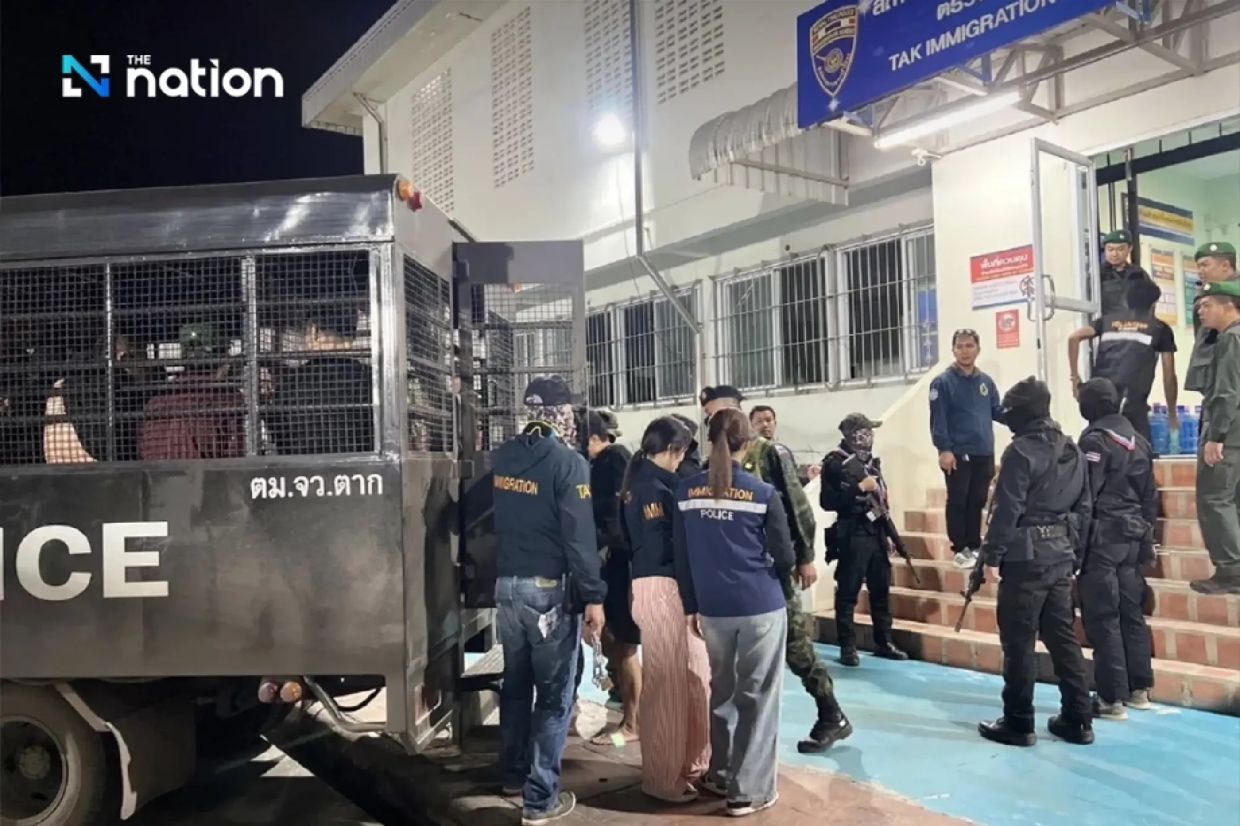
Thailand's government has launched a comprehensive overhaul of its immigration legislation to streamline the removal of foreign nationals convicted of crimes, responding to growing concerns about transnational criminal networks exploiting the kingdom as an operational base. The initiative addresses longstanding bottlenecks in the deportation process that have left detainees languishing in state facilities for extended periods while their cases wind through appeals, court hearings, and international coordination procedures.
The timing of this reform reflects accumulating frustrations with security gaps introduced by the 60-day visa exemption programme launched in July 2024 under the Srettha Thavisin administration. This policy permitted visa-free entry from 93 countries and territories, fundamentally altering Thailand's immigration screening mechanism. Because visitors no longer required advance visa applications, Thai diplomatic missions were unable to conduct background checks on criminal records or financial standing before travellers arrived. The absence of pre-arrival vetting created unintended consequences that officials now acknowledge have complicated law enforcement efforts across the region.
The practical implications of this visa scheme quickly became apparent in tourist and residential hubs throughout Thailand. Visitors exploited the absence of controlled entry procedures by conducting repeated border runs to reset their legal stay duration, effectively circumventing repatriation requirements. Some foreign nationals subsequently established themselves in Thailand's economy, working illegally in hospitality, resort management, and entertainment sectors where they undercut local employment standards. Immigration authorities have documented cases where foreign residents acquired property through nominee arrangements, participated in cryptocurrency and money laundering operations, or orchestrated large-scale call-centre fraud networks targeting victims across Southeast Asia and beyond.
The geographic concentration of these criminal activities has alarmed officials in jurisdictions ranging from Pai in Mae Hong Son to Pattaya in Chonburi, from Koh Phangan in Surat Thani to central Bangkok. These locations represent Thailand's most economically vital tourism zones and expatriate residential areas, suggesting that the security challenges are not peripheral but deeply embedded in the nation's most commercially significant regions. The Anutin government consequently elevated combating transnational crime to a core security priority, instructing the Immigration Bureau, Royal Thai Police, and supporting agencies to substantially strengthen border screening protocols and investigative enforcement capacity.
In response, authorities implemented four targeted enforcement mechanisms addressing distinct vulnerability categories. These initiatives target travellers exhibiting unusual patterns of border crossing without apparent legitimate purpose, implement heightened scrutiny of arrivals from jurisdictions designated as higher-risk, integrate international criminal databases more comprehensively with Interpol and domestic security agencies, and eliminate overlapping visa privileges that might enable extended clandestine residence. The cumulative effect of these measures was designed to reduce opportunities for foreign offenders to establish undetected criminal operations within Thai territory.
Recognising the foundational problem created by the visa exemption scheme, the Anutin 2 government took decisive action by securing Cabinet approval on May 19, 2026, to terminate the 60-day visa exemption arrangement. Thailand will revert to bilateral, country-specific visa frameworks, with most international visitors now limited to maximum stays of 30 days unless holding longer-validity documentation. This reversal represents a significant policy correction, as government analysis subsequently demonstrated that the broad visa exemption failed to generate commensurate increases in tourist arrivals or visitor spending while simultaneously introducing the documented security vulnerabilities. The strategic recalibration prioritises qualitative tourism and security considerations ahead of raw arrival statistics.
Despite heightened enforcement operations generating ongoing arrests of foreign nationals engaged in illegal activity, a fundamental systemic problem has emerged: the existing immigration legal framework impedes rapid deportations. Current procedures under the Immigration Act of 1979 permit foreign detainees to file appeals within 48 hours of receiving deportation orders, effectively halting removal proceedings during the appeal consideration phase except in extraordinary circumstances. Some detainees additionally invoke humanitarian or legal grounds for temporary stay extensions before the Immigration Commission. Simultaneously, many foreign offenders cannot afford repatriation expenses and must await Thai diplomatic coordination with their respective embassies to arrange financial support, creating prolonged detention periods that strain state resources and occasionally allow individuals to resume illicit activities pending case resolution.
Prime Minister Anutin Charnvirakul has entrusted Deputy Prime Minister Pakorn Nilprapunt, responsible for legal affairs administration, with coordinating comprehensive immigration law revision across the Royal Thai Police, Immigration Bureau, and Interior Ministry. The reform agenda specifically targets Sections 54 and 55 of the 1979 Immigration Act, which govern foreign national removal procedures. The government aims to construct a deportation framework that accelerates processing timelines while maintaining flexibility and effectiveness, though officials emphasise that any reforms must remain consistent with Thailand's human rights obligations and international treaty commitments.
The complexity of Thailand's position regarding international obligations cannot be understated. As a United Nations Human Rights Council member and signatory to eight major international human rights conventions—covering children's rights, women's rights, civil and political rights, economic and social rights, racial discrimination, torture prevention, disability protections, and enforced disappearance prevention—the kingdom faces substantial constraints on unilateral deportation acceleration. Royal Thai Police spokesman Pol Lt Gen Trairong Phiwpan acknowledged this tension explicitly, noting that extradition proceedings vary substantially depending on whether bilateral treaties exist with detainees' home countries. Where such treaties exist, the attorney-general must evaluate cases before court review. Absent formal arrangements, the Foreign Ministry channels requests through the attorney-general to the judiciary for extradition orders. Throughout these processes, detainees retain constitutional rights to petition courts, contest removal, and invoke human rights protections.
Trairong indicated that procedural reform focusing on timeline reduction and unnecessary step elimination could improve efficiency without violating international obligations, provided that authorities and courts retain capacity to evaluate case severity appropriately. He acknowledged that removing humanitarian considerations from the assessment process would contradict Thailand's treaty commitments, but streamlining procedures and limiting deliberate delays could accommodate competing interests. The spokesman further noted that detainees not invoking human rights protections experience faster repatriation, whereas those filing challenges and counterclaims inevitably encounter extended court consideration periods. Any effective reform must therefore balance accelerated processing for straightforward cases against the legitimate exercise of legal defences in complex matters.
The policy adjustment also reflects Thailand's evolving assessment of its international positioning. Prime Minister Anutin emphasised that Thailand actively welcomes foreign visitors and investors committed to lawful conduct, but those who violate Thai law or damage national interests must experience prompt legal consequences and swift removal. This rhetorical positioning serves multiple audiences: reassuring legitimate international business communities and tourists of Thailand's continued openness, while simultaneously signalling to foreign criminal networks that the previous permissive environment has fundamentally transformed. The government's visibility in addressing this issue—with high-level ministerial coordination and repeated public statements—suggests awareness that organised transnational crime operating from Thai territory threatens both Thailand's international reputation and its economic relationships with regional partners and developed nations.
Deputy Prime Minister Pakorn is expected to undertake consultations with Interior Ministry officials, police leadership, and supporting agencies to gather comprehensive information and evaluate potential impacts across all relevant policy dimensions. This consultative process acknowledges that immigration reform intersects with labour standards, property law, financial regulation, and bilateral diplomatic relationships. The outcome will determine whether Thailand can achieve meaningful deportation acceleration without creating diplomatic friction, violating international commitments, or inadvertently generating alternative criminal adaptation strategies. For Malaysia and other Southeast Asian nations concerned about criminal networks exploiting regional mobility, Thailand's legislative response represents a crucial test of whether individual countries can effectively address transnational security challenges within international legal frameworks.

