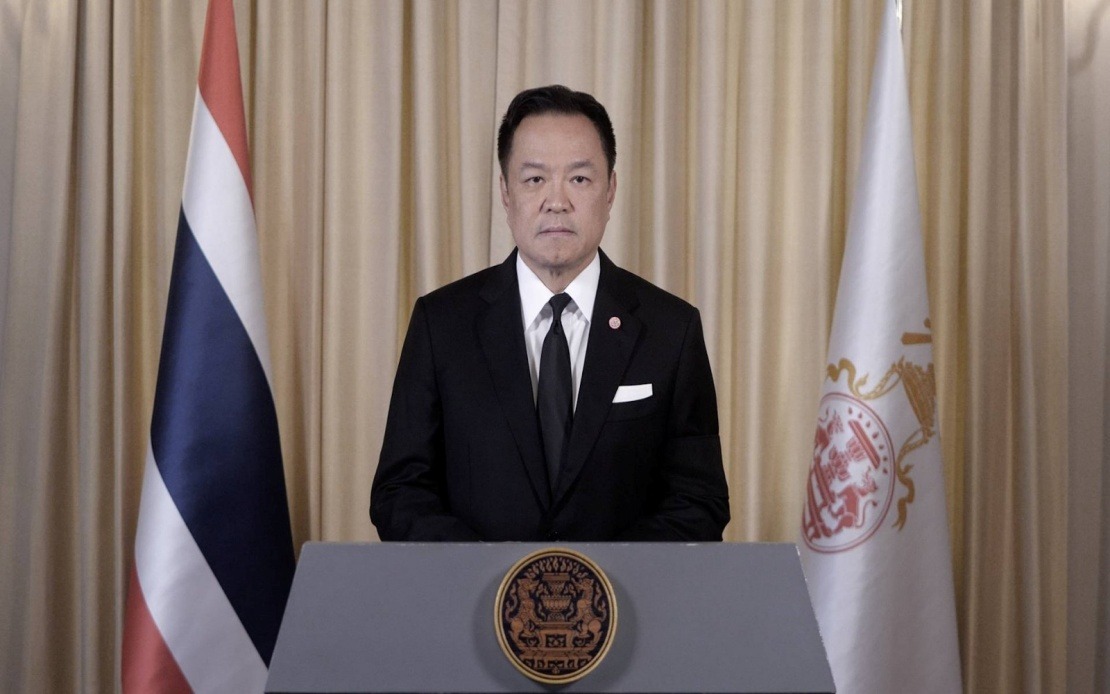
Thailand stands ready to weather geopolitical uncertainties and external economic shocks, according to Prime Minister Anutin Charnvirakul, who has expressed optimism about a potential ceasefire between the United States and Iran. Speaking at Government House on Monday, the Thai premier indicated that any resolution to tensions in West Asia would represent a significant positive development with far-reaching implications for regional and global economic stability.
The comments follow an announcement by US President Donald Trump on Sunday that an agreement with Iran had been finalised. Trump indicated he would authorise the reopening of the Strait of Hormuz and the lifting of a US naval blockade, moves that would fundamentally alter energy markets and geopolitical dynamics in one of the world's most strategically important regions. For Southeast Asian economies like Thailand that depend heavily on stable global supply chains and energy supplies, such a development carries substantial implications.
Anutin's measured response reflects Bangkok's broader approach to managing external risks through forward-looking strategic planning rather than reactive decision-making. The Thai government has demonstrated adaptability in navigating disruptions to global supply chains in recent years, building resilience into its economic structures. This foundation positions Thailand to potentially benefit from improved global conditions without being entirely dependent on favourable international developments, according to the Prime Minister's remarks.
Deputy Prime Minister and Finance Minister Ekniti Nitithanprapas expanded on these themes, emphasising that the cessation of hostilities between Washington and Tehran would deliver tangible economic benefits domestically and globally. Ekniti highlighted two primary advantages: moderating energy prices and reducing the economic risks associated with prolonged geopolitical conflict. For Thailand, which imports substantial quantities of oil and natural gas to fuel its manufacturing sector and meet domestic energy needs, lower global energy prices would have immediate ripple effects across the economy.
The Finance Minister acknowledged the government's commitment to monitoring inflationary pressures and the impact of elevated costs on households and small businesses, which have faced considerable strain from global price volatility. A ceasefire and subsequent easing of energy prices could provide relief to these vulnerable groups while potentially enabling stronger economic growth than currently projected by official forecasters. However, Ekniti's remarks suggest the government is cautiously optimistic rather than assuming such benefits are guaranteed.
Tailand's substantial 200-billion-baht energy transition programme represents a strategic commitment that extends beyond short-term energy price fluctuations. The Finance Minister underscored that this programme would proceed regardless of whether global oil prices decline as a result of regional de-escalation. This reflects recognition that Thailand's heavy dependence on imported petroleum and natural gas creates long-term vulnerabilities that cannot be addressed solely through market-driven price reductions.
The dual focus on both immediate macroeconomic benefits and longer-term energy security underscores the sophistication of Thailand's economic policymaking. Rather than viewing lower energy prices merely as a windfall, the government perceives them as an opportunity window during which investments in renewable energy, energy efficiency, and domestic energy production can be advanced without imposing additional cost burdens on consumers. This approach aligns with Thailand's broader aspirations to reduce import dependence and enhance strategic autonomy.
For Malaysian readers and Southeast Asian observers, Thailand's response carries important lessons about how regional economies can position themselves amid geopolitical uncertainty. Thailand's experience demonstrates that while external developments beyond national control shape economic conditions, domestic policy choices—particularly regarding energy transition and supply chain resilience—determine how effectively nations capitalise on favourable circumstances or weather adverse ones. The Thai model of long-term strategic planning offers a template relevant to Malaysia's own economic challenges.
The broader implications extend to regional shipping, trade, and energy security. The Strait of Hormuz is among the world's most critical chokepoints for global energy commerce, with a substantial portion of Southeast Asia's oil and liquefied natural gas imports transiting through these waters. A ceasefire and reopening of the strait would reduce transit costs and risks for regional economies, benefiting not only Thailand but also Malaysia, Singapore, and other ASEAN members dependent on stable maritime commerce.
However, the cautious framing from both Thai officials suggests awareness that reported ceasefire agreements may not translate smoothly into sustained peace. International agreements, particularly those involving longstanding adversaries with deeply entrenched interests, frequently encounter implementation challenges. Thailand's emphasis on preparedness and strategic planning indicates recognition that assuming the best outcome would be imprudent policy.
The comments also reflect evolving geopolitical realities where Southeast Asian economies, despite their relative distance from West Asian conflicts, remain vulnerable to spillover effects through energy markets, shipping lanes, and investor sentiment. Thailand's proactive communication about managing these risks aims to project stability to foreign investors and trading partners, signalling that Bangkok maintains sufficient policy tools and strategic flexibility to adapt to changing circumstances.
Moving forward, the success of Thai economic management will depend on whether global conditions genuinely improve and how effectively the government implements its energy transition programme. The next several months will indicate whether reported ceasefire agreements crystallise into durable peace, allowing energy prices to stabilise at lower levels. Thailand's readiness, according to its leadership, should provide a foundation for capturing potential benefits while maintaining focus on structural economic challenges that transcend any single geopolitical development.