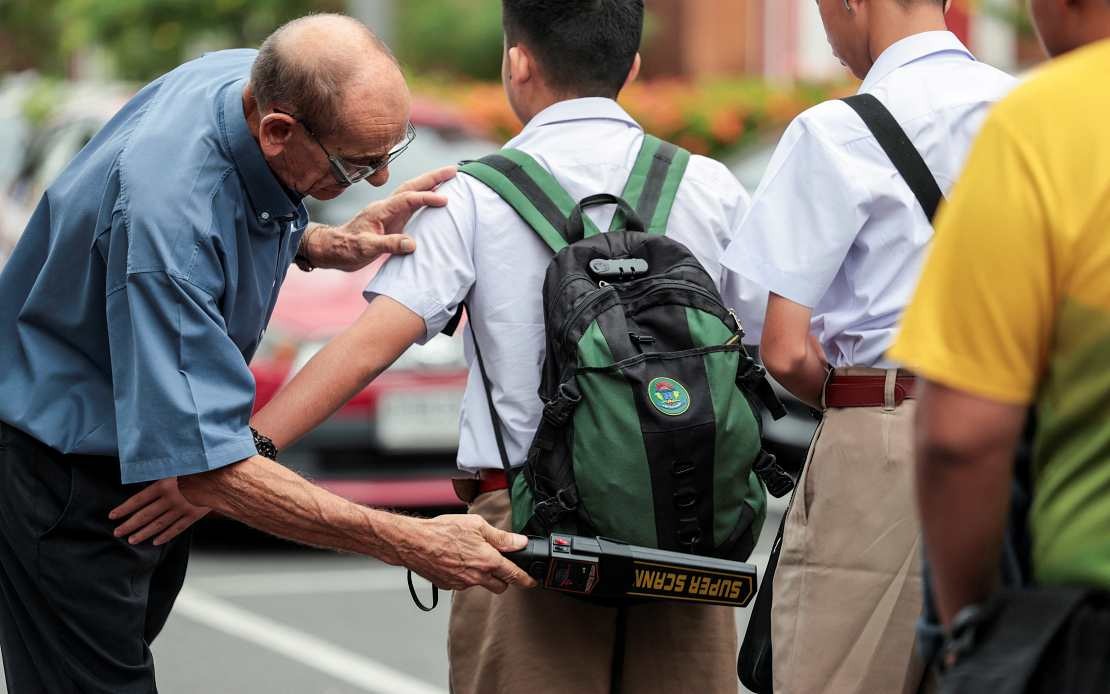
Thailand's government has responded to a devastating school shooting by implementing strict new controls on civilian firearm access. Prime Minister Anutin Charnvirakul announced on Tuesday that the country would suspend all new firearm carry permits for one year, a sweeping measure designed to curtail potential gun violence and restore public confidence in the authorities' ability to maintain order and safety.
The suspension represents a significant tightening of Thailand's existing gun regulations. The decision follows a deadly attack that unfolded on Friday, when a shooter opened fire at a school, resulting in nine fatalities including the grandparents of the student gunman, who subsequently took his own life. The tragedy has prompted serious reassessment of how Thailand manages civilian weapons ownership and public safety protocols.
Beyond the permit moratorium, the Ministry of Interior has mandated enhanced screening procedures for anyone seeking to purchase firearms. Through the Department of Provincial Administration, local officials have been instructed to conduct comprehensive background investigations on all applicants under the provisions of the Firearms Act. These stricter vetting processes aim to filter out individuals who pose potential risks to public safety before they can legally acquire weapons.
The government has also committed to strengthening oversight of those already holding valid firearm permits. Enhanced supervision mechanisms will ensure that licensed gun owners continue to meet legal compliance standards and maintain safe storage practices. Officials will conduct regular checks to verify that weapon owners are abiding by all applicable regulations and that firearms remain secure.
Existing Thai law already prohibits citizens from carrying firearms in public without legitimate justification. Those who breach this restriction face severe consequences, including imprisonment for up to five years, monetary fines reaching 10,000 baht (approximately $301), or both penalties combined. The law reflects Thailand's existing framework designed to minimize armed confrontations in civilian spaces, though Friday's tragedy demonstrates that enforcement gaps may exist.
Education Minister Prasert Jantararuangthong has advanced a comprehensive six-point safety framework to the Thai Cabinet aimed at preventing future tragedies within educational institutions. This package incorporates mandatory mental health evaluations for students, regular emergency response drills, strict zero-tolerance policies regarding bullying behaviour, and comprehensive weapon prohibition measures within school environments. The holistic approach recognizes that controlling firearm access alone requires complementary measures addressing psychological wellbeing and school safety culture.
Thailand's gun control response carries significant implications for Southeast Asia, where most nations maintain stricter civilian weapon restrictions than the United States but face occasional violent incidents that reignite debates about security versus freedom. The Thai government's swift action demonstrates how rapidly policymakers respond to mass casualty events, though critics may question whether temporary permit suspensions constitute adequate long-term solutions or merely temporary political responses to public outrage.
The timing of this initiative coincides with intensifying concerns about gun violence in the region. Malaysia and other neighbouring countries maintain their own firearm licensing regimes, and developments in Thailand may influence regional conversations about balancing legitimate sporting and security uses of weapons against broader public safety imperatives. Thai policymakers are essentially recalibrating the acceptable risk threshold for civilian gun ownership, suggesting that the Friday shooting represented a critical threshold moment.
Additionally, Thailand experienced another gun-related incident on Monday when authorities arrested a former lawmaker in connection with the killing of the Nonthaburi Provincial Administrative Organisation's president. This separate case underscores that firearms-related violence extends beyond school settings and reflects systemic challenges that single policy interventions cannot fully address.
The government's multifaceted response—combining permit restrictions, enhanced background vetting, stronger supervision, mental health initiatives, and school safety protocols—reflects recognition that effective violence prevention requires coordinated action across law enforcement, education, healthcare, and administrative systems. Whether these measures substantially reduce future incidents will become apparent only through rigorous implementation and long-term evaluation.

