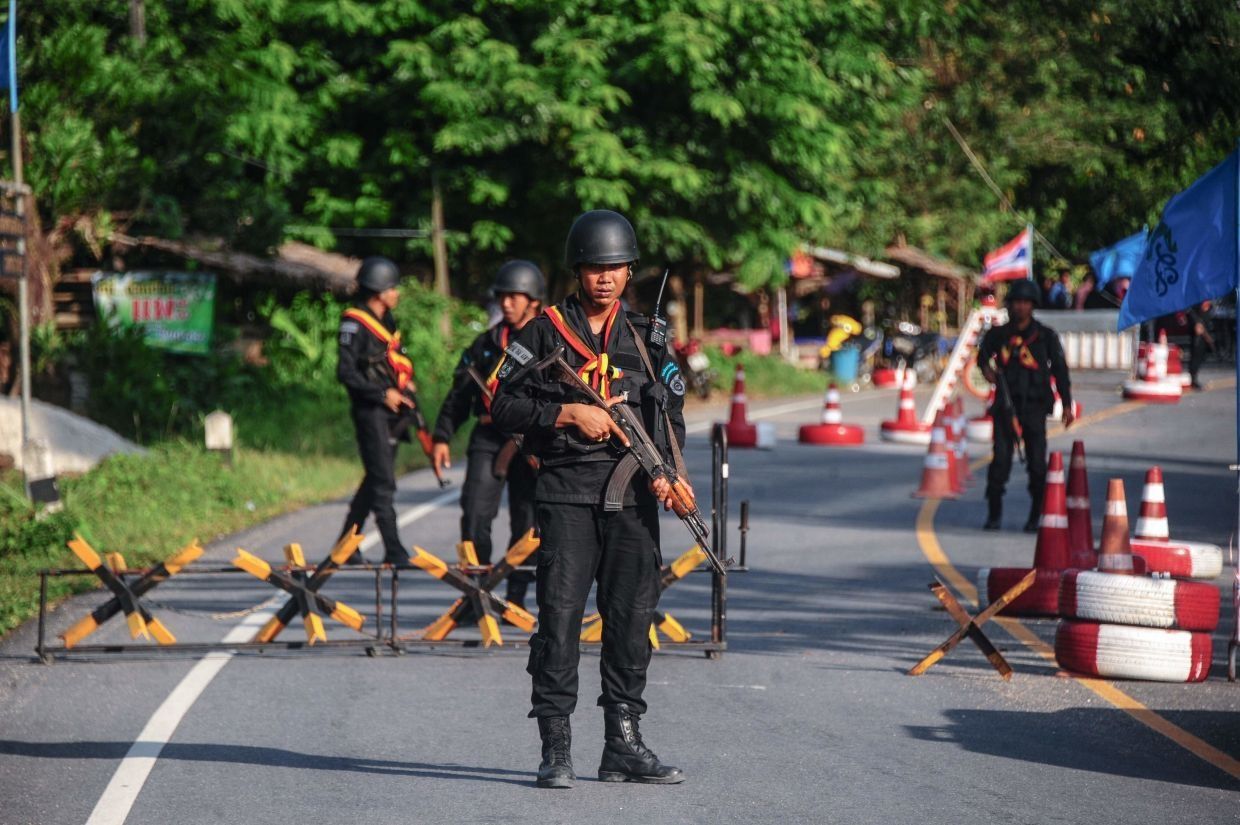
Thailand's government has suspended peace negotiations with southern insurgent groups that were set to convene in Malaysia next month, marking a significant setback in the nation's long-running efforts to resolve the decades-old conflict in its border provinces. The decision came immediately after armed assailants launched a devastating attack in Narathiwat province last Wednesday evening, killing five security personnel and injuring six civilians in what authorities described as an act of terrorism during an ostensibly peaceful dialogue process.
Thanat Suwannanont, director of the National Intelligence Agency and chair of Thailand's Southern Border Provinces Peace Dialogue Panel, announced the suspension to reporters on Tuesday, acknowledging that the carefully arranged September meeting in Malaysia would not proceed as planned. His statement reflected the government's view that the timing and brutality of the attack had fundamentally undermined the negotiating environment. The dialogue process, which Thanat characterised as having shown initial promise, was derailed by what he termed violence "too severe for us to accept," raising questions about the willingness of insurgent factions to maintain restraint during peace proceedings.
The attack itself occurred at approximately 6.45 pm local time at a security checkpoint in Ban Bukit Sami within Rangae district. Six masked assailants dressed in dark clothing arrived at the position and opened fire before launching pipe bombs at the checkpoint, resulting in the death toll of five rangers. Beyond the military casualties, the assault also wounded six civilians, including a three-year-old girl, underscoring the indiscriminate nature of the violence and its impact on ordinary residents in the restive southern provinces.
Thanat's explanation for the suspension revealed internal tension within Thailand's conflict resolution strategy. He noted that while individual fighters may have acted on impulse or following their own tactical calculations, the government had already committed to dialogue when the incident occurred. His statement that "once violence occurs, we have to start all over again" suggests that Thai authorities view such attacks as resets that effectively erase progress made in earlier phases of negotiation. This assessment raises concerns about whether either side possesses sufficient control over their respective cadres to maintain ceasefire conditions during sensitive peace processes.
The broader context involves Prime Minister Anutin Charnvirakul's consistent messaging that dialogue represents Thailand's preferred long-term strategy for addressing the southern insurgency rather than serving as a temporary fix responsive to immediate security crises. This policy stance suggests that despite the current suspension, the government intends to resume talks once security conditions stabilise and trust between parties can be reconstructed. However, the government demanded that the insurgent group provide written explanation for the attack, effectively placing the burden on insurgent leadership to account for actions that may have been taken by autonomous cells or splinter groups resistant to peace negotiations.
In response to the attack, Thai authorities implemented Martial Law across thirteen districts in Narathiwat province, enabling security forces to conduct intensive operations aimed at apprehending the perpetrators and tightening security throughout the region. The Internal Security Operations Command Region 4 subsequently issued arrest warrants for two suspects aged 45 and 43, whom investigators linked not only to last week's attack but also to an armed assault that occurred on July 22. These charges encompassed terrorism, premeditated murder of government officials, armed robbery resulting in death, and violations related to firearms and explosives offences.
The timing of this suspension carries particular significance for Malaysia, which had served as the host nation and neutral venue for the September negotiations. Malaysia has maintained a delicate diplomatic position regarding Thailand's southern conflict, offering territory for peace talks while managing its own security concerns about potential spillover effects from the insurgency. The cancellation of the Malaysia meeting represents a missed opportunity for regional diplomatic engagement and suggests that the conflict's trajectory remains volatile despite years of international mediation efforts.
For Southeast Asian observers, the incident illustrates the persistent challenge of maintaining peace processes when armed groups retain capacity and apparent willingness to conduct large-scale attacks. The attack's timing during an active dialogue process raises fundamental questions about insurgent group cohesion and whether negotiating partners actually control their operational forces. This distinction between faction leadership and grassroots militants has plagued previous peace initiatives in Thailand's south, where various groups operate with differing levels of coordination and commitment to ceasefires.
The security operations authorising military roadblocks and expanded search efforts indicate that Thai forces are treating the suspects as immediate threats rather than as isolated perpetrators. This approach may provide short-term security benefits but risks further militarising the region and potentially alienating civilian populations whose cooperation intelligence operations require. The seven-week gap between the July 22 armed assault and last week's attack suggests a pattern of sustained violence rather than isolated incidents, complicating claims that the attacks represent aberrations from the negotiation process.
Thailand's suspension of talks also reflects domestic political pressures on the government to demonstrate resolve against insurgent violence. Security force casualties, particularly deaths among rangers protecting civilians, generate public expectations for forceful responses that can conflict with the patience required for genuine peace negotiations. Prime Minister Anutin's emphasis on dialogue as a long-term approach suggests the government understands this tension and is committed to eventual resumption of talks, but the timeline for such resumption remains uncertain and contingent on both security developments and political calculations within Bangkok.

