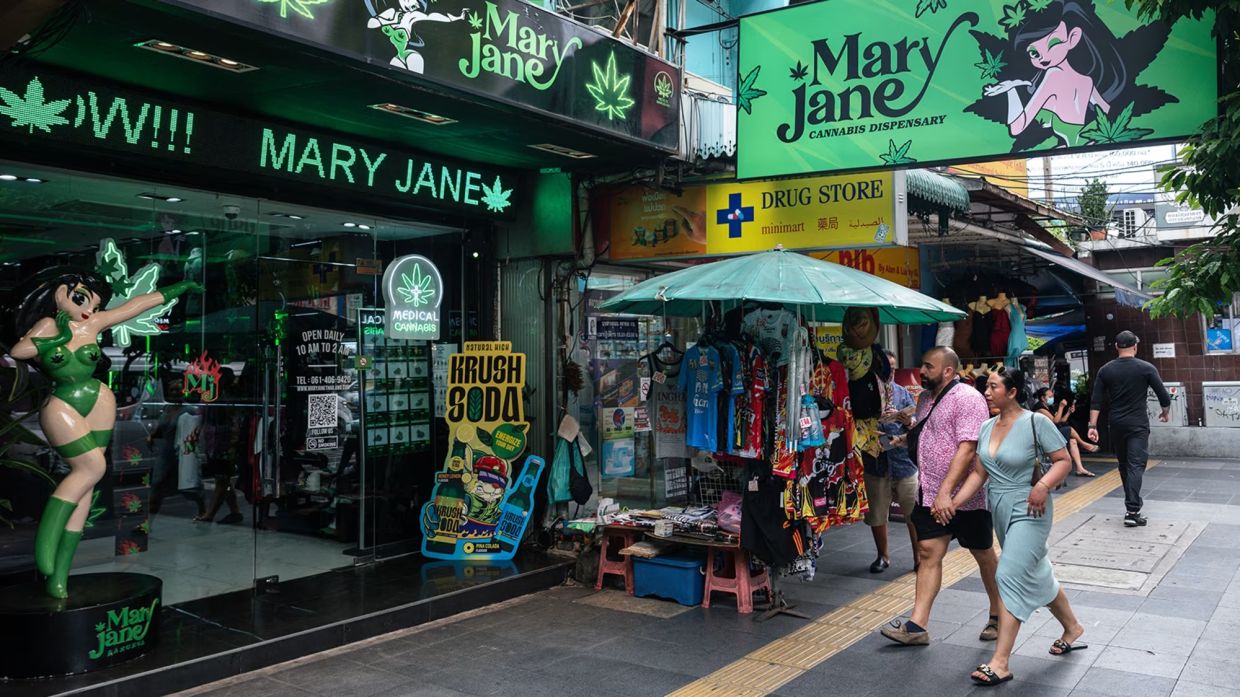
Thailand's approach to cannabis regulation has become a battleground between competing interests, with the House Public Health Committee convening a high-stakes June 18 session to determine whether the country should reverse its liberalisation stance and reclassify the substance as a narcotic. The meeting, chaired by Sakoltee Phattiyakul, assembled medical professionals, government agencies, business operators and advocacy groups to address mounting concerns about widespread informal sales, regulatory gaps and potential public health consequences that have emerged since the government began loosening restrictions three years ago.
The fundamental tension driving this policy review reflects Thailand's ongoing struggle to manage cannabis as both a potential medical and agricultural commodity while protecting public welfare. Since the Department of Thai Traditional and Alternative Medicine began overseeing cannabis cultivation in June 2022, the regulatory landscape has become increasingly fragmented. Current oversight falls under the Protection and Promotion of Thai Traditional Medicine Wisdom Act 1999, a framework designed for traditional herbs rather than a substance with complex pharmacological properties and significant psychoactive potential. This legal mismatch has created precisely the kind of regulatory vacuum that opponents of the current system argue enables illicit operators to flourish alongside supposedly legitimate enterprises.
Dr Tewan Thaneerat, the department's deputy director-general, acknowledged that concerns about cannabis availability have persisted since liberalisation began. The government attempted to address these anxieties in June 2025 through three new regulations governing research, sales, processing and exports, which were designed to align with international standards. However, medical professionals and public health advocates argue these measures have proven insufficient. The existence of cannabis flowers classified as controlled herbs rather than narcotics has created peculiar legal anomalies where certain plant components remain outside criminal jurisdiction, enabling exploitative operators to circumvent regulations through selective cultivation and distribution of non-restricted parts.
Medical representatives presented a compelling case for temporary reclassification as a pathway to comprehensive reform. Ekkapop Sittiwantana, a deputy committee chairman from the People's Party, contended that returning cannabis to the narcotics schedule would provide breathing room for lawmakers to develop a purpose-built regulatory law. He highlighted the proliferation of unregistered cultivation and informal direct sales networks that have exploited the current framework's ambiguities. Associate Professor Smith Srisont, representing a coalition of doctors and civic organisations, reinforced this argument by emphasising that despite cannabis extracts containing more than 0.2 percent THC remaining technically prohibited, widespread availability has already affected communities in measurable ways. The two-step approach—temporary narcotics reclassification followed by detailed regulation—would provide clarity to enforcement officials while preventing a legal vacuum.
The Department of Thai Traditional and Alternative Medicine and its partners have been drafting a comprehensive cannabis and hemp bill since liberalisation began, signalling long-term commitment to legitimate regulation rather than outright prohibition. This legislation was previously submitted to cabinet under a previous government but failed to reach parliamentary consideration before the legislature dissolved. The current Public Health Ministry remains committed to advancing the bill, which has entered public consultation phases expected to conclude by late July before resubmission to cabinet. Officials also collaborate across multiple agencies including the Food and Drug Administration, the Department of Health Service Support and the Office of the Permanent Secretary for Public Health, indicating recognition that cannabis regulation requires coordinated institutional effort.
The Food and Drug Administration presented evidence that its existing oversight mechanisms have functioned reasonably well within their designed scope. The agency's licensing system addresses three specific domains: production facilities and processing operations, import procedures, and retail authorisation for certified shops and approved products. Inspection data suggests most examined cannabis-derived products meet labelling standards and material specifications, demonstrating that regulatory oversight mechanisms can achieve technical compliance when properly implemented. Nonetheless, FDA representatives conceded that the fundamental challenge lies beyond their institutional reach—sales occurring through unregistered channels and informal networks that have never entered the formal licensing system cannot be effectively monitored through conventional enforcement approaches.
Cannabis entrepreneurs and their supporting networks contested the case for reclassification, presenting alternative perspectives on regulation and economic fairness. The Thai Cannabis Future Network argued that legitimate operators face existential competitive pressures from black market suppliers, illegally imported products and regulatory unpredictability that prevents long-term business planning. Network representatives alleged that some officials exploit their licensing authority to extract unofficial benefits or exert improper pressure on applicants, a charge that points to systemic corruption undermining the legitimacy of current regulatory channels. Additionally, they highlighted barriers preventing farmer participation in the medical economy, including prohibitively expensive prescription processes and instances where medical credentials appeared traded through non-healthcare venues, suggesting that regulatory requirements inadvertently favoured larger, better-resourced operators over smallholder cultivators.
This disagreement over cannabis's appropriate economic status reflects broader questions about Thailand's development priorities. Industry advocates contend that cannabis possesses traditional significance beyond mainstream medical applications and offers genuine economic opportunities for rural communities. They argue that hastily returning cannabis to narcotics lists would devastate farmers who attempted to operate within emerging legal frameworks while doing nothing to address underlying enforcement deficiencies. Conversely, medical and public health constituencies emphasise that expanded access inevitably increases exposure among young people and vulnerable populations, with potential consequences for mental health and developmental outcomes that remain incompletely understood in Thai contexts.
Chairman Sakoltee responded to these competing arguments by commissioning immediate data compilation on all legally licensed cannabis retailers operating in Bangkok, alongside a comprehensive inventory of FDA-approved cannabis products for detailed review. This pragmatic response acknowledges that better information is prerequisite to sound policy, though it also signals frustration with the current system's opacity. He specifically raised concerns about excessive retail accessibility, stressing that any future legislation must incorporate spatial regulations creating protective distances between cannabis shops and educational institutions—a notably modest regulatory intervention that nonetheless addresses documented public health concerns.
The committee simultaneously endorsed a broader investigative approach, authorising additional research into cannabis-related harms and affected populations throughout Thailand. Sakoltee indicated willingness to consider competing legislative proposals from both public sector actors and the Public Health Ministry, suggesting openness to solutions beyond current trajectories. This openness potentially reflects recognition that Thailand's cannabis policy cannot simply replicate models from other countries but must account for local conditions, institutional capacity and social preferences.
The ultimate resolution of Thailand's cannabis policy will significantly influence how Southeast Asian nations approach similar substances during their own regulatory transitions. Thailand's experience demonstrates that liberalisation without simultaneously developing robust enforcement infrastructure and clear legal definitions creates policy vacuums that inevitably favour illegal operators over compliant businesses. The next parliamentary phase will test whether Thai governance institutions can design frameworks balancing legitimate economic participation, agricultural opportunity and public health protection—or whether political pressures will force binary choices between prohibition and uncontrolled access, foreclosing more nuanced middle ground.

