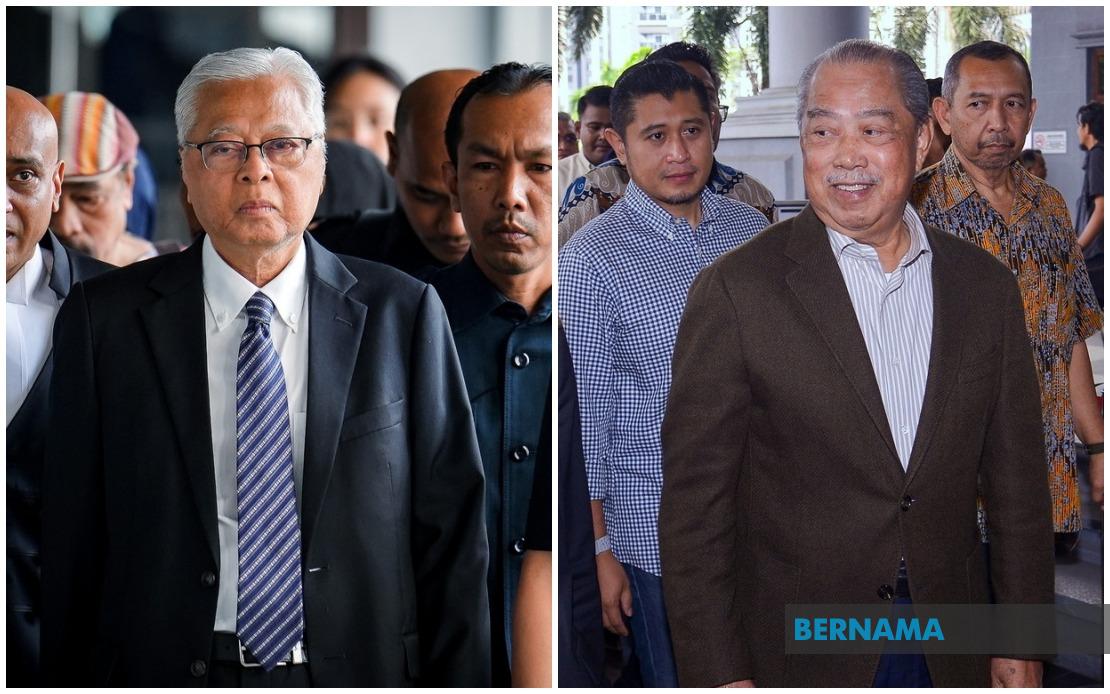
Malaysia witnessed a rare convergence of political history and legal proceedings on August 27 when three former prime ministers appeared at the Kuala Lumpur Court Complex at the same time for separate hearings. The simultaneous presence of Datuk Seri Najib Tun Razak, Tan Sri Muhyiddin Yassin, and Datuk Seri Ismail Sabri Yaakob created an extraordinary moment that journalists and legal observers described as potentially unrepeatable in the nation's judicial annals.
Veteran court reporter V. Anbalagan of Free Malaysia Today articulated the historical significance of the occasion, emphasizing that no journalist in his career had witnessed such a convergence. The unprecedented nature of three former heads of government appearing simultaneously before the courts underscored the turbulent political landscape Malaysia has navigated in recent years, with multiple former leaders facing separate legal challenges that have drawn sustained public and media attention.
The logistics of covering such an event presented journalists with both challenges and opportunities. Bernama TV news officer Siti Zanariah Nor Zin, drawing on 16 years of broadcasting experience, reflected on the exceptional circumstances and commended the coordination that allowed reporters to manage coverage effectively. The staggered arrivals of the three former premiers and their legal representatives provided crucial breathing room for media teams to transmit updates and coordinate their reporting efforts across different courtrooms and procedural schedules.
Security preparations began the previous afternoon, with authorities recognizing that the convergence demanded heightened vigilance and sophisticated crowd management. Police personnel from Sentul district police headquarters, court security officers, and Palace of Justice police coordinated their efforts to ensure that the court complex remained orderly despite the massive media presence and public interest. A court official disclosed that between three and six categories of security passes were distributed to regulate access for journalists, the public, and those utilizing video-link facilities, reflecting the complex security architecture required for such an occasion.
The early morning hours saw the court grounds progressively fill with television crews, photographers, and reporters who arrived as early as 7 am to position themselves strategically. Amirul Aiman Osman from Utusan Malaysia noted that while the atmosphere proved hectic and crowded, the robust security framework prevented any untoward incidents. His comment that he had been stationed at the complex since dawn illustrated the extent of preparation journalists undertook to capture this historic moment comprehensively.
Security officer Nik Zainab Jusoh emphasized how preparatory briefings held the previous day ensured that all personnel maintained heightened alertness throughout the proceedings. Monitoring concentrated on upper floors and courtroom exteriors, where congestion might have posed challenges, while ground-level operations remained controlled and systematic. This tiered approach to security reflected lessons learned from managing high-profile judicial proceedings and the specific vulnerabilities presented by simultaneous hearings.
Najib's presence concerned a USD5.64 billion civil suit initiated by 1Malaysia Development Berhad (1MDB) and its subsidiary against him and multiple other defendants. The case proceeded before Judicial Commissioner Mohamad Redzuan Idrus, addressing allegations that stretched back to the controversial development fund that became synonymous with one of Malaysia's most significant financial scandals. This particular hearing represented a continuation of civil accountability processes alongside the criminal proceedings that have dominated Malaysian courts in recent years.
Muhyiddin faced seven charges related to alleged abuse of power and money laundering connected to the Jana Wibawa programme, appearing before Judge Noor Ruwena Md Nurdin. These allegations, distinct from Najib's cases, reflect the complex web of political and financial accountability issues that have entangled multiple administrations. The multiplicity of charges across different former leaders suggested deeper systemic questions about governance, financial stewardship, and political accountability that extended beyond individual cases.
Ismail Sabri confronted charges concerning asset declaration failures, specifically involving RM14.7 million in cash, substantial quantities of foreign currencies, and gold bars. Appearing before Judge Suzana Hussin, he posted RM300,000 bail with one surety before departing the court complex at 11.43 am. The asset-related charges illustrated how financial irregularities and disclosure violations formed a significant component of the legal frameworks addressing former leaders' conduct.
The convergence of these three separate proceedings within a single day raised profound questions about Malaysian political accountability and judicial processes. For observers and legal analysts, the moment symbolized both the complexity of contemporary Malaysian politics and the judiciary's role in addressing allegations against former heads of state. The unprecedented media coverage of this event created an unusual public documentation of multiple legal proceedings simultaneously, ensuring that Malaysian citizens could witness firsthand the legal mechanisms through which their nation's institutions address former leaders.
Journalists emphasized that while such a convergence might theoretically occur again, the circumstances surrounding this specific date—involving these three particular former prime ministers, their different cases, and the coordinated scheduling—rendered it genuinely historic. The event illuminated how Malaysia's judicial system manages complex, high-profile cases involving former political leadership while maintaining order and ensuring that media access serves the public interest. The smooth coordination between security forces, court officials, and media representatives demonstrated institutional capacity to handle extraordinary circumstances, though observers acknowledged that replicating such an event remained virtually impossible.

