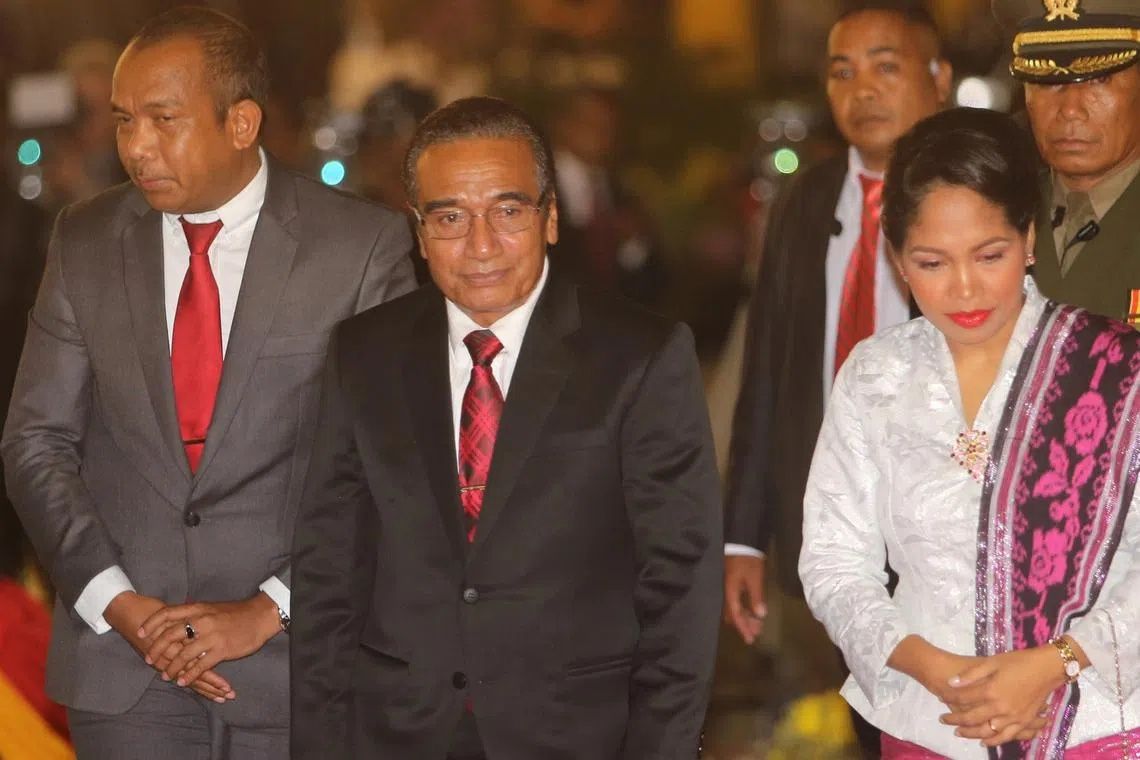
The government of Timor-Leste has proclaimed a week of national mourning after the death of former president Francisco "Lu-Olo" Guterres, who passed away over the weekend at a hospital in Malaysia. The 71-year-old statesman, who served as the nation's sixth president between 2017 and 2022, was a towering figure in the Southeast Asian country's struggle for sovereignty and self-determination. His death marks the end of an era for a nation that has only recently emerged from decades of foreign occupation and conflict.
Guterres came to symbolise the resilience of the Timorese people through his long involvement in both armed and political resistance. Beginning as a guerrilla fighter during Indonesia's brutal 24-year occupation that lasted until 2002, he later transitioned into civilian leadership roles as Timor-Leste built its democratic institutions. His transformation from combatant to statesman reflected broader patterns of post-conflict nation-building across the developing world, where liberation struggle leaders have had to adapt their skills to the demands of governance. The former Fretilin party leader's trajectory demonstrated the challenges such figures face when navigating the shift from revolutionary fervour to bureaucratic responsibility.
Following the announcement of his death on June 22, the government immediately ordered the lowering of flags to half-mast across all public buildings, diplomatic missions, embassies and consulates. This symbolic gesture, replicated throughout the capital Dili and beyond, reflected the broad respect that Guterres had commanded across Timorese society despite his electoral defeat two years earlier. The decision to honour him in this manner suggested that national grief transcended political divisions, with even his successor recognising his contributions to the nation's founding principles and early years of independence.
Current President Jose Ramos-Horta, who defeated Guterres in the 2022 presidential runoff election, issued a statement describing the departed leader as a "great patriot" whose loss represented "a significant blow to the nation". The cordial recognition from his political rival underscored the maturity of Timor-Leste's democratic institutions and the personal dignity both men had maintained despite their electoral contest. Ramos-Horta's public acknowledgement of Guterres's legacy demonstrated how post-conflict societies can preserve national cohesion even as power changes hands, an important model for other developing democracies wrestling with questions of legitimacy and leadership transition.
Guterres's body is scheduled to return to Dili on Tuesday, according to his brother Domingos Guterres, who briefed reporters on arrangements still being finalised by the family. The repatriation of the former president's remains signals the beginning of a prolonged period of national reflection and commemoration. His final journey home will likely attract large numbers of supporters and dignitaries, both domestically and from regional partners, many of whom will wish to pay respects to a man whose life embodied the aspirations of a nation that achieved independence little more than two decades ago.
The family has appealed for privacy during this period of grief, requesting that the public respect their need for space as they mourn. Their statement acknowledged the outpouring of sympathy and support from supporters, Fretilin party members, and ordinary Timorese citizens, while emphasising the deeply personal nature of their loss. This balance between national significance and private bereavement reflects how figures of historical importance occupy a complicated space in collective consciousness, belonging simultaneously to their families and to the nation at large.
Guterres's political career reached its apex in 2017 when he secured the presidency with just over 57 percent of the vote, a commanding mandate that suggested broad confidence in his ability to lead the young nation through its second decade of independence. His election represented a validation of his decades of sacrifice and service to the independence cause. However, his 2022 reelection bid proved unsuccessful, as voters turned to Ramos-Horta, a Nobel Peace Prize laureate with his own substantial liberation credentials. The electoral outcome illustrated how even beloved historical figures must ultimately answer to the democratic will of the people they served.
Guterres's involvement in the independence struggle spanned the entire period of Indonesian occupation, making him one of the oldest surviving veterans of that liberation campaign. The guerrilla forces he helped lead operated under extraordinarily difficult circumstances, facing superior military technology and resources while attempting to sustain popular support in mountainous terrain. His survival through this era and subsequent transition to elected office placed him among a small cohort of Southeast Asian independence leaders who shaped both the armed and political dimensions of their nations' emergence into sovereignty.
Regional leaders have begun issuing statements of condolence, with Malaysian Prime Minister Datuk Seri Anwar Ibrahim expressing deep sadness at Guterres's passing and extending sympathies to his family and the Timorese people. Anwar's statement, emphasising that "Malaysia mourns his passing alongside the Timorese people" and that he "will be remembered here with respect and affection," reflected the regional significance of Guterres's role and the interconnectedness of Southeast Asian political narratives. Malaysia's substantial Indonesian diaspora and longstanding ties to Timor-Leste made this expression of grief particularly meaningful, highlighting the personal bonds that cross national boundaries among those who experienced Southeast Asia's struggles for independence and regional cooperation.
The week of mourning will provide Timor-Leste with formal space to reflect on the founding generation's contributions and to consider the nation's trajectory as it matures beyond its immediate post-independence phase. Guterres represented a bridge between the revolutionary period and the democratic present, and his loss prompts questions about how young nations preserve institutional memory while advancing into new eras. For Malaysia and other Southeast Asian countries watching Timor-Leste's development, the death of such a foundational figure offers both a moment of regional solidarity and an opportunity to consider broader patterns of leadership succession and nation-building in the twenty-first century.

