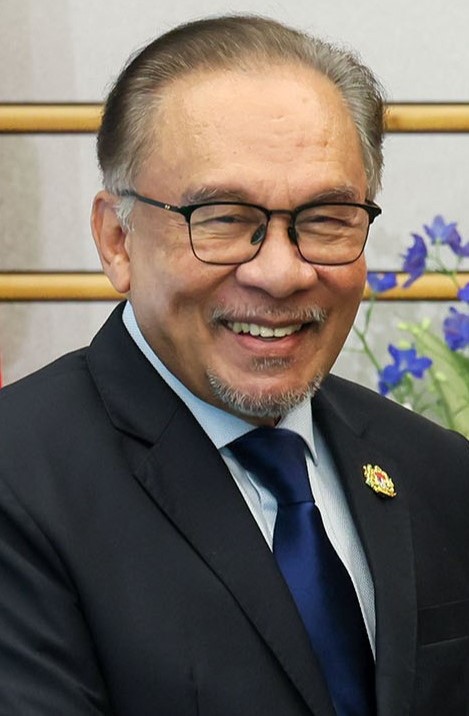
The recognition bestowed upon this year's Tokoh Maal Hijrah award recipients should galvanise the broader Muslim community in Malaysia to redouble efforts in pursuit of knowledge and service, according to Deputy Prime Minister Datuk Seri Dr Ahmad Zahid Hamidi. Speaking in the wake of the national-level awards ceremony held at Masjid Putra in Putrajaya, Ahmad Zahid framed the honour as extending beyond individual achievement, instead positioning the recipients as exemplars whose accomplishments carry broader implications for religious scholarship and social contribution across the nation.
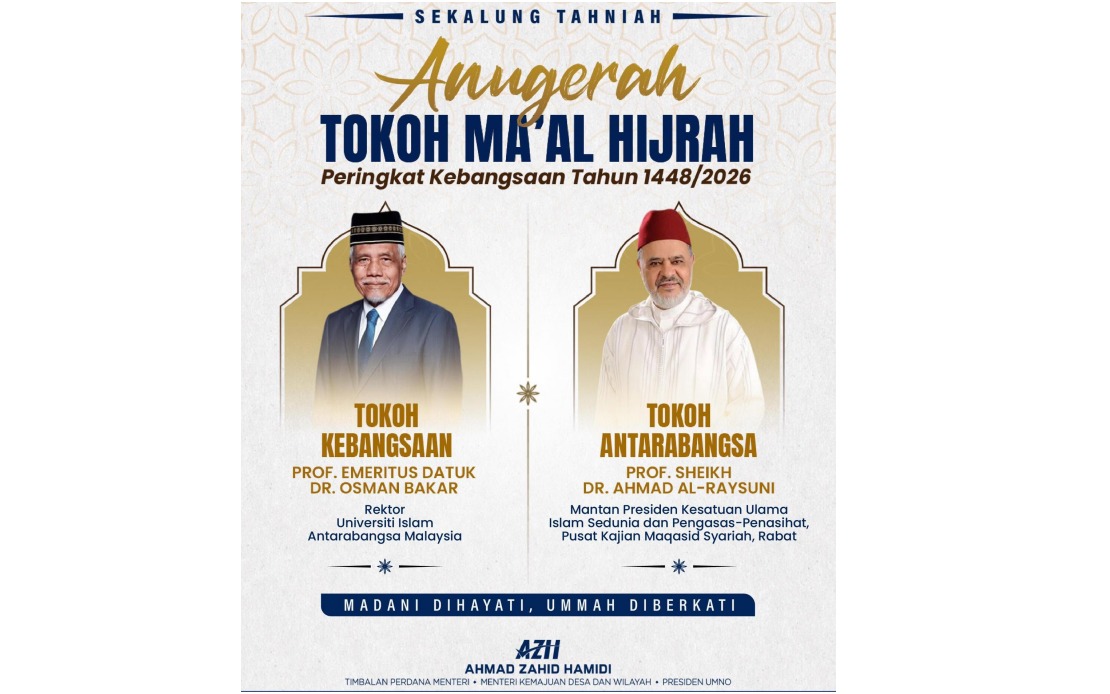
The ceremony, presided over by Sultan Nazrin Shah of Perak, recognised two distinguished figures for their intellectual and spiritual leadership. Prof Emeritus Datuk Dr Osman Bakar received the National Tokoh Maal Hijrah Award, while Prof Sheikh Dr Ahmad Al-Raysuni, an esteemed Islamic jurisprudence scholar from Morocco, secured the International Tokoh Maal Hijrah Award. Both recipients were honoured with cash prizes, trophies and certificates of appreciation, underscoring the significance accorded to their respective contributions.
Ahmad Zahid articulated a vision of these accolades as catalysts for broader engagement within the Muslim population. He emphasised that the recipients' journeys should motivate others to intensify their commitment to knowledge acquisition, a cornerstone principle within Islamic tradition. Beyond personal development, he stressed the importance of channeling such scholarly pursuits toward tangible benefit for the wider community and the collective advancement of the ummah—a concept encompassing the global Muslim community united by faith.
The Deputy Prime Minister's remarks underscored how the honoured individuals have contributed meaningfully to the empowerment of Malaysia's Muslim constituency through their intellectual endeavours. He highlighted their roles in enhancing the standing of Islamic knowledge within society and disseminating Islamic principles grounded in mercy, wisdom and practical utility. These characterisations suggest an official view of Islamic scholarship as instrumental to social well-being, positioning religious learning not as insular or purely theological but as directly relevant to contemporary challenges facing Muslim-majority societies.
Paralleling Ahmad Zahid's observations, Deputy Prime Minister Datuk Seri Fadillah Yusof endorsed the inspirational value of the awards, yet framed his remarks with broader national resonance. Rather than addressing Muslims exclusively, Fadillah extended his message to encompass all Malaysians, reflecting the inclusive civic language increasingly deployed by government figures when addressing issues intersecting religion and national identity. He congratulated the recipients while positioning their contributions as advancing the development trajectory of the ummah writ large.
Fadillah drew explicit connections between the concept of Hijrah—Prophet Muhammad's migration from Mecca to Medina in 622 CE—and contemporary nation-building imperatives. Rather than treating Hijrah as purely historical narrative, he reinterpreted it as an enduring philosophical framework embodying sacrifice, cohesion, fortitude and purposeful transformation toward progressive change. This reframing carries particular resonance within Malaysia's context, where navigating religious identity, national unity and development goals remains an ongoing political and social endeavour requiring careful calibration.
The Deputy Prime Minister articulated a vision wherein the Hijrah's foundational values should inform contemporary efforts to construct a society that balances material prosperity with moral and spiritual foundations. This formulation addresses persistent concerns within Malaysian discourse regarding the relationship between economic advancement and values preservation—a tension particularly acute in Southeast Asia's rapidly modernising urban centres where traditional social structures face disruption from globalisation and technological change.
Fadillah's call for collaborative effort to reinforce social cohesion, deepen religious commitment and augment charitable practice carries implications extending beyond ceremonial rhetoric. His invocation of unity, faith and righteous action as preconditions for ummah and national welfare reflects official prioritisation of collective harmony over individualistic impulses—a theme recurring throughout Malaysian political discourse and governance philosophy. For the nation's Muslim majority, such formulations establish normative expectations regarding civic participation and religious observance.
The elevation of these two scholars—one a Malaysian academic figure, the other an internationally prominent Islamic jurist—indicates governmental interest in promoting Islamic intellectual production as compatible with modernity and scholarly rigour. Prof Osman Bakar's standing within Malaysian academic circles and Prof Al-Raysuni's international repute together suggest an intentional signal that serious Islamic scholarship commands state recognition and resources. This positioning may reflect broader efforts to counter narratives portraying Islamic learning as fundamentally at odds with scientific inquiry or contemporary knowledge production.
Within the Southeast Asian context, Malaysia's ceremonial elevation of Islamic scholarship and community-oriented religious practice carries regional implications. The nation has positioned itself as a Muslim-majority democracy managing religious plurality and development aspirations simultaneously. By honouring scholars emphasising mercy, wisdom and social benefit as core Islamic principles, Malaysian leadership projects an interpretation of Islam aligned with inclusive governance rather than sectarian fragmentation—a message with potential resonance across diverse Muslim populations throughout the region grappling with comparable modernisation challenges.
The awards ceremony itself, hosted within Putrajaya's administrative precinct and graced by royal patronage, underscores institutional commitment to recognising Islamic intellectual labour as foundational to national development. For Malaysian Muslims seeking contemporary models of meaningful religious engagement, the recognition of scholars balancing traditional learning with social utility offers validation that piety need not entail withdrawal from civic participation or professional advancement. This implicit curriculum carries particular significance for younger generations navigating identity formation within plural societies.
Looking forward, the celebration of these recipients appears designed to establish aspirational benchmarks within Malaysia's Muslim community. By publicly commending individuals advancing Islamic knowledge in service of broader social welfare, state institutions implicitly encourage emulation of such examples. The awards mechanism thus functions not merely as ceremonial recognition but as a governance tool promoting particular conceptions of virtuous Islamic practice—one emphasising erudition, social responsibility and constructive engagement with contemporary challenges.