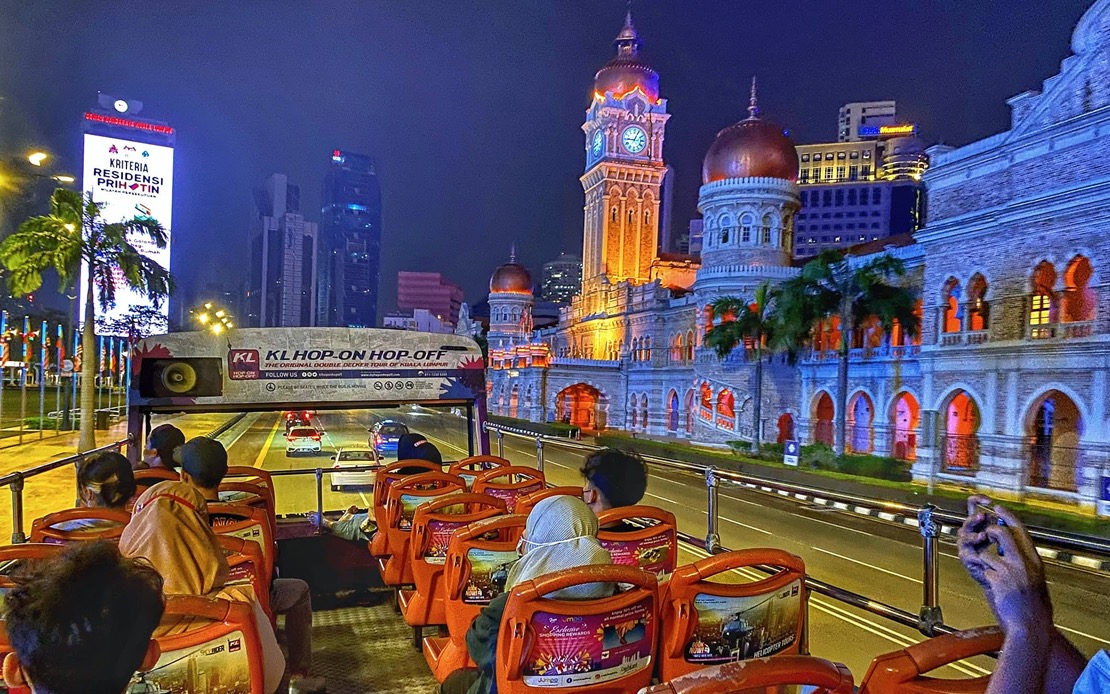
Tourism Malaysia and bus operator Elang Wah Sdn Bhd have unveiled a fresh campaign to galvanise domestic travel through a high-visibility partnership with KL Hop-On Hop-Off, the popular sightseeing service. Announced on June 24 in Kuala Lumpur, the initiative seeks to energise Malaysians to explore their own country whilst building momentum for Visit Malaysia 2026, the government's signature tourism drive.
Minister of Tourism, Arts and Culture Datuk Seri Tiong King Sing underscored the strategic importance of strengthening domestic tourism as a cornerstone of Malaysia's broader tourism strategy. Local travel, he noted, generates sustained economic benefits that extend beyond major hotels and attractions, trickling into smaller communities and supporting diverse service sectors. The ripple effects of domestic tourism—from transport and hospitality to food and retail—create employment across regions and help balance tourism revenue across the nation rather than concentrating it in major hubs.
The collaboration exemplifies a pragmatic approach to brand-building. By commandeering six KL Hop-On Hop-Off buses as moving billboards, Tourism Malaysia transforms commuter vehicles into touring promotional platforms. The buses will display custom wraps showcasing major attractions spanning 15 states and federal territories, from the Sri Sendayan Mosque in Negeri Sembilan to the Pinnacles of Mulu in Sarawak. This geographical breadth signals to Malaysians that compelling destinations exist far beyond their immediate surroundings, challenging the perception that tourism is concentrated in tourist hotspots like Kuala Lumpur and Penang.
Technology integration amplifies the campaign's reach. Each wrapped bus incorporates interactive QR codes that direct passengers and street-level onlookers to curated travel offers, the official Calendar of Events for VM2026, and dedicated state tourism websites. This seamless bridge between offline advertising and digital engagement allows the campaign to convert casual interest into actionable bookings and information-seeking behaviour. For a technologically diverse audience, QR codes provide low-friction access to deeper content without requiring passengers to search or remember specific URLs.
The timing reflects buoyant market conditions. Domestic tourism surged 21.3 per cent in 2025, with visitor arrivals reaching 290.1 million compared to 260.1 million the previous year. Simultaneously, total spending within Malaysia climbed 13.3 per cent year-on-year to RM121.0 billion, up from RM106.7 billion. These figures demonstrate that Malaysians have both appetite and disposable income for leisure travel, a foundation upon which campaigns like this one build.
The campaign's regional implications warrant attention. As Southeast Asian tourism recovers and intensifies post-pandemic, neighbouring countries are aggressively pursuing outbound tourists and cross-border visitors. Thailand, for instance, has ramped marketing spend substantially. By concentrating on the domestic base—a market that remains undermonetised relative to international arrivals—Malaysia strategically builds tourism infrastructure and experience quality that will later attract foreign visitors. Domestic tourism campaigns thus serve a dual purpose: immediate revenue and market preparation.
For Malaysia's smaller and peripheral states, such visibility is particularly valuable. Sarawak's Mulu Caves, Sabah's Kinabalu Park, and lesser-known destinations in Perlis or Terengganu often struggle to compete with Kuala Lumpur and Langkawi for tourist attention and marketing budgets. A national campaign that explicitly showcases these locations normalises their inclusion in travel itineraries and encourages Malaysians to venture beyond familiar territory. This geographic diffusion of tourism benefit helps reduce regional disparities and supports grassroots economies.
The bus-wrap strategy also capitalises on a captive audience. KL Hop-On Hop-Off passengers are, by definition, tourists or travellers already engaged in sightseeing behaviour. Reaching them with alternative destinations and VM2026 offers taps into an audience with demonstrated willingness to spend on tourism experiences. Equally, pedestrians and motorists passing the buses encounter the messaging repeatedly, building top-of-mind awareness through frequency and creative visual design.
Industry participation extends beyond promotion. The campaign strengthens the ecosystem of tourism service providers by generating demand that cascades through multiple sectors. Hotels, restaurants, transport operators, and attraction managers in peripheral regions stand to benefit from increased domestic visitation, provided they maintain competitive service standards. This creates a virtuous cycle where campaign-driven demand incentivises investment in tourism infrastructure and service quality, which in turn justifies future marketing outlays.
Looking ahead to VM2026, this campaign establishes a crucial foundation. The mega-year campaign requires not only international arrivals but also repeat domestic visitors who will fill accommodation, dine at restaurants, and purchase experiences during peak tourism seasons. Building domestic visitation habits now ensures that when international marketing reaches fever pitch in 2025-2026, Malaysia's tourism infrastructure—from accommodation to attractions—operates near optimal capacity and delivers the consistent, high-quality experiences needed to convert first-time visitors into repeat tourists.
The QR code integration also generates data valuable for future targeting. As Malaysians scan codes and visit linked websites, Tourism Malaysia captures behavioural insights into which destinations, events, and offers resonate with domestic audiences. This granular understanding enables more precise, segmented marketing in subsequent campaigns and allows operators to tailor offerings to demonstrated preferences rather than relying on demographic assumptions alone.
Sustainability considerations underscore the campaign's longer-term value. Encouraging local tourism reduces environmental strain from international long-haul flights whilst supporting local communities directly. As Malaysia positions itself as a responsible tourism destination—an increasingly important differentiator in affluent source markets—demonstrating commitment to domestic and sustainable tourism strengthens the nation's brand narrative.
The collaboration between a government agency and private operator also signals confidence in Malaysia's tourism sector recovery and growth trajectory. Private companies typically commit resources only to ventures they believe will generate returns. Elang Wah's participation suggests the operator expects increased ridership and ancillary spending flowing from the heightened domestic tourism awareness the campaign will generate. This alignment of incentives between public promotion objectives and private commercial interests creates a sustainable model worthy of replication across other sectors and partnerships.

