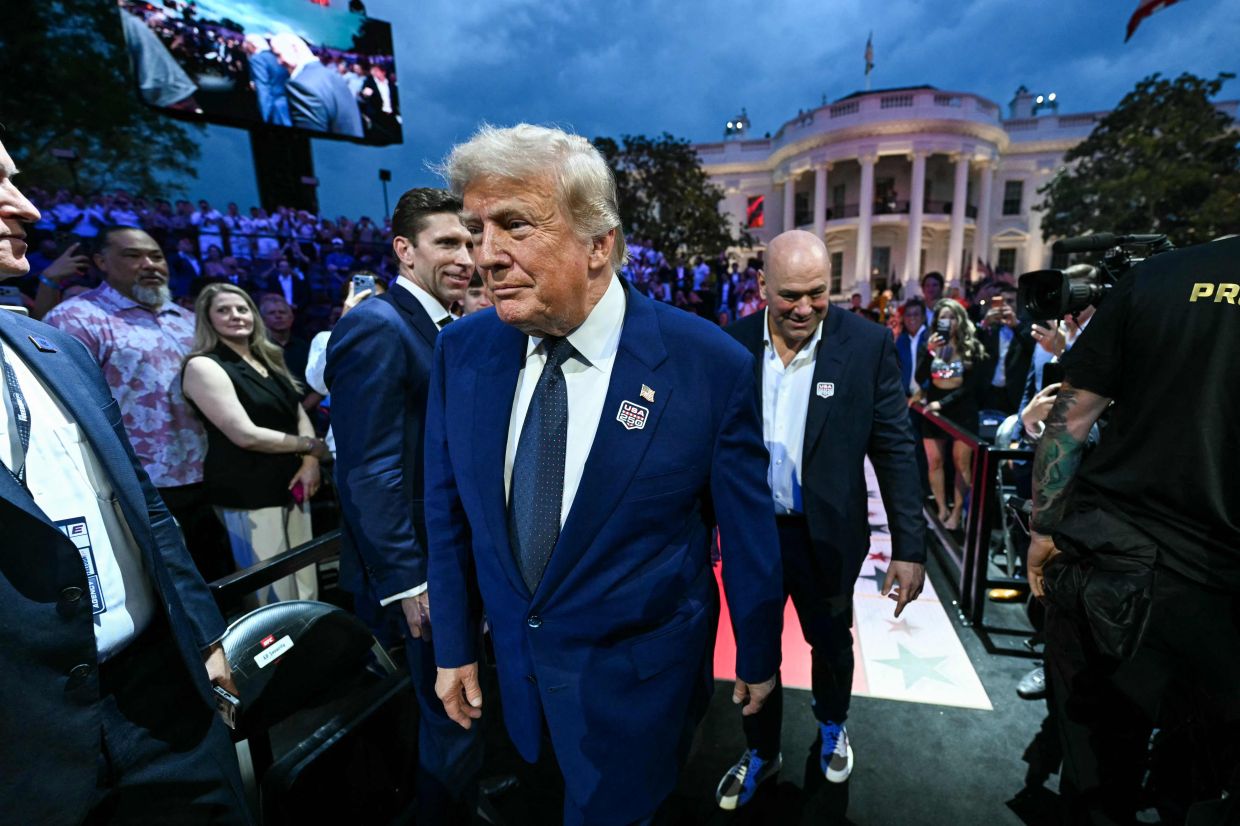
Donald Trump chose to mark his 80th birthday with a spectacle befitting the occasion: bringing the Ultimate Fighting Championship to the South Lawn of the White House on Sunday evening, hours before embarking on a contentious diplomatic mission to France to meet with Group of Seven leaders. The event, which kicked off just before 8:30 p.m., featured cage fights under a nearly 100-foot-tall "Claw" arena structure, representing one of the most unconventional uses of the presidential residence's grounds in recent memory.
The gathering assembled an impressive roster of attendees from the worlds of technology, entertainment, and government. Meta Platforms Inc. CEO Mark Zuckerberg, Paramount Skydance Corp. CEO David Ellison, and Treasury Secretary Scott Bessent rubbed shoulders with members of Trump's family while watching the matches unfold. Podcast host Joe Rogan, whose platform resonates powerfully with young male voters who formed a crucial part of Trump's 2024 election coalition, provided live commentary throughout the evening. The White House coordinated with military bases globally, including in Okinawa, Japan, to broadcast the fights to assembled servicemembers, lending the event an unusual national security dimension.
The infrastructure erected for the occasion demonstrated the scale of Trump's ambitions. The Claw arena itself provided seating for 4,300 spectators, while an additional 120,000 people were expected to gather at the nearby Ellipse, where free tickets had been distributed through a lottery system. The ceremonial aspects reflected careful orchestration: Medal of Honor recipients and first responders escorted fighters into the arena, while the South Lawn, traditionally host to more conventional presidential events such as the Easter Egg Roll and Congressional Picnic, was transformed into a combat sports venue. A slight weather delay, caused by lightning strikes and thunder over the nation's capital, caused minor disruptions but did not derail the proceedings.
The event itself formed part of a broader celebratory initiative marking the 250th anniversary of the United States. UFC's hosting of the fights was integrated into what the administration framed as a comprehensive birthday observance for the president, complete with a commemorative gold coin bearing Trump's likeness and plans for an IndyCar race through Washington DC's streets in August. The strategic timing allowed Trump to simultaneously celebrate his personal milestone while promoting his administration's patriotic messaging around the nation's founding anniversary.
Financially, the operation represented a significant undertaking. TKO Group Holdings Inc., the parent company of the UFC, committed over US$60 million to staging the event. The White House officially stated that the UFC covered all costs and handled sponsorship arrangements independently, though more than seven federal agencies allocated considerable resources and manpower to the undertaking, according to court documents. Sponsors visible on the UFC Freedom 250 website included Crypto.com and the Ram truck brand, while Trump's family venture World Liberty Financial contributed an additional US$250,000 bonus to the event's top two fighters.
For the UFC itself, the White House hosting represented unprecedented access to a demographic proving crucial to Republican electoral success. The organization's young, predominantly male fan base had significantly backed Trump's election victory, and his administration reciprocated with formal partnerships: both the State Department and Federal Bureau of Investigation signed cooperation agreements with the company. UFC President Dana White, a longtime ally of the president, had long championed the league's fights to Trump, and Sunday's event was formally organized at the president's behest. While White publicly characterized the event as a financial loss for his organization, internal discussions among other company executives suggested different calculations.
The celebration did not proceed without controversy. A lawsuit filed by the Public Integrity Project characterized the White House fights as a "volcano of corruption," and public opinion appeared decidedly mixed. A YouGov poll released June 5 found that 51 percent of Americans surveyed disapproved of the White House fight, while only 27 percent approved. The use of federal resources and the appropriateness of hosting such a spectacle at the nation's most symbolic residence animated debate across political and cultural lines.
The promotional activities surrounding the fights incorporated Washington DC's most iconic venues. UFC President Dana White and the competing fighters held a press conference at the Lincoln Memorial, where combatants engaged in the traditional fight sport ritual of exchanging insults and predicting victory. Fighter Michael Chandler framed his participation in terms of national patriotism, expressing his determination to demonstrate "the best version" of himself while fighting "on the White House lawn for America's 250th birthday." The ceremony thus transcended mere sport, becoming intertwined with patriotic symbolism and national mythology.
Preparing the White House grounds for the event required significant logistical adaptation. Locker rooms were established on the presidential grounds themselves, including in the Indian Treaty Room, a space conventionally reserved for formal official ceremonies. The Claw structure, towering higher than the White House building itself, represented a temporary but visually dominant addition to the landscape. In a TikTok video released June 2, Trump mused about the possibility of leaving the structure in permanent place, comparing its architectural appeal to the Eiffel Tower in Paris. However, he subsequently claimed the remark was joking, and administration court filings confirmed that disassembly would commence at 10 a.m. Monday, immediately following the event.
The timing of the event highlighted the intersection of Trump's personal celebration with broader geopolitical considerations. Following the UFC fights, the president would depart for France to engage with other Group of Seven leaders on substantive international issues. Yet the administration ensured that Trump would carry away from the event a UFC championship belt, according to the company, providing a tangible symbol of the evening's conclusion. The contrast between the spectacle of Sunday night and the diplomatic discussions awaiting in France underscored Trump's distinctive approach to the presidency: one that seamlessly blended celebrity culture, patriotic messaging, and formal state functions.
The event ultimately revealed the degree to which professional sports, political mobilization, and presidential symbolism have become intertwined in contemporary American politics. Trump's decision to host the UFC at the White House represented not merely a personal birthday celebration but a strategic deployment of cultural capital targeting the demographic coalition that secured his 2024 election victory. The willingness of major technology and entertainment executives to participate in the event, alongside the government's commitment of substantial resources and formal partnerships, demonstrated the normalization of such arrangements within the current political establishment. For regional observers in Southeast Asia, the spectacle offered a window into how American political leaders leverage popular culture and entertainment to consolidate support among core constituencies.