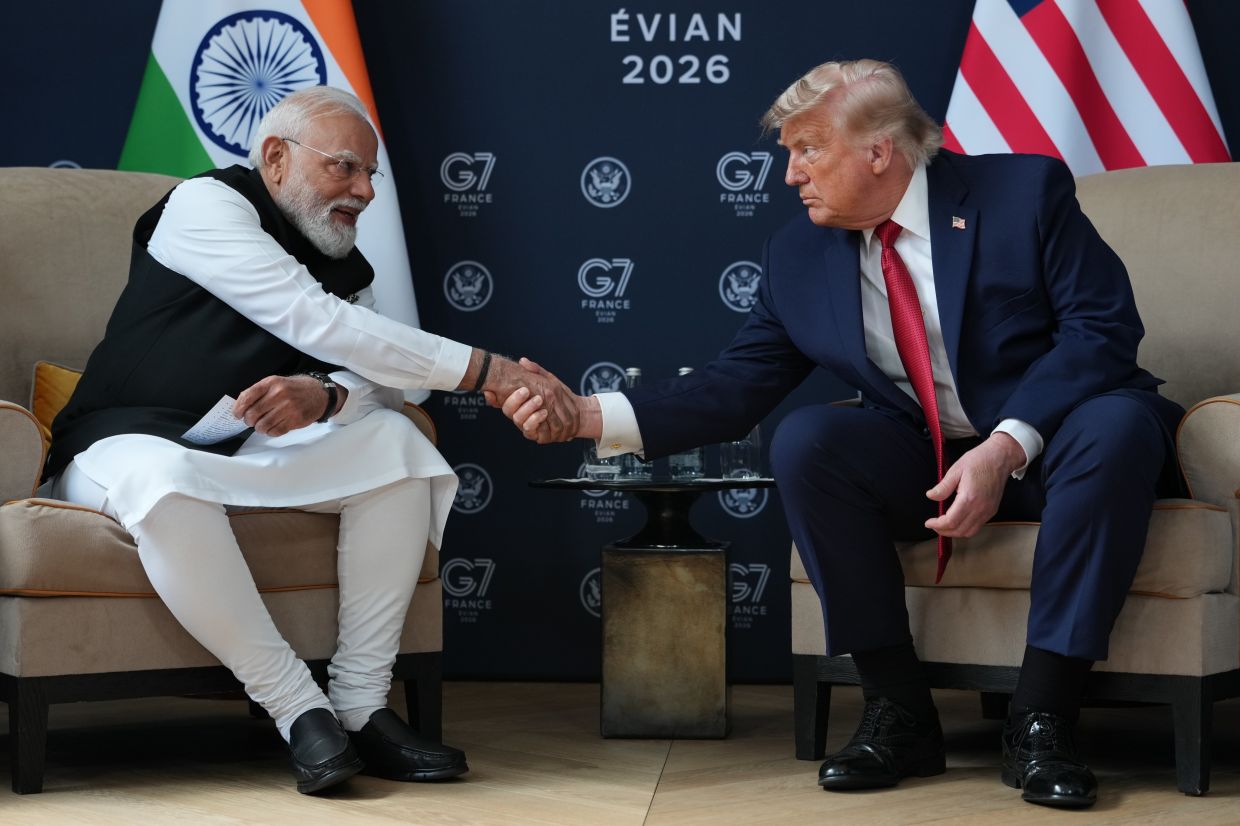
During a bilateral meeting with Indian Prime Minister Narendra Modi—their first in 16 months—US President Donald Trump declined to offer any apology or condolences regarding the deaths of three Indian nationals, instead downplaying the incident as an unfortunate consequence of maritime commerce. Speaking to journalists after the encounter, Trump acknowledged hearing about the incident but framed the tragedy within the context of ongoing US-India collaboration, stating that both nations would continue working together while characterising seafaring as "a rough profession" marked by inherent risks throughout history.
The diplomatic exchange followed a volatile episode in which American forces fired missiles at the Palau-flagged MT Settebello in the Strait of Hormuz, killing the three Indian crew members. US Central Command justified the attack as a response to alleged violations of its naval blockade on Iranian ports, citing what it characterised as illicit transport of Iranian oil. The incident was not an isolated occurrence; American forces also targeted two additional commercial vessels crewed by Indian nationals for comparable alleged infractions of the blockade regime.
Indian Foreign Secretary S. Jaishankar had previously expressed strong official protest during discussions with US counterparts, a position the State Department acknowledged in its public readout of the conversation. However, the American response prioritised reinforcement of its blockade enforcement, with officials emphasising that "violations of the US blockade and the illicit transport of Iranian oil will not be tolerated." This unyielding posture suggested that Washington viewed the incident as justified action rather than a matter warranting diplomatic recalibration.
The incident triggered considerable domestic backlash within India, fracturing the carefully cultivated image of bilateral partnership. Footage circulated widely showing autorickshaw drivers in Delhi tearing down posters celebrating "Happy Birthday America" that displayed Trump's photograph—part of a broader US embassy campaign aimed at promoting goodwill. Such scenes underscore the depth of public sentiment regarding perceived American disregard for Indian lives, particularly when framed against the backdrop of ongoing geopolitical alignments.
Opposition voices in India seized upon the moment to challenge Prime Minister Modi's handling of the relationship. Rahul Gandhi, a prominent opposition leader, used the incident to question the government's agency in its dealings with Washington, posting on social media that "a free country would never tolerate such language" and characterising the government's response as that of an "obedient servant" complying with American directives. This criticism reflects broader anxieties within Indian political circles about the asymmetries embedded in the bilateral relationship, particularly as India seeks to maintain strategic autonomy.
Despite the palpable tensions, both leaders maintained a public facade of cordiality during their meeting. Trump praised Modi as a "tough trader" and "great guy," while signalling intentions to visit India at an unspecified future date. Modi, for his part, expressed confidence that seafarer safety would receive priority during implementation of bilateral agreements, a statement that carried implicit acknowledgment of American actions without directly censuring them. The diplomatic language masked the underlying friction threatening the relationship's trajectory.
The meeting occurred within the broader context of deepening US-India strategic engagement, particularly regarding trade matters. When Trump and Modi last convened in Washington in February 2025, discussions commenced on finalising a bilateral trade agreement that would position India among the first nations to enter formal trade negotiations with the Trump administration. These talks represented a significant diplomatic development, reflecting American interest in deepening economic ties with a key Indo-Pacific partner and India's desire for reciprocal market access and investment frameworks.
Progress on the interim trade deal remains ongoing, with discussions continuing under the purview of the US Trade Representative's office. The negotiations reflect competing priorities and divergent interests on agricultural tariffs, intellectual property protections, and market access provisions. For Malaysia and other Southeast Asian nations, the contours of any US-India trade arrangement carry implications for regional supply chain dynamics, competitive positioning, and the broader architecture of Indo-Pacific economic integration.
Secretary of State Marco Rubio visited India separately and characterised the country as among America's "most important strategic partners," language designed to reinforce commitment amid the sailor incident controversy. His visit served partly to recalibrate messaging and emphasise institutional continuity in the bilateral relationship despite the MT Settebello tragedy. Such diplomatic choreography illustrates how both governments navigate between acknowledging serious incidents and preserving the larger strategic framework upon which their partnership rests.
Trump's deflection on questions regarding the Quad—the informal four-nation alliance comprising the United States, India, Japan, and Australia—suggested deliberate avoidance of commitments or specificity on certain strategic arrangements. This ambiguity reflects broader patterns in Trump administration diplomacy, characterised by transactionalism and reluctance to embrace multilateral commitments that constrain bilateral negotiating flexibility. For regional observers, this approach raises questions about the durability and scope of American strategic commitments in the Indo-Pacific.
The episode encapsulates the tensions inherent in contemporary US-India relations: strategic alignment coupled with genuine disagreements over maritime operations, commercial rights, and the permissible scope of naval enforcement actions. As both nations seek to deepen their partnership amid Chinese regional assertiveness, incidents such as the MT Settebello strike test the resilience of their engagement framework. The apparent willingness of American officials to prioritise blockade enforcement over Indian sensibilities suggests that strategic interest in India remains contingent upon alignment with specific American foreign policy objectives, a reality that may inform how New Delhi calibrates its diplomatic commitments moving forward.

