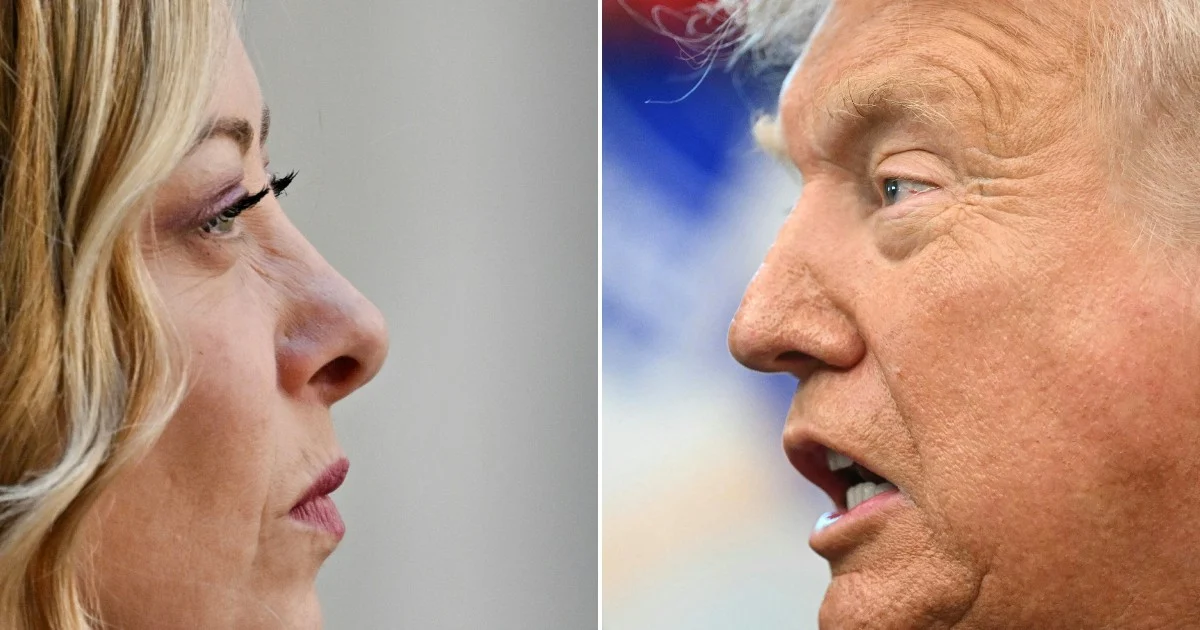
The relationship between Washington and Rome has deteriorated significantly as US President Donald Trump publicly escalated tensions with Italian Prime Minister Giorgia Meloni on Saturday, making pointed accusations regarding her conduct at a recent G7 gathering. Trump's latest comments represent a shift from routine diplomatic friction into more personalised criticism, reflecting underlying policy disagreements that extend well beyond the confines of formal summit photography.
The core of Trump's complaint centres on Meloni's alleged repeated requests for photographs alongside the US President during G7 proceedings. Rather than treating this as a minor protocol matter, Trump has weaponised the accusation, suggesting that Meloni's eagerness to be photographed with him reflects something deeper about her political motivations or standing. This personalised approach to diplomatic criticism marks a departure from traditional protocols that typically insulate summit etiquette from public scrutiny.
For Malaysian observers watching great power dynamics unfold, this fracture within the Western alliance carries considerable significance. The G7 represents the formal coordination mechanism through which wealthy democracies align their positions on global economic and security matters. When fissures emerge at this level, they often signal more profound disagreements that could reverberate through international institutions and coalitions that Malaysia engages with regularly, from trade negotiations to security partnerships in the Indo-Pacific region.
Trump has deliberately interconnected this photograph dispute with substantive policy disagreements, particularly around NATO commitments and Iran strategy. This bundling of personal grievance with geopolitical differences suggests that the US administration views Italy's positions on these critical issues as unsatisfactory. NATO burden-sharing remains contentious, with the Trump administration consistently pressuring European members to increase defence spending. Italy's approach to these obligations may not align with Washington's expectations, creating friction that surfaces through this more sensational controversy.
The Iran dimension adds another layer of complexity to this diplomatic breakdown. Trump withdrew the United States from the Joint Comprehensive Plan of Action, the multilateral nuclear agreement with Iran, during his first presidency. Italy, as a European Union member, maintains a more measured posture toward Iran engagement, attempting to balance American pressure against European commercial and diplomatic interests. Meloni's government may be perceived as insufficiently aligned with Trump's hardline approach, translating into resentment that explodes during high-profile summits.
From a Southeast Asian perspective, this transatlantic discord carries implications worth monitoring closely. Regional governments like Malaysia often navigate between American security assurances and Chinese economic opportunities, requiring careful diplomatic positioning. When the Western alliance itself becomes fractious, it complicates the strategic environment for Indo-Pacific nations trying to maintain balanced relationships. A weakened G7 consensus on major geopolitical questions diminishes the coordinating capacity of democratic economies to shape rules-based international order.
Meloni's political position within Italy also contextualises this dispute. As a right-wing populist leader, she shares certain ideological affinities with Trump's brand of nationalism. However, the Italian Prime Minister also leads a NATO member bound by alliance commitments and EU obligations that constrain her freedom of action. Trump's public criticism may be designed to further strain Italy's balancing act between alliance loyalty and domestic political considerations, potentially using diplomatic pressure as a tool to secure policy concessions.
The photograph controversy itself, while superficially trivial, reflects deeper anxieties about diplomatic respect and standing within international hierarchies. Leaders' eagerness to be photographed together signals alliance health and mutual esteem. By publicly highlighting Meloni's requests for photographs, Trump seeks to invert the traditional understanding of such courtesies, suggesting neediness rather than routine protocol. This inversion carries reputational implications for Meloni domestically and internationally.
Historically, US Presidents have employed public criticism of allied leaders as a negotiating tactic, intending to isolate targets and force policy adjustments. The Trump administration's willingness to pursue this strategy openly, rather than through private diplomatic channels, reflects the current administration's preference for transactional approaches over relationship-building. For regional players watching from Southeast Asia, this unpredictability in US diplomatic behaviour complicates long-term strategic planning and alliance management.
The timing of this escalation matters significantly. G7 coordination on Russia's invasion of Ukraine, economic sanctions regimes, and technological competition with China require unity that becomes harder to achieve when member states are locked in public disputes. Meloni's Italy occupies a moderating position on several European issues, attempting to bridge divisions between more hawkish and cautious European governments. Trump's public attacks may weaken her hand in these internal European debates.
Looking forward, this dispute suggests that the Western alliance architecture may face increasing strain throughout Trump's presidency. Malaysia and other regional countries accustomed to relying on G7 coordination for rule-setting and international stability should prepare for a period of greater unpredictability in multilateral decision-making. When leading democratic economies openly clash over protocol and policy, it creates openings for alternative power blocs to assert influence in spaces traditionally dominated by Western institutions.
The broader lesson emerging from this fracture concerns the fragility of democratic alliance systems when driven primarily by transactional calculations rather than shared values and interests. Meloni and Trump theoretically share ideological common ground, yet personal and policy grievances override these affinities. For Southeast Asian governments seeking stable international partnerships, this demonstrates why building diverse diplomatic relationships across ideological and geopolitical lines remains essential for regional resilience.

