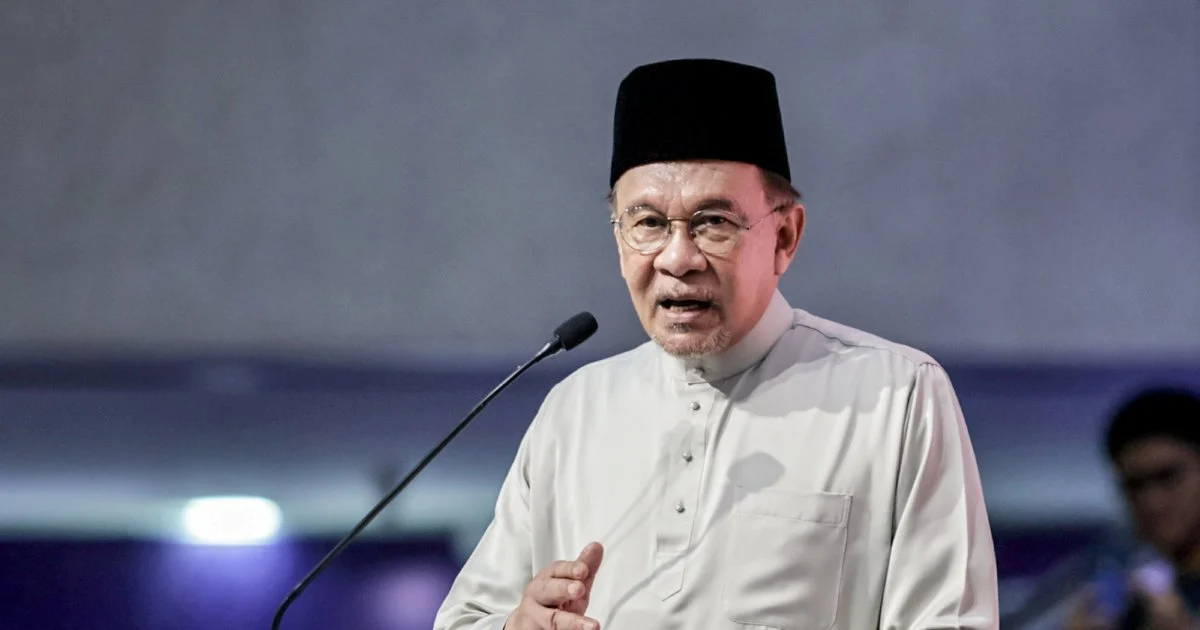
The Tunku Mahkota of Johor, Tunku Ismail Sultan Ibrahim, extended an audience to Prime Minister Datuk Seri Anwar Ibrahim in Kuala Lumpur today, with official observers characterising the encounter as warm and constructive. The meeting between two of Malaysia's most prominent figures underscores the ongoing relationship between the federal government and the Johor royal household, one of the nation's most influential institutional players in regional affairs.
Meetings between the premier and members of the royal families carry significant constitutional and ceremonial weight in Malaysia's Westminster-influenced system of governance. The Tunku Mahkota's willingness to grant audience reflects the established protocol through which the federal administration engages with state-level leadership and the royal establishment. Such engagements often touch upon matters of mutual concern spanning economic development, inter-governmental coordination, and matters affecting the Federation as a whole.
Tunku Ismail Sultan Ibrahim has become an increasingly visible figure in Malaysia's public sphere in recent years, representing the younger generation of royal leadership while maintaining deep roots in Johor's administrative and commercial landscape. As the heir apparent to the Johor throne, his positions and public engagements frequently mirror broader concerns about national development and regional prosperity. His growing prominence has made him a significant voice in discussions about Southeast Asia's economic trajectory and Malaysia's place within it.
Prime Minister Anwar Ibrahim's administration has consistently emphasised the importance of institutional cooperation across all levels of government and the royal structure. The cordial nature of today's meeting aligns with the government's broader approach of strengthening relationships with traditional power centres while pursuing its agenda of economic reform and development. Such interactions provide opportunities to align national priorities with the concerns and perspectives of regional leaders who wield considerable influence over their respective constituencies.
Johor's strategic position within Malaysia cannot be overstated. As the nation's second-largest state by population and a crucial economic hub with significant port facilities and manufacturing capacity, the state's stability and prosperity directly affect national performance. The Tunku Mahkota's role as an emerging force in Johor's governance structure makes his relationship with the federal government a matter of practical importance beyond ceremonial considerations. Any disconnect between federal and state-level leadership in Johor could potentially complicate implementation of national policies affecting the southern region.
The nature of discussions during such meetings typically remains confidential, though the characterisation as harmonious provides reassurance to observers monitoring whether federal-state relations remain stable. In Malaysia's political context, where state governments sometimes pursue agendas that diverge from federal direction, maintaining cordial relations across institutional lines serves as a stabilising force. The Tunku Mahkota's apparent receptiveness to engagement with the current administration suggests a pragmatic approach to governance that prioritises developmental outcomes over political point-scoring.
Recent years have witnessed elevated expectations regarding the Tunku Mahkota's role in guiding Johor's future direction. Young, internationally educated, and active in both traditional and contemporary spheres, he represents a bridge between Malaysia's monarchical traditions and modern governance imperatives. His meetings with senior federal figures carry implications beyond mere protocol, signalling to observers both domestically and regionally the state of relations between different centres of power within the Malaysian system.
From an economic perspective, Johor's ongoing development projects and regional connectivity initiatives intersect directly with federal-level planning. Coordination between the state's leadership and the Prime Minister's office becomes essential when considering infrastructure investments, logistics hubs, and the broader ASEAN economic integration that Malaysia seeks to champion. The Prime Minister's engagement with the Tunku Mahkota can therefore be understood partly through the lens of ensuring alignment on strategic economic matters that affect both Johor specifically and the nation more broadly.
The decision to hold this audience in Kuala Lumpur rather than Johor adds another interpretive layer. It demonstrates the Tunku Mahkota's willingness to engage at the federal centre rather than insisting on formal engagements at the state level, a posture that typically signals cooperative intent. Such flexibility in diplomatic protocol can facilitate more substantive discussions unencumbered by the formalities that sometimes accompany meetings in official state settings.
As Malaysia navigates complex regional dynamics and economic challenges that require coordinated responses across state and federal boundaries, the maintenance of functional relationships between the Prime Minister and major state leaders becomes increasingly consequential. Today's cordial meeting between Anwar Ibrahim and the Tunku Mahkota of Johor reinforces the institutional stability upon which effective governance depends. For Malaysian observers and regional watchers, such visible signals of harmonious relations across the traditional power structure provide confidence that the nation's multiple centres of authority remain aligned on fundamental matters of state interest and national prosperity.

