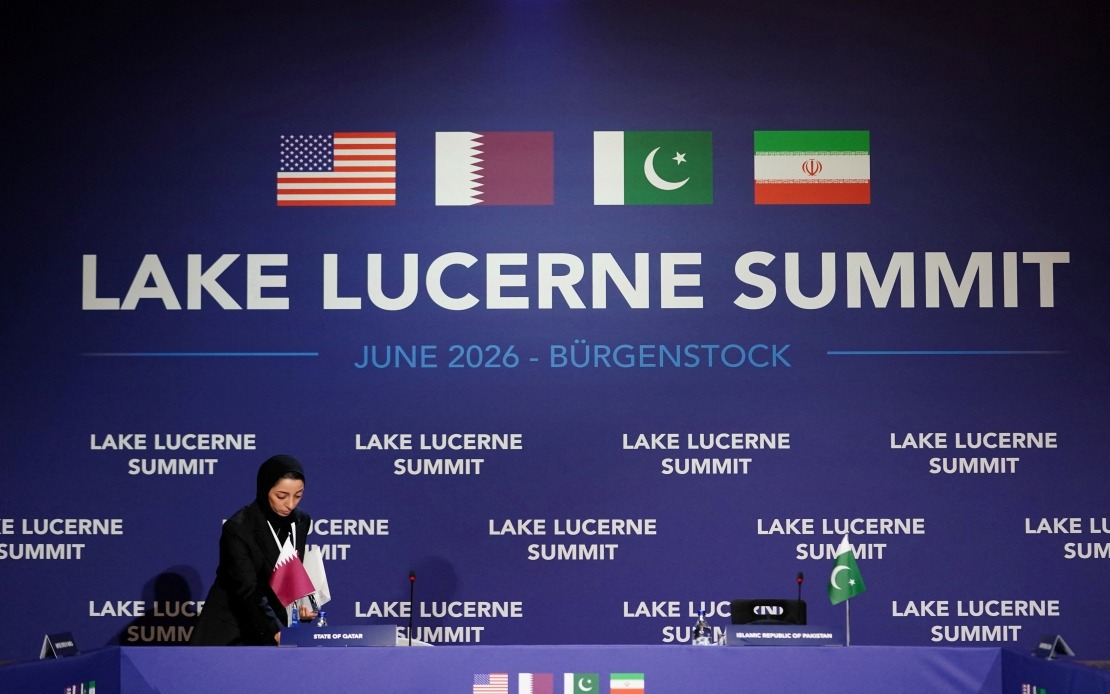
Four influential Middle Eastern and South Asian nations have jointly endorsed a significant agreement between the United States and Iran, signalling renewed diplomatic momentum in one of the world's most volatile regions. At a meeting convened in Cairo, the foreign ministers of Türkiye, Egypt, Pakistan and Saudi Arabia released a coordinated statement on Sunday affirming their support for the Islamabad Memorandum of Understanding, a development that underscores the broader appetite among regional stakeholders for reducing tensions in West Asia.
The backing of these four powers carries particular weight given their collective influence across the Middle East, South Asia and Eastern Mediterranean. Türkiye straddles Europe and Asia while wielding influence in Syria and the Eastern Mediterranean; Egypt controls the Suez Canal and exercises significant sway across the Arab world; Pakistan commands attention as a nuclear power with substantial regional reach; and Saudi Arabia, as custodian of Islam's holiest sites and leader of the Gulf Cooperation Council, wields enormous economic and geopolitical influence. Their joint endorsement therefore represents a rare alignment of interests at a time when the region has been fractured by competing agendas.
The foreign ministers characterised the memorandum as a constructive step aimed at de-escalation and the termination of conflict that has created profound risks for regional security and stability. Beyond the traditional security concerns, the statement identified broader implications for global economic systems, particularly energy markets, international shipping lanes, supply chains and international commerce. This framing acknowledges that instability in West Asia does not remain confined to the region—it sends reverberations across interconnected global networks that affect pricing, shipping insurance, manufacturing schedules and consumer costs worldwide.
The four nations specifically commended the role of Pakistan in shepherding the negotiation process and organising the meeting framework that produced the agreement. Pakistan's prominent mention reflects its increasing importance as a mediator in regional disputes and its desire to position itself as a stabilising force amid geopolitical turbulence. Qatar also received recognition for its diplomatic support, consistent with Doha's traditional function as a neutral broker and facilitator of dialogue among parties with divergent interests.
Yet the statement did not simply celebrate the achievement; it set conditions for future progress. The ministers stressed the necessity of moving expeditiously toward subsequent rounds of negotiations aimed at producing a comprehensive, verifiable and mutually satisfactory resolution of remaining grievances. This language acknowledges that the memorandum, while significant, remains preliminary—substantial work lies ahead to convert this initial understanding into durable structural arrangements.
Crucially, the statement stipulated that any subsequent agreements must incorporate the security interests of Gulf states and Levantine countries. This qualification reflects the concerns of Saudi Arabia and other Gulf monarchies that have long viewed Iranian regional expansion with alarm. It ensures that their strategic anxieties receive formal recognition in future diplomatic processes, preventing any settlement that might be perceived as ignoring their legitimate defence requirements.
The ministers devoted considerable attention to the Israeli-Palestinian conflict, framing it as integral to achieving enduring peace and stability across West Asia. This emphasis reflects the deep interconnection between various regional flashpoints—a resolution of Israeli-Palestinian tensions is presented not as a separate issue but as fundamental to the broader regional architecture. The statement reaffirmed commitment to establishing an independent Palestinian state within the 1967 boundaries, with East Jerusalem as capital, consistent with United Nations resolutions.
This position carries significance for Southeast Asian readers insofar as it reflects the diplomatic consensus among major Muslim-majority nations outside Southeast Asia. While Malaysia, Indonesia and other ASEAN members have traditionally supported Palestinian statehood, the endorsement by these four powers—particularly Saudi Arabia—demonstrates sustained alignment across the Islamic world on this cardinal issue. The reaffirmation follows decades of Palestinian statehood efforts and indicates that regional powers view Palestinian independence as essential, not optional, to broader Middle Eastern stability.
For Malaysia and other Southeast Asian nations, the statement's implications extend across multiple dimensions. First, any de-escalation in West Asia reduces geopolitical risk to regional economies heavily dependent on oil imports and maritime trade through the Indian Ocean and Red Sea. Second, the diplomatic engagement demonstrates that multilateral negotiation, mediation and consensus-building remain viable approaches even in deeply fractious environments. Third, the emphasis on comprehensive settlements addressing multiple parties' security concerns models an approach that might prove instructive for other regional disputes.
The agreement also highlights Pakistan's expanding role as a bridge between the Islamic world and Western powers, a position that influences how regional diplomacy evolves. Pakistan's central participation in facilitating the accord and its joint statement with three other major nations strengthens its diplomatic standing and suggests potential for Pakistani mediation in other regional contexts.
The four nations' careful calibration—welcoming the accord while setting conditions for deeper negotiations—reflects diplomatic sophistication. Rather than declaring victory, they recognised the memorandum as a foundation requiring substantial further development. This measured approach suggests realistic expectations about the complexity of resolving longstanding tensions between the United States and Iran, whose adversarial relationship spans four decades of military confrontation, economic sanctions and proxy conflicts throughout the Middle East.
Looking forward, the statement establishes parameters for international involvement in subsequent negotiations. By explicitly recognising the roles of Pakistan and Qatar while calling for broader mediatory support, the four ministers created space for additional actors to contribute to peace-building efforts. This inclusive framing may encourage other nations—potentially including ASEAN members—to participate in confidence-building measures and humanitarian initiatives supporting regional stability. The joint statement thus functions both as immediate diplomatic endorsement and as a blueprint for institutionalising de-escalation mechanisms across West Asia.

