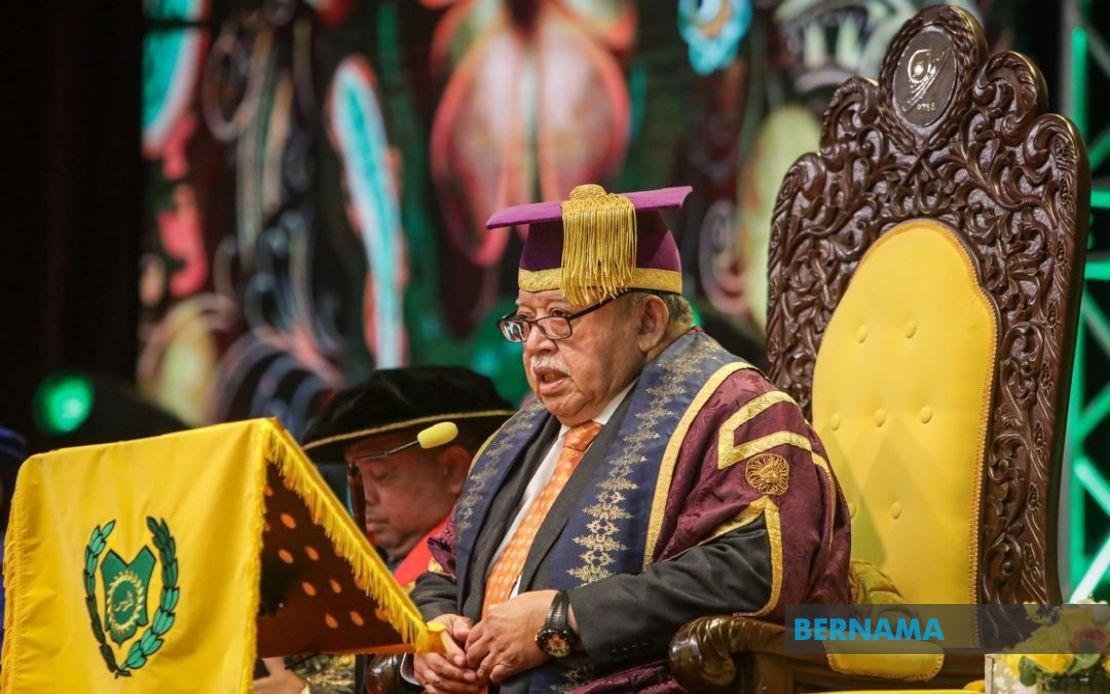
Technical and vocational education has emerged as a cornerstone strategy for developing the skilled, creative workforce Malaysia requires to navigate an increasingly complex global economy. Speaking at the 2026 Northern Zone Polytechnic and Community College Convocation Ceremony at Politeknik Tuanku Syed Sirajuddin in Arau, the Raja of Perlis, Tuanku Syed Sirajuddin Jamalullail, reaffirmed that TVET institutions occupy an indispensable position in preparing graduates to meet tomorrow's challenges. The Ruler's remarks come at a pivotal moment when Southeast Asia's labour markets are undergoing profound transformation driven by technological disruption and shifting economic patterns.
Tuanku Syed Sirajuddin stressed that innovation has transitioned from being merely advantageous to becoming fundamentally necessary for national progress. In an era characterised by relentless technological change, he noted that staying competitive demands a deliberate commitment to fostering creative thinking and problem-solving capabilities throughout the workforce. The Ruler's emphasis reflects broader regional recognition that countries must systematically build human capital capable of harnessing emerging technologies rather than simply responding to their arrival. This perspective aligns with development priorities across the Association of Southeast Asian Nations, where rapid digitalisation is reshaping employment structures and skill requirements across sectors.
The technological landscape reshaping economies throughout the region extends far beyond conventional manufacturing. Artificial intelligence, automation systems, robotics technology and comprehensive digitalisation are fundamentally reconfiguring how industries operate and what capabilities organisations require from their personnel. These transformations create both opportunities and vulnerabilities for nations unprepared to guide their populations through this transition. The Raja highlighted that polytechnic institutions and community colleges must function as knowledge hubs that not only impart technical competencies but actively cultivate the innovative mindset necessary for graduates to develop solutions addressing real-world problems. This dual mandate—combining practical skills with creative capacity—distinguishes effective TVET programmes from conventional technical training.
Beyond technical proficiency, Tuanku Syed Sirajuddin delivered a forceful message regarding moral and ethical foundations in professional life. He cautioned graduates against compartmentalising their education, treating technical knowledge as separable from personal values and integrity. The Ruler's message that excellence cannot be divorced from character speaks to growing international concerns about how societies develop professionals who combine capability with responsibility. Malaysian employers increasingly report that technical skills, while necessary, prove insufficient without accompanying qualities such as reliability, ethical judgment and commitment to community welfare. This integration of moral development within skills training represents a distinctive strength that Malaysian TVET institutions can leverage as they compete globally for credibility and influence.
The convocation ceremony itself demonstrated the scale of Malaysia's TVET sector, bringing together 6,104 graduates from polytechnic and community college programmes across three northern states. This gathering of over six thousand newly qualified professionals represents a substantial annual injection of trained personnel into regional labour markets. The scale underscores the strategic importance of ensuring that these institutions maintain both quality and relevance as they process thousands of students annually. For Malaysian policymakers, regional observers and international development partners, these numbers highlight the sector's critical role in employment generation and economic productivity.
During the ceremony's opening session, recognition was bestowed upon Teerti Ganapathi Rao, a 22-year-old graduate from the Department of Information and Communication Technology who completed the Diploma in Digital Technology programme. His selection for the Director-General of Polytechnic and Community College Education Award reflects institutional acknowledgment of outstanding achievement. Recognition of high-performing graduates serves multiple purposes: it celebrates individual excellence, signals institutional standards to prospective employers, and encourages cohorts to aspire toward distinction in their respective fields. Such acknowledgment proves particularly significant within digital technology disciplines, where Malaysia faces persistent talent shortages and competition from regional neighbours for skilled practitioners.
The location of this convocation ceremony at Politeknik Tuanku Syed Sirajuddin itself carries symbolic weight. Named after the current Ruler, the institution represents state-level investment in technical education infrastructure. For Perlis and neighbouring Kedah and Penang, these polytechnic facilities represent crucial resources for skills development, economic diversification and regional competitiveness. The northern corridor's development strategy increasingly depends upon institutions capable of producing workers qualified in emerging fields. As manufacturing shifts toward higher-value activities and service sectors expand, demand grows for technicians and professionals who understand both traditional crafts and contemporary digital tools.
The emphasis on nurturing innovation culture specifically among polytechnic staff and graduates signals recognition that institutional transformation must extend beyond curriculum revision. Staff who teach these subjects must themselves embody innovative thinking, continuously updating their knowledge and modelling the problem-solving approaches their students will require. This institutional dimension often receives insufficient attention in education discussions, yet staff capability directly determines graduate quality. Malaysian polytechnics competing for international recognition and partnership require educators capable of engaging with cutting-edge developments in their disciplines.
For Malaysia's broader development trajectory, TVET expansion represents more than simple skills provision. Technical education offers pathways to prosperity for students who might not pursue conventional university routes, democratising access to quality training and income-generating capabilities. This inclusivity dimension carries particular significance across Southeast Asia, where educational inequality remains pronounced and TVET can provide alternatives that previous generations lacked. The sector's growth also distributes economic opportunity more geographically, as polytechnics typically operate throughout the country rather than concentrating in major urban centres as universities do.
The Raja's call for integrating moral development with technical skills acquisition reflects emerging consensus that sustainable development requires complete human development. Graduates entering professions characterised by rapid technological change must possess not only current expertise but also adaptive capacity and ethical frameworks guiding decision-making when encountering novel situations their training did not explicitly address. This holistic approach to professional development increasingly distinguishes Malaysian TVET from competitors emphasising technical skills alone.
Looking forward, the growth of TVET participation demonstrated by the scale of these convocation ceremonies suggests sustained institutional expansion and resource allocation across Malaysia's polytechnic network. Sustaining this momentum requires continuous quality monitoring, relevance alignment with employers' evolving needs, and investment in staff development and infrastructure. For regional observers, Malaysia's TVET trajectory offers insights into how middle-income economies can strategically position themselves within competitive global talent markets through institutional development and deliberate skills cultivation focused on emerging fields where demand persistently exceeds supply.

